Wheel Bearing Noise & Failure: Diagnosis Guide for Trucks
July 21, 2026 · PartsNow Guides
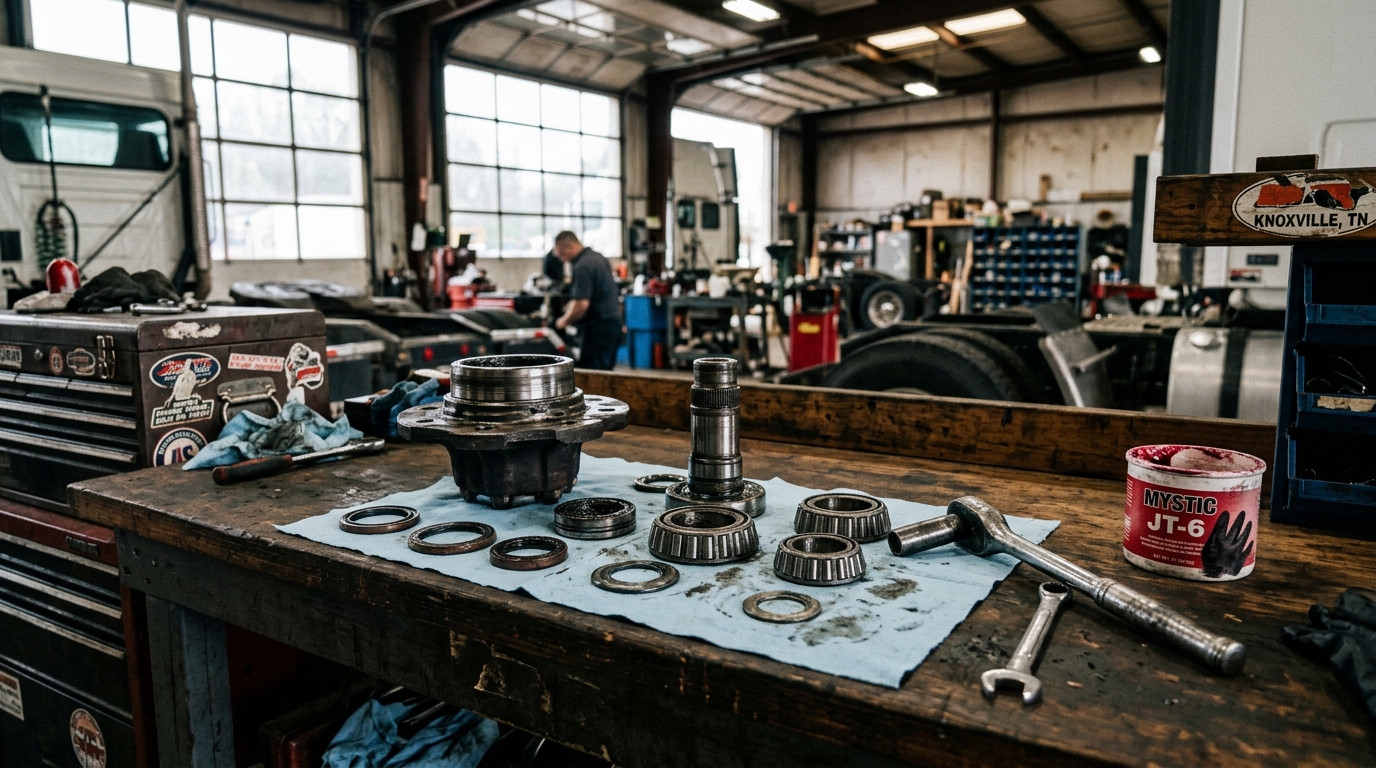
That low hum coming from a wheel that gets louder as you pick up speed isn't your imagination — and it isn't going to fix itself. Wheel bearing failure starts quiet and ends violent. By the time you feel the wobble in the steering wheel or smell hot grease baking off a hub, that bearing's been telling you it's dying for a while.
On medium-duty trucks like the GMC TopKick C4500-C8500, wheel-end failures don't just mean a roadside breakdown — a seized or separated hub at highway speed can take out a wheel assembly entirely. That's a safety issue, not just a maintenance one.
This guide walks through what wheel bearing failure sounds and feels like, what's actually going on inside that hub, and how to inspect and replace one the right way. Wheel-end work is safety-critical — if you're not signed off on brake and hub service, get a certified tech involved before you pull a hub apart.
The Symptoms: What Failing Wheel Bearings Sound and Feel Like
Bearing failure has a signature, and once you've heard it once you don't forget it.
- Humming or roaring that rises and falls with vehicle speed, not engine RPM — the classic early warning
- Grinding or growling under load, especially in corners, as the bearing's rollers start pitting
- Steering wheel vibration or a wandering feel at speed
- Wheel wobble you can see or feel through the floorboard
- Excess heat at the hub — if you can't hold your hand on it after a short drive, that's a red flag
- Uneven or accelerated tire wear on one side
On a TopKick C4500-C8500 running box or flatbed loads, that humming often gets written off as tire noise or driveline vibration. Don't guess — isolate it. Jack the wheel, spin it by hand, and listen and feel for roughness or play. A bearing that's shot won't spin smooth, and it won't be quiet.
Why Wheel Bearings Fail on Medium-Duty Trucks
Bearings don't just wear out from mileage — they fail from what gets past the seals or gets skipped on the maintenance sheet.
- Contamination — water or road grit getting past a cracked or worn seal washes out grease and starts pitting the rollers
- Under- or over-greasing — too little cooks the bearing, too much blows the seal
- Overloading — running a TopKick past its rated GVWR stresses the wheel-end harder than it's built for
- Improper installation — a bearing set without correct preload or per OEM spec torque on the retaining nut will fail early, sometimes fast
- Heat cycling — repeated hard braking on grades cooks grease over time near the hub
Most failures on these trucks trace back to greasing intervals getting stretched on a busy fleet schedule, or a seal that got nicked during a brake job and nobody caught it. Cheap insurance is checking the seal every time you're in there for brakes.
How to Inspect a Suspect Wheel Bearing
Before you condemn a bearing, confirm it properly. Don't rely on ear alone.
- Chock the opposite wheels and safely lift and support the suspect corner
- Spin the wheel by hand — listen for grinding, feel for roughness or binding
- Grab the wheel at 12 and 6 o'clock and rock it — any play means the bearing's loose or worn
- Check for side-to-side wheel play beyond OEM spec
- Pull the hub cap or cover and inspect grease color and consistency — milky, gritty, or burnt grease means contamination or overheating
- Inspect the seal for cracks, tears, or leakage
- Check brake components while you're in there — heat and contamination often hit both at once
If you find play, noise, or bad grease, that bearing's done. This is wheel-end and brake-adjacent work — inspection and any disassembly should be signed off by a certified tech, especially on a truck that's still running loaded routes.
Replacement: What's Involved
Wheel bearing replacement on a TopKick-class truck isn't a five-minute job, and it's not one to rush.
- Safely support the vehicle and remove the wheel and hub assembly
- Remove the hub, bearing races, and old seal — inspect the spindle for scoring or wear
- Clean the spindle and hub bore thoroughly before fitting new components
- Press in new bearing races and pack or fill with the correct grease per OEM spec
- Install the new seal, being careful not to damage the lip going in
- Reinstall the hub, set bearing preload per OEM spec, and torque the retaining nut per OEM spec
- Reinstall brake components and wheel, then torque lug nuts per OEM spec in the correct sequence
Getting preload wrong in either direction — too loose or too tight — will kill the new bearing fast. This is safety-critical wheel-end work and needs a certified tech's sign-off before the truck goes back on the road.
Preventing the Next Failure
Wheel bearings are cheap compared to a hub separation on the highway. Stay ahead of it.
- Follow OEM-specified greasing and inspection intervals — don't stretch them because the truck's busy
- Use the grease type specified for your application, not whatever's on the shelf
- Inspect seals every time brakes are serviced — a nicked seal is a bearing failure waiting to happen
- Watch for early hum or heat and act on it instead of waiting for grinding
- Keep loads within rated GVWR — overloading a TopKick C4500-C8500 wheel end shortens bearing life fast
- Log any wheel-end noise complaints from drivers and check them the same day, not the same week
A bearing that gets caught humming costs a repair. One that gets ignored until it's grinding can cost a wheel.
Quick answers
Can I keep driving if I hear humming from a wheel but no wobble yet?
You can get away with it for a short distance to a shop, but don't plan a long haul on it. Humming means the bearing's already pitted or losing lubrication, and it can go from noisy to seized faster than you'd expect.
How do I tell if it's a wheel bearing or a tire/driveline noise?
Jack the wheel and spin it by hand while listening and feeling for roughness or play — tire and driveline noise won't show up that way. If the hand-spin test is clean but you still hear noise on the road, look at tires and driveline before condemning the bearing.
Is wheel bearing replacement something an owner-operator can do themselves?
The basic steps aren't complicated, but this is wheel-end work tied directly to steering and braking safety, so it needs to be done to spec with correct preload and torque. If you're not certified for brake and wheel-end service, get a qualified tech to do it or sign off on your work.
Parts for this job
Real products from the PartsNow catalog. Confirm fitment with Mike before ordering.


Still not sure what's wrong?
Mike — the free AI truck consultant — will walk through your exact symptoms and point you to the right part. No account, English or Spanish, 24/7.
Related truck: GMC TopKick C4500–C8500— specs & parts
