Wheel Bearing Failure: Diagnosing Noise, Play & Heat
October 1, 2026 · PartsNow Guides
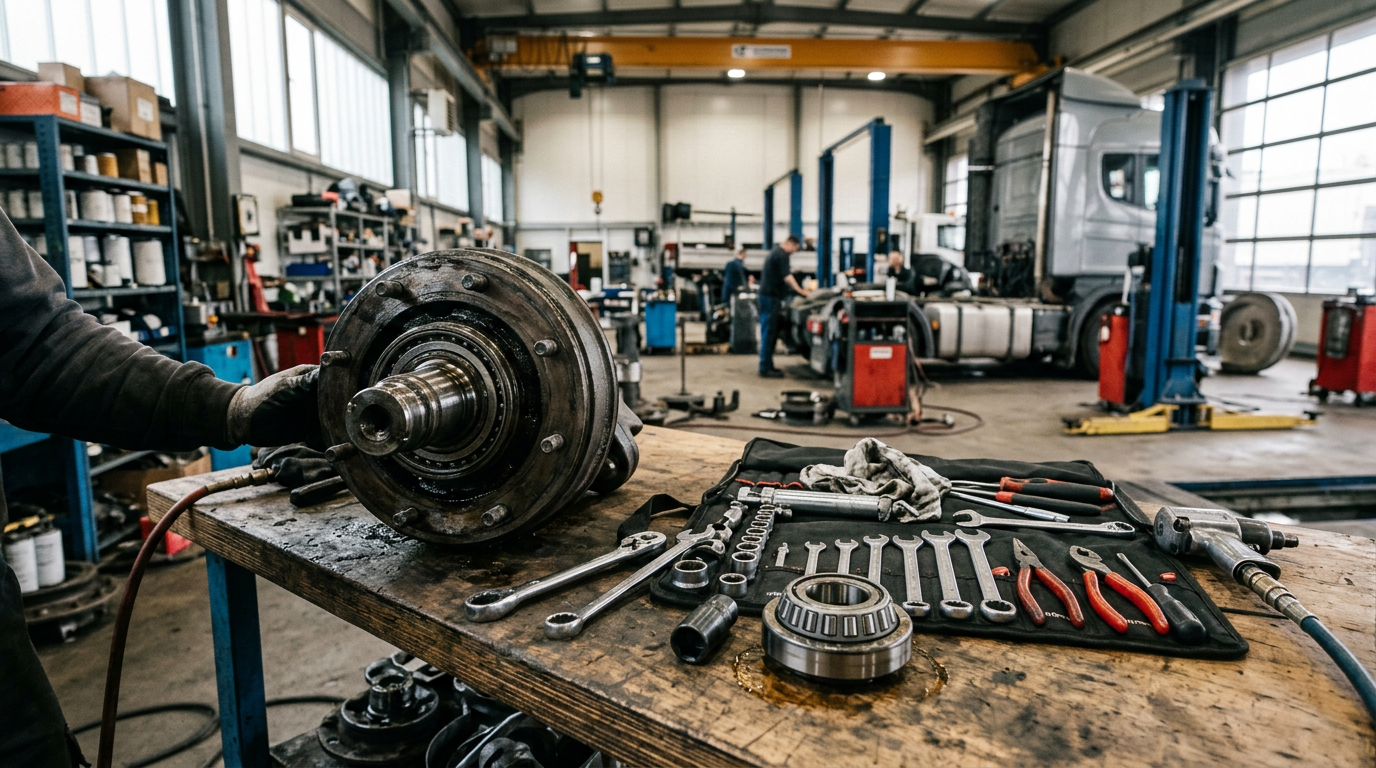
Nobody wants a wheel-off call at 2 AM on the interstate. Most of those catastrophic failures didn't happen overnight — they started weeks earlier as a faint hum at highway speed or a little extra wobble when you jacked up the corner for a tire rotation. By the time you hear grinding or see smoke, you're not diagnosing anymore, you're doing damage control.
Wheel bearings take a beating on a working truck. Loaded weight, potholes, water crossings, and miles upon miles of highway vibration all chip away at the grease film and race surfaces. A 389 running regional or OTR routes sees enough heat cycles and load changes that bearing wear is just part of the maintenance picture — the question is whether you catch it on your schedule or the DOT catches it on theirs.
This guide walks through the three early warning signs — noise, play, and heat — and gives you a practical path for deciding between a repack and a full bearing replacement. Wheel-end work is safety-critical. If you're not confident in your findings or your torque procedure, get a certified tech to sign off before that truck rolls.
Listening for the Early Warning Noise
A failing wheel bearing usually announces itself with sound before anything else. Listen for a low-pitched hum or growl that changes pitch with road speed — not engine RPM. It'll often get louder in a turn because cornering loads one side of the bearing more than the other.
On a drive-axle truck like a 389, it helps to have a second set of ears. Have someone ride along or use a mechanic's stethoscope at idle with the wheels jacked and spinning free. A rough, grainy growl as the wheel turns points to pitted races or a spalled roller — that bearing's done, not worth repacking.
Don't confuse bearing noise with tire cupping, a bad U-joint, or exhaust leak drone. Isolate by jacking the suspect wheel, spinning it by hand, and feeling/listening independent of the rest of the drivetrain. If the noise follows the wheel when raised off the ground, you've found your culprit.
Checking for Play: The Dial Indicator Test
Noise tells you something's wrong; play tells you how bad. With the wheel off the ground, grab it at 12 and 6 o'clock and rock it in and out. Any noticeable movement — more than just a few thousandths — means the bearing adjustment is loose or the bearing itself is worn.
For a real number, mount a dial indicator against the hub face or rotor and push/pull the wheel assembly. Compare your reading to per OEM spec for that axle and hub configuration — don't eyeball it. Steer axles and drive axles often have different allowable endplay, and the 389's front and rear setups aren't interchangeable in spec.
Excessive play accelerates wear fast because it lets the hub shift under load, hammering the races. If you find play beyond spec, don't just re-torque and send it — inspect the bearing and races for damage first. A loose adjustment on a bearing that's already pitted just buys you a little time before failure.
Heat: The Tell-Tale Sign of a Bearing in Distress
A bearing running hot is a bearing running out of time. After a drive, carefully check hub temps at each wheel — a non-contact infrared thermometer is the safest way to do this without getting near a hot wheel end. Compare side to side; one hub noticeably hotter than its mate on the same axle is a red flag.
Excess heat usually means insufficient lubrication, bearing preload set too tight, or internal damage creating friction. On grease-lubed hubs, check the sight glass or fill level — low grease is the number one preventable cause of heat failure.
If a hub is hot enough that you can't hold your hand on it for more than a couple seconds, pull that wheel and inspect before it goes any further. Running a truck with a bearing already cooking grease is how you end up with a seized spindle or a wheel separation. This isn't a "monitor it next week" situation — it's a park-it-now situation.
Repack or Replace: Making the Call
Not every wheel end needs a full bearing swap. If you catch wear early — noise is faint, play is within spec after readjustment, and the races show no pitting, discoloration, or flat spots — a clean, thorough repack with fresh grease per OEM spec can buy solid service life.
But if you find any of the following, replace both bearings on that hub, not just the bad one:
- Visible pitting, spalling, or heat bluing on races or rollers
- Play that won't hold adjustment after a proper torque sequence
- Noise that persists after repack and readjustment
- Any sign the grease was contaminated with water or metal shavings
Bearings wear as a set — the inner and outer race see different load patterns, and if one's shot, the other isn't far behind. On a working truck racking up miles daily, replacing in pairs is cheap insurance against a repeat teardown a few months later.
Torque, Seating, and Sign-Off
This is where shortcuts turn into wheel-offs. Bearing preload and spindle nut torque have to be set per OEM spec for that specific axle and hub — not "close enough" from memory. Over-tightening cooks the bearing from excess preload heat; under-tightening lets it run loose and self-destruct.
Use the correct torque sequence — usually a seat torque, a back-off, then a final torque or rotation spec — and verify with a dial indicator afterward. Don't trust torque wrench feel alone on a wheel-end job.
This is safety-critical work. Wheel-end service, bearing replacement, and torque verification should be signed off by a certified tech before the truck goes back in service. A wheel separation at highway speed doesn't just total a truck — it kills people. Treat every wheel-end job with that level of seriousness, every time.
Quick answers
What does a bad wheel bearing sound like on a semi truck?
It's usually a low hum or growl that changes pitch with road speed and gets louder in turns. If you jack the wheel and spin it by hand and hear a rough, grainy growl, the bearing's likely damaged, not just loose.
How much play is normal in a truck wheel bearing?
Allowable endplay varies by axle type and manufacturer — always check per OEM spec with a dial indicator rather than going by feel. Any play beyond that spec means the bearing needs readjustment or replacement.
Can I just repack a wheel bearing instead of replacing it?
Yes, if the bearing shows no pitting, spalling, or heat damage and the play is within spec after readjustment. If there's any visible race damage or persistent noise, replace both bearings on that hub instead.
Why is one wheel hub hotter than the others after driving?
Uneven heat usually points to low or old grease, bearing preload set too tight, or internal bearing damage creating friction. Check it with an infrared thermometer and pull the wheel for inspection if it's noticeably hotter than its mate.
What happens if you ignore a failing wheel bearing?
The bearing keeps generating heat and wear debris until the races spall, the hub loses support, and in the worst case the wheel separates from the axle at speed. This is why any wheel-end work needs a certified tech's sign-off before the truck goes back on the road.
Parts for this job
Real products from the PartsNow catalog. Confirm fitment with Mike before ordering.


Still not sure what's wrong?
Mike — the free AI truck consultant — will walk through your exact symptoms and point you to the right part. No account, English or Spanish, 24/7.
Related truck: Peterbilt 389— specs & parts
