ABS Wheel Speed Sensor Failure: Diagnosing Codes & Faults
September 29, 2026 · PartsNow Guides
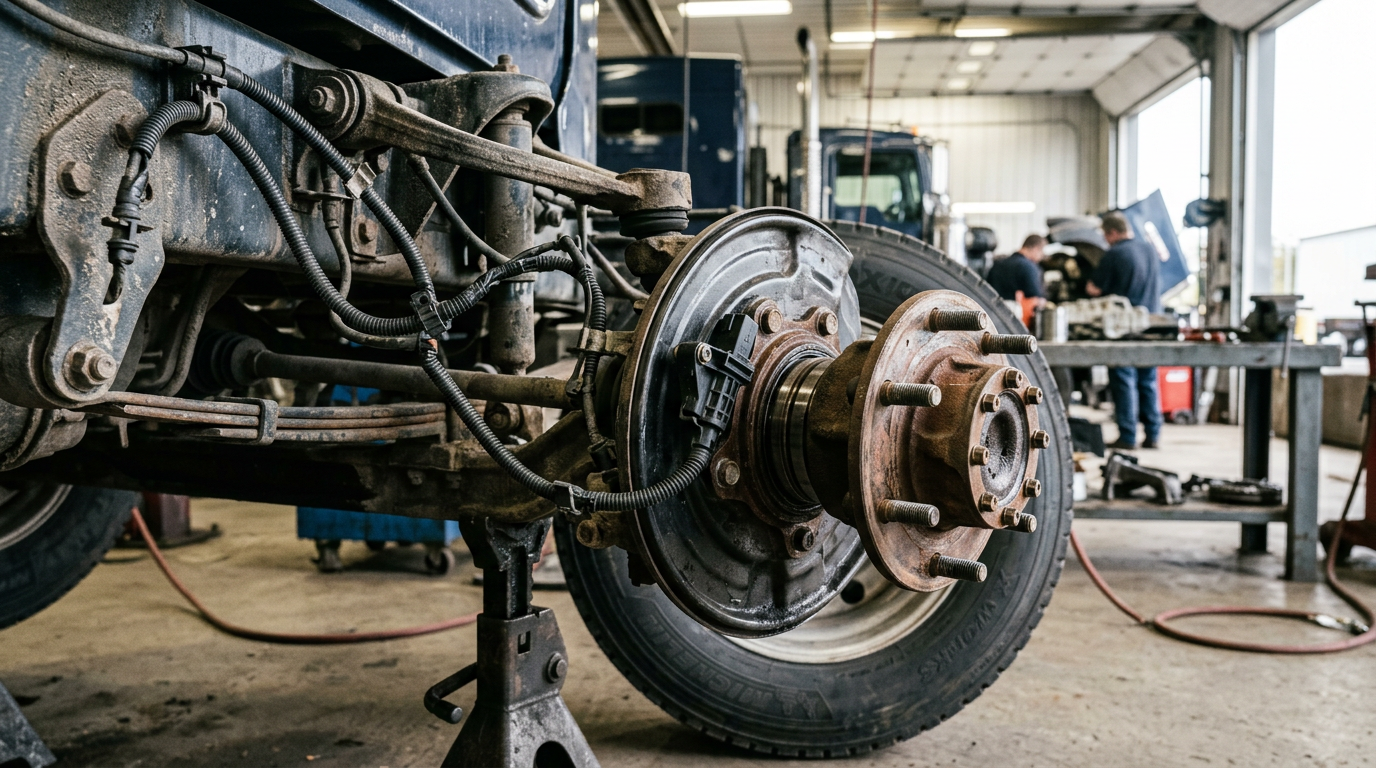
That ABS light coming on at 2am on a dark stretch of I-80 never means good news. Most of the time it's not the ABS module — it's a wheel speed sensor that's dirty, damaged, or wired wrong. But guessing costs you diagnostic time and sometimes a whole tone ring you didn't need to replace.
Wheel speed sensor faults show up as steady ABS lamps, intermittent traction control drops, or codes that come and go with vibration or temperature. On an International TranStar, these sensors live right at the wheel end, exposed to road salt, brake dust, and the kind of grime that eats connectors alive. Knowing how to read the fault pattern before you pull a wheel saves labor hours and keeps trucks off the lift longer than they need to be.
This guide walks through the diagnostic sequence — from scan tool codes to physical inspection to the wiring harness — so you can tell a five-minute cleaning job from a sensor that's actually toast.
Reading the Codes: What the ABS Light Is Actually Telling You
Start with a scan tool pull before you touch anything. Wheel speed sensor codes typically point to one of three things: an open circuit, a signal that's out of range, or an erratic/intermittent signal. An open circuit code usually means a broken wire or a sensor that's died completely. Out-of-range or erratic codes often mean the sensor air gap is off, the tone ring is damaged, or there's electrical interference from a chafed harness.
On a TranStar, cross-reference the code with which wheel position it's flagging — steer axle, drive axle, or trailer if you're running a smart trailer system. Don't assume the code location is exactly where the fault lives; a chafed wire further up the harness can throw a fault at the sensor connector even though the sensor itself is fine.
Write down whether the fault is constant or intermittent, and if it correlates with speed, vibration, or wet weather. That pattern matters more than the raw code number once you're under the truck.
Physical Inspection: Sensor, Tone Ring, and Air Gap
Pull the wheel-end cover or crawl under and locate the sensor. Check for:
- Cracked or worn sensor tip — road debris and brake dust chew these up over time
- Bent or corroded tone ring teeth — even one damaged tooth can cause an erratic signal
- Air gap — too much clearance between sensor and tone ring weakens the signal; check against per OEM spec
- Sensor seated fully — vibration can walk a sensor partway out of its bore
On high-mileage TranStars, it's common to find the sensor tip worn flat from contact with the tone ring — that's a sensor that needs replacing, not cleaning. If the tone ring itself shows chipped or missing teeth, that's a bigger job and it's tied directly to brake and wheel-end function.
This is safety-critical work. Any inspection involving wheel-end disassembly or brake components should be signed off by a certified tech before the truck goes back in service.
Cleaning vs. Replacing: Making the Call
Not every ABS fault needs a new sensor. If the sensor tip is coated in brake dust, grease, or road film but shows no physical damage, a careful cleaning with the right solvent and a soft brush can restore the signal. Reinstall, reset the air gap to spec, clear the code, and road test.
Replace the sensor if you see:
- Cracked housing or exposed wiring at the sensor tip
- Worn or flattened sensing face
- Repeated code returns after cleaning
- Sensor resistance out of range on a multimeter check (compare to per OEM spec)
Wheel speed sensors are cheap compared to a tow bill or a DOT out-of-service violation for a bad ABS system. If you're on the fence and the truck runs regional or long-haul routes, replace it — the labor to get back to that wheel end isn't worth saving on a low-cost part.
Wiring, Connectors, and Chafe Points
A huge share of ABS wheel speed sensor faults aren't the sensor at all — they're the harness. Check the full run from sensor to ECU connector:
- Connector corrosion — green or white buildup means moisture got in; clean and dielectric grease it, or replace the connector
- Chafe points — anywhere the harness rubs against frame, suspension, or brake components
- Pinched wiring — especially near wheel-end covers and axle housings where techs sometimes reroute during service
On a TranStar drive axle, the harness routing near the suspension travel area is a known chafe spot — inspect it closely if you're chasing an intermittent fault that shows up over rough roads. Use a multimeter to check continuity and resistance end-to-end; a sensor that reads good on the bench can still throw a code if the wire between it and the ECU has a partial break.
If you find chafe damage, don't just tape it — reroute and reloom the harness so it doesn't repeat the failure in six months.
When to Call In a Certified Tech
Wheel speed sensor diagnosis often overlaps with brake and wheel-end work — tone rings live on the hub, sensors mount near brake components, and any disassembly touches systems tied directly to stopping the truck. If your diagnostic work requires pulling a hub, disturbing brake hardware, or resetting anything related to ABS/traction control calibration, that work needs a certified tech's sign-off before the truck returns to service.
Owner-operators doing their own basic diagnostics — scan tool pulls, visual inspection, connector cleaning — are fine to handle solo. But once you're into hub removal, tone ring replacement, or anything affecting brake function, get a second set of certified eyes on it. ABS and traction control exist because wheel-end failure at highway speed is not a place to guess.
Quick answers
Why does my ABS light stay on but the truck drives fine?
A steady ABS light with normal driving usually means a wheel speed sensor fault the system has flagged but that isn't affecting braking yet. Get it scanned soon — ignoring it risks losing ABS function entirely when you actually need it.
Can a dirty wheel speed sensor cause an ABS code?
Yes — brake dust and road grime buildup on the sensor tip is one of the most common causes of erratic or weak signal codes. Cleaning it often resolves the fault without needing a replacement part.
How do I know if it's the sensor or the wiring harness?
Check resistance at the sensor connector against per OEM spec, then check continuity along the full harness run to the ECU. If the sensor tests good on its own but the code persists, the fault is almost always in the wiring or connector.
Is it safe to keep driving with an ABS wheel speed sensor code?
You can usually still drive since normal brakes still work, but you lose ABS and traction control protection, which matters most in wet or icy conditions. Get it diagnosed and repaired before it becomes a DOT inspection issue.
How much does a wheel speed sensor replacement cost on a TranStar?
Cost varies by part and labor time to access the wheel end, so check current pricing with your parts supplier rather than relying on old numbers. It's generally a low-cost part relative to the labor and downtime a bad sensor can cause if ignored.
Parts for this job
Real products from the PartsNow catalog. Confirm fitment with Mike before ordering.


Still not sure what's wrong?
Mike — the free AI truck consultant — will walk through your exact symptoms and point you to the right part. No account, English or Spanish, 24/7.
Related truck: International TranStar— specs & parts
