Power Steering Pump Failure: Symptoms & Diagnosis Guide
July 31, 2026 · PartsNow Guides
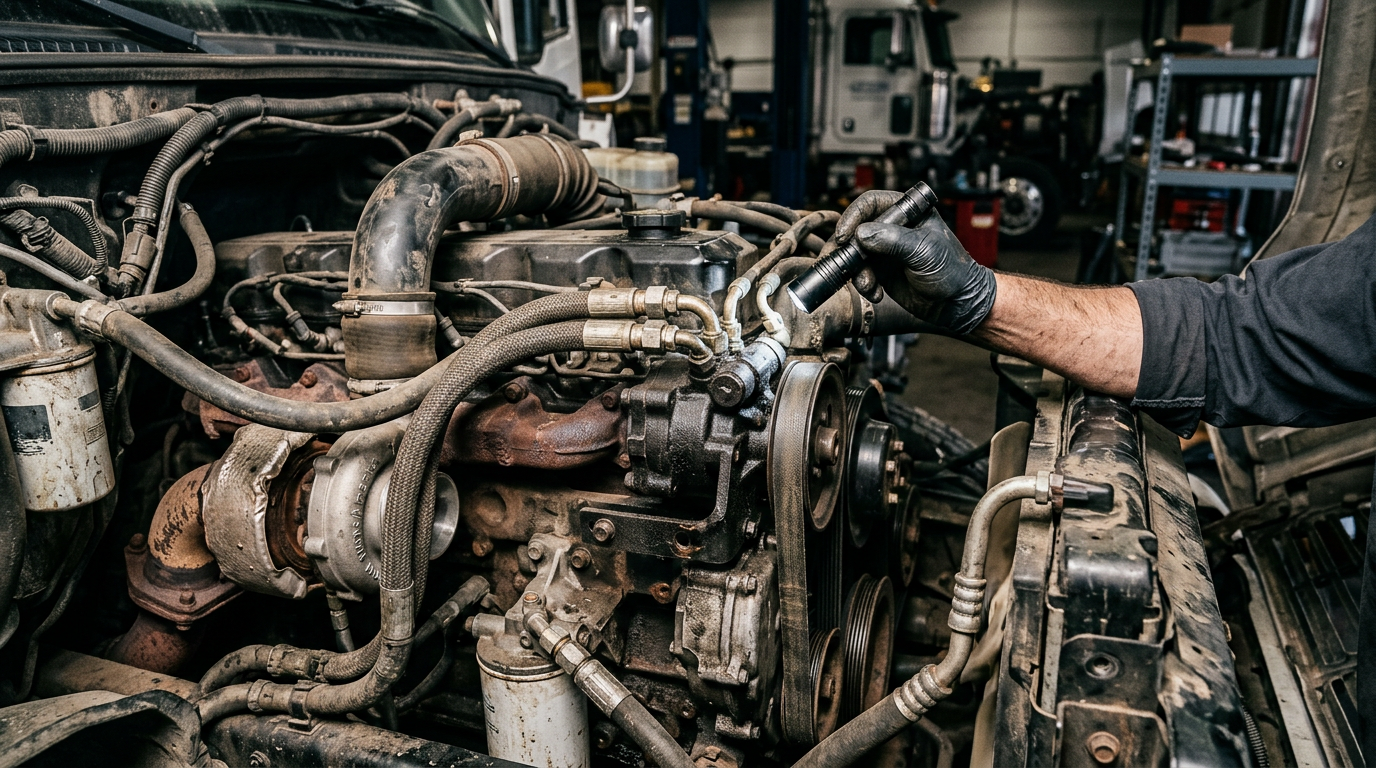
That whine coming from under the hood when you turn the wheel isn't just annoying—it's your power steering pump telling you it's on borrowed time. On older conventional trucks like the Peterbilt 379, hydraulic steering systems have been grinding out miles for decades, and the pumps, hoses, and gearboxes that make up that system don't last forever. Catch the early signs and you fix it in the bay. Miss them, and you're wrestling a loaded truck at 60 mph with no power assist, or worse, stuck on the shoulder with fluid all over the frame rail.
The good news is this system talks to you before it quits. Noise, feel, and fluid tell you almost everything you need to know if you pay attention. This guide walks through what to look for and how to run it down before it strands you.
The Whine: Your First Warning Sign
A high-pitched whine or groan when you turn the wheel—especially at idle or during tight maneuvers like backing into a dock—is usually the first symptom of a failing power steering pump. It's typically caused by low fluid, air in the system, or a worn pump losing internal efficiency.
On a 379, check these before you assume the pump's bad:
- Fluid level in the reservoir—top it off with the correct fluid per OEM spec
- Belt tension on the pump pulley—a loose or glazed belt will slip and whine
- Hose routing—kinked or collapsed hoses restrict flow and starve the pump
If fluid and belt check out and the whine persists, especially under load or during full-lock turns, the pump itself is likely wearing internally. Don't ignore it—a pump that's cavitating or starved for fluid will eat itself from the inside out.
Hard Steering and Loss of Assist
If the wheel feels heavier than usual, especially at low speed or when maneuvering in the yard, that's a clear sign the power steering pump isn't building the pressure it should. On the 379 and other older conventional trucks, this often shows up gradually—drivers get used to it before they realize how bad it's gotten.
Causes to run down:
- Worn pump vanes or a scored rotor losing pressure output
- A failing pressure relief valve stuck open, bleeding off flow
- Low fluid causing intermittent starvation
- A worn steering gearbox masquerading as a pump problem
Don't just swap the pump and hope. Hook up a pressure gauge in-line and check output against OEM spec at idle and at rated RPM. If pressure's low even with a fresh pump, look at the gearbox or relief valve before throwing more parts at it.
Fluid Leaks: Where They Show Up First
Power steering fluid leaks are sneaky—by the time you see a puddle in the yard, you've probably been losing fluid for weeks. On a 379, the usual suspects are:
- Pump shaft seal—leaks show up as fluid slung around the pump and belt area
- High-pressure hose fittings—check crimped ends and banjo bolts for seepage
- Return line clamps—low-pressure side leaks are slower but still drain the reservoir
- Steering gearbox seals—fluid pooling near the frame rail under the box
Wipe everything down, run the engine, cycle the wheel lock to lock a few times, then shut down and inspect with a flashlight. Fresh fluid tells you exactly where it's coming from. A rusty, grimy pump housing with dried fluid streaks means it's been leaking for a while—don't wait on that one.
Diagnostic Steps Before It Strands You
Run this sequence in the bay, not on the side of the interstate:
- Check fluid level and condition—dark, burnt-smelling fluid means internal wear and heat damage
- Inspect the belt for glazing, cracking, or slip marks
- Listen for whine at idle, then again during a full-lock turn
- Check for play in the steering wheel before the tires respond—excess play points to gearbox wear, not the pump
- Use a pressure test kit to compare pump output against OEM spec
- Inspect all hoses and fittings for wet spots, swelling, or chafing against the frame
If you find low pressure, contaminated fluid, and a whine all at once, you're looking at a pump on its way out. Replace the pump, flush the system, and bleed air out before road testing. Any looseness in the wheel or gearbox needs separate attention.
When to Bring in a Certified Tech
Steering is safety-critical—there's no gray area here. If your diagnosis points to anything beyond the pump itself—a worn steering gearbox, damaged tie rod ends, or play in the linkage—that work needs a certified tech's sign-off before the truck goes back on the road.
Same goes for any pressure testing that requires disconnecting high-pressure lines under load, or if you're not fully confident bleeding air out of the system correctly. A poorly bled system can mimic pump failure symptoms and send you chasing the wrong part.
Owner-operators handling their own pump swaps: that's fine for the pump and hoses. But steering gear, linkage, or anything affecting how the truck responds to wheel input belongs in the hands of someone certified to sign off on it. This isn't the place to save a few bucks and guess.
Quick answers
How do I know if it's the pump or the steering gearbox that's failing?
Whining noise and low pressure on a gauge test point to the pump. Play in the steering wheel before the tires move, or a clunk when you turn, points to the gearbox—get a certified tech to check linkage and gearbox wear separately.
Can I keep driving with a whining power steering pump?
You can for a short while, but a whining pump usually means it's cavitating or wearing internally, and it can fail without warning. Get it checked before your next long haul rather than risk losing steering assist on the road.
What fluid should I use in an older Peterbilt 379's power steering system?
Use whatever fluid type is called out per OEM spec for your specific pump and gearbox—don't guess or substitute automatic transmission fluid unless the manual specifically allows it. Wrong fluid can damage seals and cause the exact leaks you're trying to avoid.
Parts for this job
Real products from the PartsNow catalog. Confirm fitment with Mike before ordering.


Still not sure what's wrong?
Mike — the free AI truck consultant — will walk through your exact symptoms and point you to the right part. No account, English or Spanish, 24/7.
Related truck: Peterbilt 379— specs & parts
