Air Bag Suspension Failures: Sagging, Leaks & Ride Height Fixes
August 6, 2026 · PartsNow Guides
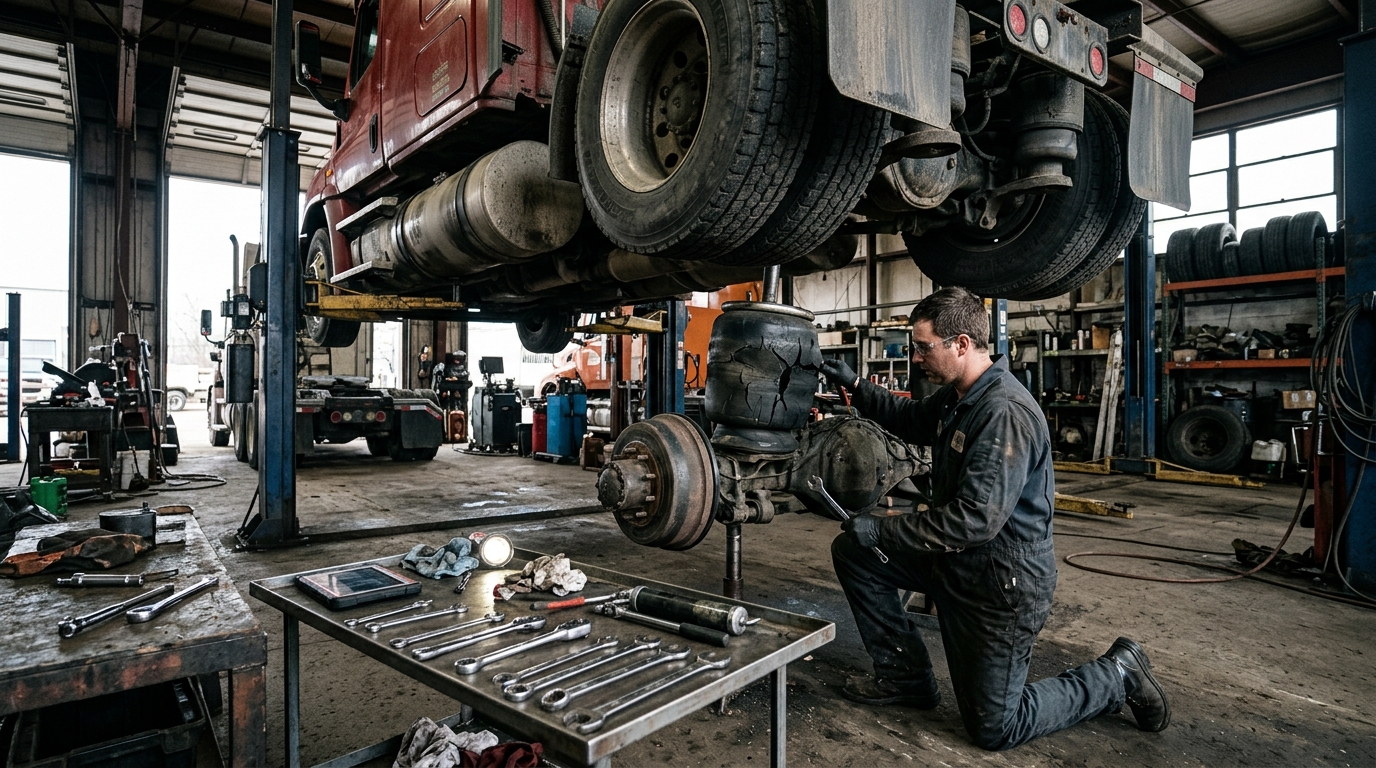
You walk out to the truck in the morning and something looks off — one corner's sitting lower than the rest, or the whole rig looks like it's squatting after a long haul. That's your air bag suspension talking to you, and if you ignore it, you're looking at frame rail damage, chewed-up tires, and a ride quality that'll rattle your fillings loose.
Air springs don't fail all at once — they leak slow, they crack at the bead plate, or the mounting brackets rust through and let the whole assembly walk around under load. Catch it early with a five-minute inspection and you're swapping a bag. Catch it late and you're explaining to your safety manager why there's a bent frame cross member and three cupped tires on the trailer.
This guide walks through what to look for, where these things actually fail, and how to decide between a quick air bag swap and a deeper suspension repair — with some notes specific to the Western Star 5800 since that air ride setup shows up a lot in fleet yards.
Spotting the Sag: Ride Height Basics
Every OEM sets a ride height spec for the air suspension — the distance from a reference point on the frame to the axle, measured with the system aired up to normal operating pressure. On a Western Star 5800, that spec lives in the chassis manual and it's not the same number as your buddy's Freightliner, so don't eyeball it against another truck in the yard.
Here's the quick check:
- Park on level ground, air system fully charged
- Measure ride height per OEM spec at the designated points, both sides
- Compare side-to-side — more than about a half-inch difference usually means a leak or a bad bag, not just normal wear
- Check it loaded and unloaded if you can — some sag only shows up under weight
If ride height's low on one side and air pressure won't hold, you've got a leak somewhere in that circuit. If it's low on both sides evenly, check your height control valve linkage before you start throwing parts at it.
Where Air Springs Actually Fail
Air bags don't just "go bad" randomly — they fail in predictable spots:
- Bead plate cracks — the rubber-to-metal bond at top or bottom of the bag separates, usually from age, ozone exposure, or road debris cutting the sidewall
- Piston chafing — if the bag's riding on a worn piston or the alignment's off, you'll see abrasion wear on the rubber that eventually blows through
- Mounting bolt corrosion — road salt eats the studs and plates, and a loose bag will shift and wear unevenly
- Bracket cracking — the steel bracket holding the bag to the frame can fatigue crack, especially on trucks running heavy and rough routes
Soap-and-water test the bag at full pressure — bubbles tell you exactly where the leak is. Also run your hand around the bead plate seam; a slow leak there feels like a faint hiss even when you can't see bubbles right away. Don't skip checking the height control valve and its linkage rod — a stuck or disconnected rod mimics a bag failure and wastes your time chasing the wrong part.
Bracket and Mount Wear: The Hidden Culprit
A lot of guys replace the air bag and call it done, then it fails again in six months. Nine times out of ten, that's because nobody checked the mounting bracket underneath it.
Rust and fatigue crack the bracket at the weld points, especially on trucks that see a lot of frame flex — dump trucks, mixers, anything off-highway. A cracked bracket lets the bag rock side to side under load, which chafes the rubber and blows it out prematurely.
While the bag's off:
- Inspect the bracket for cracks, especially at weld seams
- Check for elongated bolt holes — sign the bracket's been walking
- Look at the frame rail itself where the bracket mounts for stress cracks or rust-through
- Replace corroded mounting hardware, don't just reuse rusty bolts
A bracket repair or replacement is more labor than a bag swap, but skipping it means you're back under the truck sooner than you'd like.
Repair or Replace: Making the Call
Replace the air bag when:
- You see visible cracking, bulging, or bead plate separation
- Soap test shows a leak you can't isolate to a fitting
- The bag's original to a truck with 300k+ miles — rubber degrades with age even if it hasn't failed yet
Repair components (fittings, height control valve, linkage) when:
- Leak traces to a push-to-connect fitting or cracked air line, not the bag itself
- Height control valve is stuck or misadjusted but the bag itself checks out fine
On a fleet truck like the Western Star 5800 running regional routes, air bags typically don't get a fixed mileage replacement interval — they get replaced on condition. Keep a log of ride height readings at PM intervals so you can spot the trend before it's a roadside failure. If you're swapping bags in pairs (same axle), you save a comeback — one bag going usually means its partner isn't far behind.
Downstream Damage: What Sagging Costs You
A sagging air bag isn't just a ride comfort issue — it changes your alignment geometry and load distribution in ways that cost real money down the line.
- Uneven tire wear — a low corner shifts camber and toe, and you'll see cupping or feathering on that tire faster than the others
- Frame stress — sustained sag puts the frame rail and cross members at angles they weren't built for, and over time that's cracked welds or bent structure
- Driveline angle changes — on some configurations, a sagging rear suspension alters the driveshaft angle enough to cause vibration and premature U-joint wear
This is why ride height checks belong in your regular PM, not just when the driver complains the truck's riding rough. A $150 air bag caught early beats a frame shop bill any day of the week.
Quick answers
How do I know if it's the air bag or the height control valve that's bad?
Soap test the bag first — if you see bubbles at the bead plate or sidewall, that's your leak. If the bag holds air fine but ride height still won't correct, check the height control valve linkage rod for disconnection or a stuck valve before replacing anything else.
Can I run a truck with a sagging air bag until my next scheduled PM?
Short trips at low mileage might not hurt anything immediately, but sustained sag causes uneven tire wear and frame stress that gets expensive fast. If ride height's noticeably off on one side, get it looked at before your next scheduled service — this isn't a wait-and-see item.
Do air bags need to be replaced in pairs on the same axle?
It's not always required, but it's good practice — if one bag's failing from age or mileage, the other one on that axle is usually close behind. Replacing both at once saves you a comeback and keeps ride height even side to side.
Parts for this job
Real products from the PartsNow catalog. Confirm fitment with Mike before ordering.


Still not sure what's wrong?
Mike — the free AI truck consultant — will walk through your exact symptoms and point you to the right part. No account, English or Spanish, 24/7.
Related truck: Western Star 5800— specs & parts
