Leveling Valve Problems: Diagnosing Ride Height Issues
July 30, 2026 · PartsNow Guides
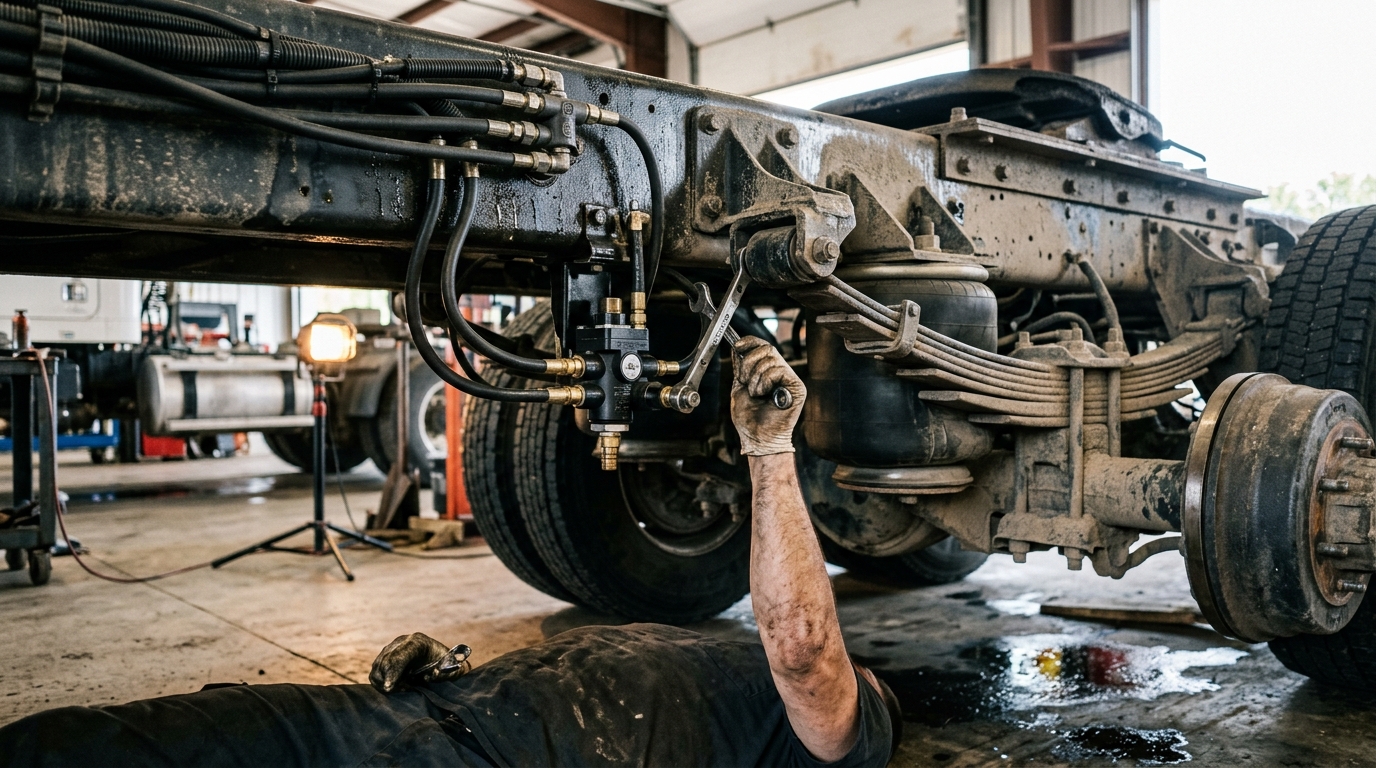
You walk up to the truck in the morning and something's off — the trailer's sitting nose-down, or the tractor looks like it's on stilts. Maybe it's not a height problem at all, just a bounce you can feel in your kidneys every time you hit a pothole. Nine times out of ten, that's the leveling valve (also called the height control valve) telling you it's tired.
The leveling valve is the traffic cop for your air suspension. It reads ride height through a linkage arm and either lets air into the bags or dumps it out to keep the frame riding level, loaded or empty. When that valve sticks, drifts, or the linkage falls out of adjustment, the whole suspension goes sideways — literally.
Good news: most leveling valve issues are diagnosable with a wrench, a torch light, and twenty minutes on your back under the trailer or tractor frame. This guide walks through the checks in order, so you're not throwing parts at a linkage problem or vice versa.
How the Leveling Valve Controls Ride Height
The leveling valve mounts to the frame and connects to the axle (or a linkage bracket on the axle) through a control arm and linkage rod. As the axle moves up and down relative to the frame — load going on, load coming off — that arm rotates the valve's internal spool.
Rotate it one way and it opens a port to feed air from the supply tank into the air springs (bags). Rotate it the other way and it opens an exhaust port that dumps air out. Dead center, it holds — no air in, no air out. That's your target ride height.
On a Freightliner Cascadia tractor, you'll typically find the drive axle leveling valve mounted to the frame rail with the linkage running down to a bracket on the axle housing. Trailers run the same basic setup, just usually one valve per axle group instead of two. Know where yours lives before you start chasing symptoms — you can't diagnose what you can't see.
Symptom: Truck or Trailer Sits Too High or Too Low
Start with the linkage before you condemn the valve — it's the more common culprit and the cheaper fix.
- Check that the linkage rod is still attached at both ends and hasn't bent, cracked, or slipped in its clamp
- Look for a loose or rotated control arm on the valve shaft — if it spun on the shaft, your reference point is gone and the valve thinks the axle is somewhere it isn't
- Confirm the linkage length matches OEM spec for your make/model — a rod that's too long or short will bias ride height high or low even with a perfectly good valve
If the linkage checks out and the vehicle is always high or always low regardless of load, the valve itself is likely stuck or worn internally. If it's high empty but fine loaded (or the reverse), that's almost always a linkage geometry problem, not the valve.
Symptom: Bouncy or Harsh Ride with Good Air Pressure
If your air gauges show normal pressure but the ride feels harsh, bouncy, or like the bags aren't settling, the leveling valve may be hunting — constantly correcting instead of holding steady.
This usually points to:
- A worn valve spool that won't hold a stable null position
- Excessive linkage play at the pivot points, letting the arm wander and trigger fill/exhaust cycles it shouldn't
- A binding linkage (rusted pivot, bent rod) that's slow to respond, so the valve overcorrects when it finally catches up
Grease and freedom of movement matter more than people think. On a Cascadia running gravel or off-road routes, that lower pivot bushing dries out and seizes faster than you'd expect. Free it up, regrease it, and retest before you condemn the valve — cheap fix, big difference.
Checking the Exhaust Port
The exhaust port is where a lot of leveling valves die quietly. It's supposed to only crack open when the valve is actively dumping air to lower ride height — otherwise it should be sealed.
- With the engine off and park brake set, listen and feel at the exhaust port (usually on the bottom or side of the valve body) for a continuous air leak
- A steady hiss with the linkage sitting at the neutral/ride-height position means the internal seals are worn and the valve is bleeding air it shouldn't
- Soap-and-water bubble test works well here if the leak is faint — spray it and watch
A valve that leaks constantly out the exhaust port will slowly settle the suspension low over time, especially overnight when nobody's driving to trigger a refill cycle. If you're finding the trailer sagging every morning with no load change, check this port before anything else.
Repair or Replace: Making the Call
Leveling valves aren't usually a rebuild-in-the-shop item — they're a sealed unit on most modern trucks, including the Cascadia's. That simplifies the decision:
- Linkage problems (bent rod, worn bushing, loose clamp) — repair or replace the linkage hardware, keep the valve
- Valve leaking air at rest, failing to hold ride height, or not responding to linkage input at all — replace the valve as an assembly
- Valve is intermittent (works sometimes, sticks other times) — don't chase it, replace it; intermittent air valves have a way of failing at the worst possible time, usually loaded on a grade
Always confirm the replacement valve matches OEM spec for arm length and port configuration — a mismatched valve will fight your linkage geometry from day one and you'll be right back here troubleshooting a "bad valve" that's really just the wrong part.
Quick answers
Can I adjust ride height by just bending the leveling valve linkage?
You can make small corrections by adjusting the linkage length at its adjustable end, but don't just bend the rod — that changes the geometry unevenly and can throw the valve's response off in a way that's hard to diagnose later. Adjust it properly per OEM spec or replace the rod if it's damaged.
How do I know if it's the leveling valve or a leaking air bag?
Isolate the bag by pinching or clamping its supply line temporarily — if the ride height still drifts with the bag isolated, the leak is upstream at the valve or its plumbing, not the bag itself. If the bag holds air fine on its own but the truck still won't sit right, look hard at the linkage and exhaust port on the valve.
Is a bad leveling valve a safety-critical repair?
A leveling valve itself isn't a brake or steering component, but a truck sitting way out of ride height can affect axle alignment, driveline angle, and overall handling, so don't ignore it. If the ride height issue is tied into anything affecting steering geometry or axle alignment, get a certified tech to sign off before it goes back on the road.
Parts for this job
Real products from the PartsNow catalog. Confirm fitment with Mike before ordering.


Still not sure what's wrong?
Mike — the free AI truck consultant — will walk through your exact symptoms and point you to the right part. No account, English or Spanish, 24/7.
Related truck: Freightliner Cascadia— specs & parts
