Wiper Linkage Failure on the Kenworth T800: Diagnosis & Fix
September 1, 2026 · PartsNow Guides
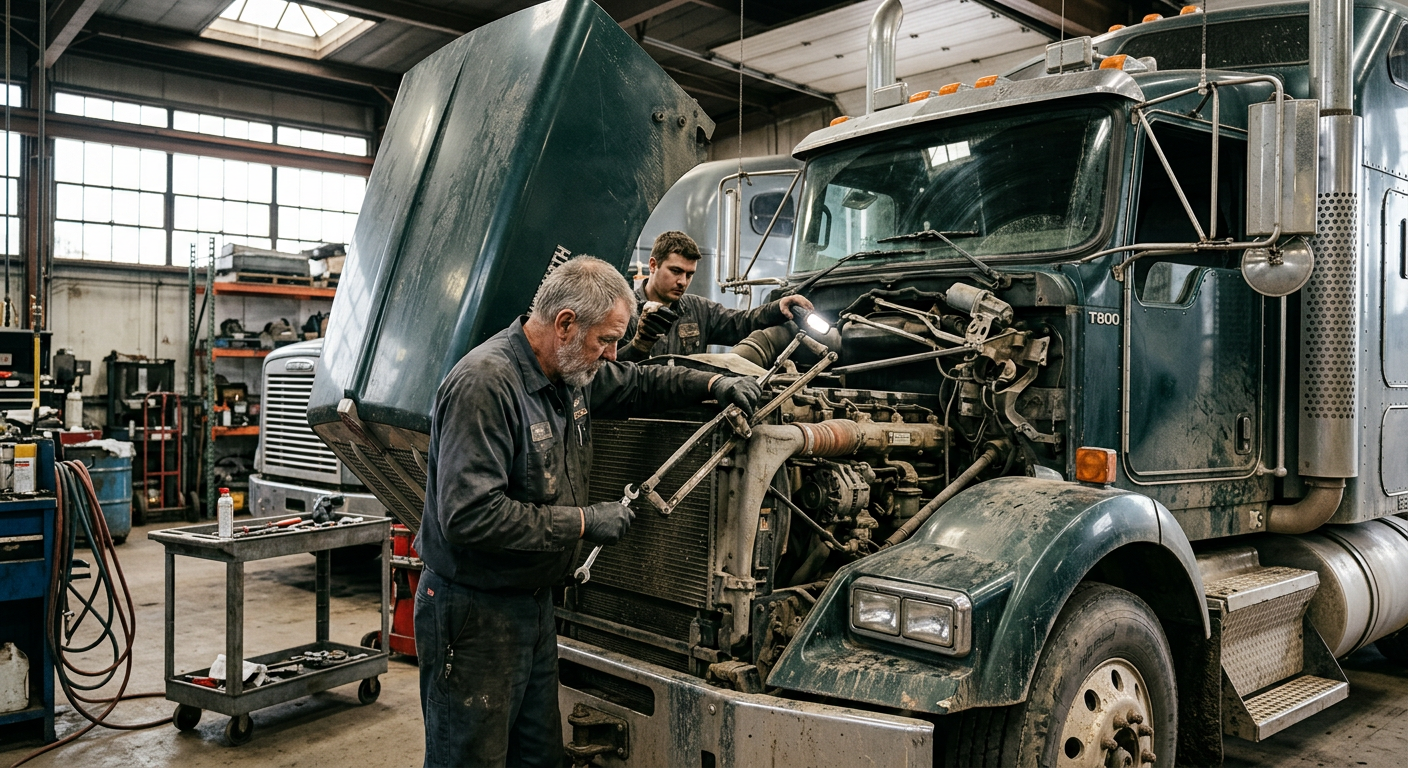
You flip the wiper switch in a downpour on the T800 and get nothing but a sad little twitch, or the blades are flopping around like they're doing their own thing instead of clearing your windshield. That's wiper linkage failure, and on the T800 it's one of those problems that seems minor until you're doing 65 in a thunderstorm with zero visibility.
The T800's wiper system runs on a mechanical linkage — a set of pivots, links, and a transmission arm connecting the motor to both wiper arms. It's simple, it's been the same basic design for years, and it wears out the same way every time. The good news: this isn't a hard diagnosis, and it's not an expensive fix if you catch it before something breaks loose and starts banging around behind your dash.
We're going to walk through why these linkages fail, how to tell a bad linkage from a bad motor, and exactly what to pull and replace so you're not chasing this problem twice.
Why Wiper Linkage Fails on the T800
The T800's wiper linkage lives behind the cowl panel, right where road grime, salt, and water collect every time it rains or you run through a wash. That environment eats the pivot bushings and linkage joints over time.
Here's the usual failure chain:
- Bushings dry out and crack from UV and heat cycling under the cowl
- Grit works into the pivot joints and accelerates wear
- Play develops in the linkage arms, so motion doesn't transfer cleanly
- Eventually a link pops off its ball stud or a pivot seizes solid
Trucks that sit outside year-round or run a lot of gravel and dirt roads see this faster — the abrasive dust gets pulled into the cowl vents right along with the water. If your T800's wipers have gotten progressively sloppier over a few months rather than failing overnight, that's the classic wear pattern talking.
Diagnosing Sloppy or Dead Wipers
Before you tear into anything, figure out if you've got a linkage problem or a motor problem — they look similar from the driver's seat but the fix is totally different.
- Turn the wipers on and watch the arms. If they move unevenly, hesitate, or one side lags behind the other, that's linkage play, not motor weakness
- Grab each wiper arm by hand with the switch off and wiggle it side to side. Any looseness or clunk means a worn pivot or bushing
- Pop the cowl panel and visually check the linkage — look for a link disconnected from a ball stud, a bent arm, or a pivot that's rusted and frozen
- If the wipers are completely dead, check the motor's transmission arm connection first — a disconnected link here means the motor's spinning but doing nothing
- Listen for the motor running with no wiper movement — that confirms linkage, not electrical or motor failure
If the motor hums and nothing moves, or moves badly, you're almost always looking at linkage, not the motor itself.
What to Replace: Linkage, Bushings, or the Whole Assembly
Once you've confirmed it's the linkage, decide how far to go. There are three levels of repair depending on how bad it's gotten:
- Pivot bushings only — if the linkage arms themselves are straight and undamaged, and the only issue is play in the pivots, replacing just the bushings can solve it cheap
- Individual linkage arms/links — if a link is bent, cracked, or the ball stud socket is worn oval-shaped, replace that specific arm rather than the whole assembly
- Complete wiper linkage assembly — if you've got multiple worn pivots, a seized joint, or the truck's got high mileage and you don't want to be back in here in six months, replace the whole linkage as a unit
For a T800 that's been in service a long time, we lean toward the full assembly. It's more parts cost up front but you're not paying labor twice to chase the next pivot that lets go. Check with your parts source for the correct linkage assembly per OEM spec for your T800's cab and dash configuration — there are minor differences across build years.
Step-by-Step: Pulling the Old Linkage
This is straightforward wrench work, no special certification needed, but take your time getting the cowl panel off clean so you don't crack clips or trim.
- Disconnect the battery or pull the wiper fuse before you start — you don't want the motor firing while your hands are in there
- Remove the wiper arms from the pivot shafts — most pull straight off once you release the retaining nut, per OEM spec for arm removal
- Pull the cowl/cowl vent panel to expose the linkage assembly underneath
- Disconnect the linkage from the motor's transmission arm — usually a spring clip or retaining ring at the ball joint
- Unbolt the pivot shaft housings from the cowl structure
- Lift the whole linkage assembly out as one piece
Clean the mounting area and check the motor while it's exposed — spin the transmission arm by hand and make sure it moves freely with no binding. That confirms the motor's fine and you were right to focus on linkage.
Installing the New Linkage and Testing
Installation is the reverse of removal, but a few things separate a lasting repair from a repeat visit:
- Grease the new pivot bushings and ball joints before assembly — don't install them dry
- Seat each linkage arm fully onto its ball stud until you feel/hear the retaining clip lock
- Bolt the pivot housings back to the cowl structure per OEM spec torque — don't overtighten and crack the housing
- Reinstall the cowl panel, making sure weatherstripping seats properly so water doesn't pool where it can reach the linkage again
- Reinstall wiper arms in the correct park position — this matters, since arms installed wrong will hit the windshield frame or leave streaks
- Reconnect power and cycle the wipers through several full sweeps before buttoning everything up, watching for smooth, even motion on both arms
Run the washer fluid too — you want to see clean, consistent arcs from both blades with no hesitation or binding anywhere in the sweep.
Quick answers
Why do my Kenworth T800 wipers move slow or uneven on one side?
That's almost always worn linkage pivots or a link that's popped loose from a ball stud, not a weak motor. Check the linkage under the cowl panel before you consider replacing the motor.
My T800 wiper motor runs but the wipers don't move — what's wrong?
This points straight to the linkage, specifically a disconnected transmission arm link at the motor. The motor's doing its job; the mechanical connection to the wiper arms has failed.
Can I just grease the wiper linkage instead of replacing it?
Greasing helps if the pivots are just dry, but it won't fix cracked bushings, bent links, or worn ball stud sockets. If there's visible play or damage, grease is a temporary band-aid at best.
How much play in the wiper arm is too much?
Any noticeable side-to-side wiggle when the wipers are off means the pivot bushing is worn beyond usable spec. There should be little to no detectable movement in the arm by hand.
Is wiper linkage replacement something I can do myself?
Yes — it's basic mechanical work with no brake, steering, or electrical certification required, just care removing the cowl panel and correctly reinstalling the pivots. If your truck also has electrical gremlins affecting the wiper motor itself, that diagnosis may need a qualified electrical tech.
Parts for this job
Real products from the PartsNow catalog. Confirm fitment with Mike before ordering.


Still not sure what's wrong?
Mike — the free AI truck consultant — will walk through your exact symptoms and point you to the right part. No account, English or Spanish, 24/7.
Related truck: Kenworth T800— specs & parts
