Brake Drum Cracks & Wear: DOT Inspection Guide
August 7, 2026 · PartsNow Guides
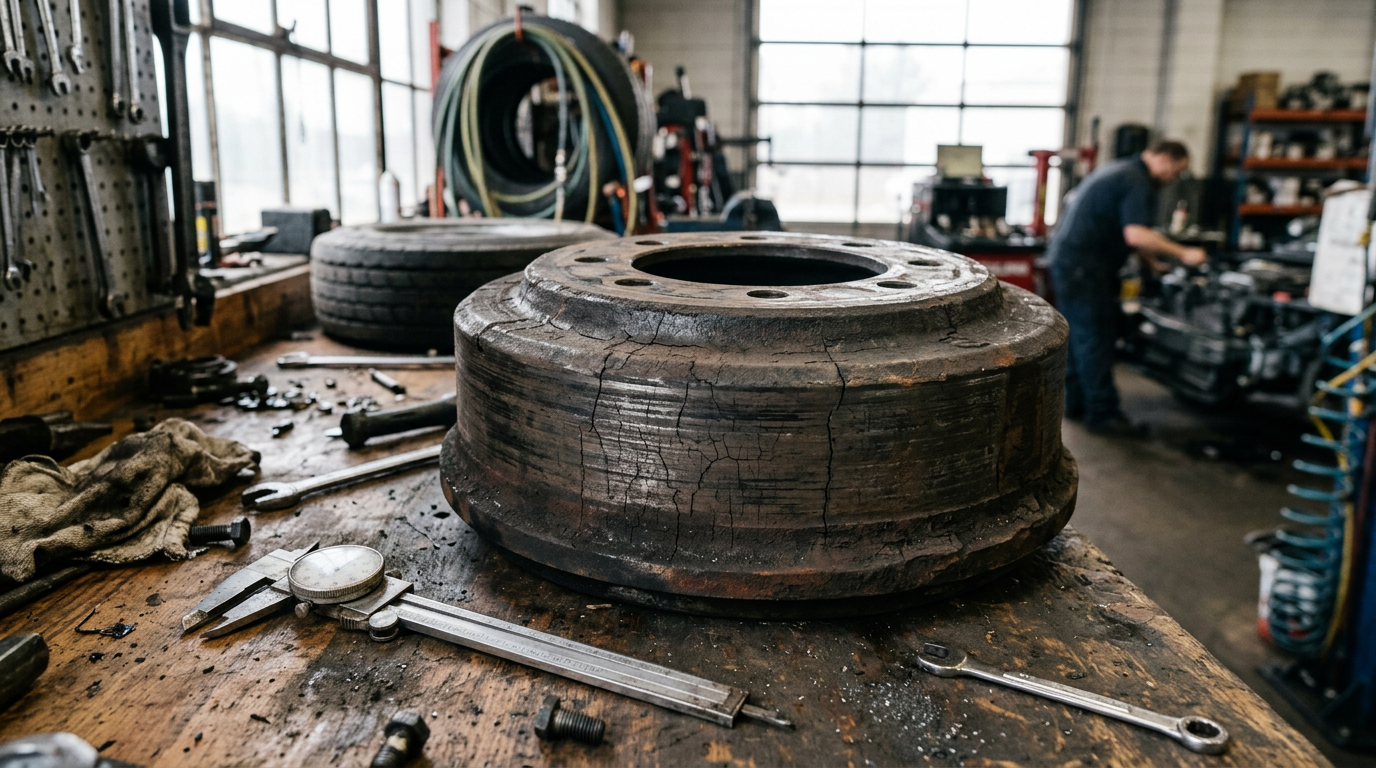
You feel it before you see it — a pulsing brake pedal, a low grinding hum on a downhill grade, or a driver complaint about the truck pulling to one side under braking. Nine times out of ten, that's a brake drum telling you it's done being ignored.
Drums take a beating. Heat cycles, road debris, worn linings dragging metal-on-metal — it all adds up to cracks, heat checking, and out-of-round wear that a DOT inspector will find in about ten seconds with a flashlight and a tape measure. And once they find it, that truck isn't leaving the scale until it's fixed.
This guide walks through what to look for, how to measure it, and how to decide whether you're turning that drum or replacing it outright. We'll use the Kenworth T800 as our reference point since it's a workhorse in a lot of fleets and sees the kind of duty cycles that chew drums up fast.
Why Drums Crack and Wear Out Early
Most drum failures trace back to heat. Every time your brake shoes clamp down, friction turns kinetic energy into heat, and that heat has to go somewhere. On long descents, in stop-and-go city routes, or with a driver riding the brakes instead of downshifting, the drum absorbs more heat than it can shed.
Repeated heat cycling causes heat checking — those spiderweb-fine cracks on the friction surface. Keep cycling it and those fine cracks grow into structural cracks that can propagate clean through the drum wall.
Other common causes:
- Worn or glazed brake linings running metal-to-metal
- Out-of-adjustment brakes causing uneven heat distribution
- Overloaded trailers or aggressive mountain grades
- Contaminated linings (oil, grease) causing erratic friction and hot spots
On a T800 running regional freight with a lot of stop-and-go, drums see more heat cycles per mile than a sleeper truck cruising the interstate — inspect accordingly.
What a DOT Inspector Is Looking For
Under FMCSA/CVSA out-of-service criteria, inspectors are checking drums for cracks that go all the way through the drum, or that run more than a certain length on the friction surface — exact limits are per OEM spec and the current CVSA out-of-service criteria book, so keep a copy in the truck.
They're also looking for:
- Heat checking severe enough to be more than surface crazing
- Drums worn beyond the maximum diameter stamped on the drum itself
- Obvious out-of-round wear that causes uneven shoe contact
- Any crack that intersects another crack, or runs from the friction surface to the outer edge
A drum that looks rough but doesn't meet the OOS threshold might still pass — but if it's headed that way, fix it now on your terms instead of on the side of the highway on the inspector's terms.
Measuring for Out-of-Round and Diameter Limits
You don't need a fancy shop to catch this early. Here's the basic process:
- Pull the wheel and hub assembly per your service manual
- Clean the drum face of dust and debris
- Use a drum micrometer to measure diameter at multiple points around the friction surface
- Compare readings — more than a few thousandths of variation point-to-point means the drum is going out-of-round
- Check total diameter against the maximum wear diameter cast or stamped into the drum
Every drum has that max diameter number right on it — don't guess, read it. Once a drum measures past that number, it's done, no matter how good it looks visually. On a T800 running heavy regional loads, it's smart to check drum diameter at every brake job, not just when something feels off.
Turn or Replace: Making the Call
Turning a drum removes light heat checking and minor scoring, restoring a clean friction surface — but it also removes material, and material you remove doesn't come back.
General rule of thumb:
- Turn it if heat checking is shallow, there are no through-cracks, and the drum has enough material left above minimum diameter to survive another full brake life cycle after machining
- Replace it if you see any crack running to the edge, if the drum is already near max diameter, or if it's been turned once already and is getting close to minimum thickness
When in doubt, replace. A drum is cheap insurance compared to a brake failure or an OOS violation that parks your truck. This is safety-critical wheel-end work — final call and installation should be signed off by a certified brake tech.
Preventing Premature Drum Failure
The best inspection is the one you never have to fail. A few habits keep drums lasting their full service life:
- Keep brake adjustment in spec so all wheel ends share the load evenly
- Train drivers to use engine braking on grades instead of riding the service brakes
- Replace linings before they glaze or wear down to metal
- Address any oil or grease contamination on brakes immediately — it changes how heat builds and dissipates
- Rotate drum inspections into every PM, not just annual DOT prep
Fleets running Kenworth T800s in vocational or regional service should treat drum inspection as routine maintenance, not a once-a-year scramble before an inspection sticker's due.
Quick answers
How deep can a crack be before a drum fails DOT inspection?
Any crack that goes all the way through the drum wall is an automatic out-of-service violation. Surface heat checking is judged by severity and length per current CVSA criteria, so when in doubt, have a certified tech make the call.
Can I turn a brake drum more than once?
You can, as long as each turn leaves enough material above the minimum diameter stamped on the drum. Once you're getting close to that minimum, it's time to replace rather than turn again.
What causes heat checking on brake drums?
Heat checking comes from repeated heat cycling — long downgrades, aggressive braking, or riding the brakes instead of downshifting. It shows up as fine cracks on the friction surface and gets worse the more it's ignored.
Parts for this job
Real products from the PartsNow catalog. Confirm fitment with Mike before ordering.

3030HNTRX
3030HNTRX - 3030 SPEC LONG SHAFT HNTRX BRAKE CHAMBER
$84.04

2424T
2424T - TYPE 2424 BRAKE CHAMBER COMPLE
$150.00

5-808330
5-808330 - BRAKE KIT FOR 4709DEN SHOES
$14.38

NB2001KIT-FRUE
NB2001KIT-FRUE - BRAKE SHOE KIT
$131.60

148.4719E.23
148.4719E.23 - BRAKE SHOE KIT
$94.61

3151503
3151503 - OIL BATH SEAL WEAR RING
$40.13

OTR10143
OTR10143 - AUTO SLACK ADJUSTER, 11/2-10DRIVE 5.5,6.5
$150.00

370036A
370036A - OIL BATH SEAL
$45.94
Still not sure what's wrong?
Mike — the free AI truck consultant — will walk through your exact symptoms and point you to the right part. No account, English or Spanish, 24/7.
Related truck: Kenworth T800— specs & parts
