Brake Drum Sizing: How to Read 16.5x7 and Pick the Right Drum
August 11, 2026 · PartsNow Guides
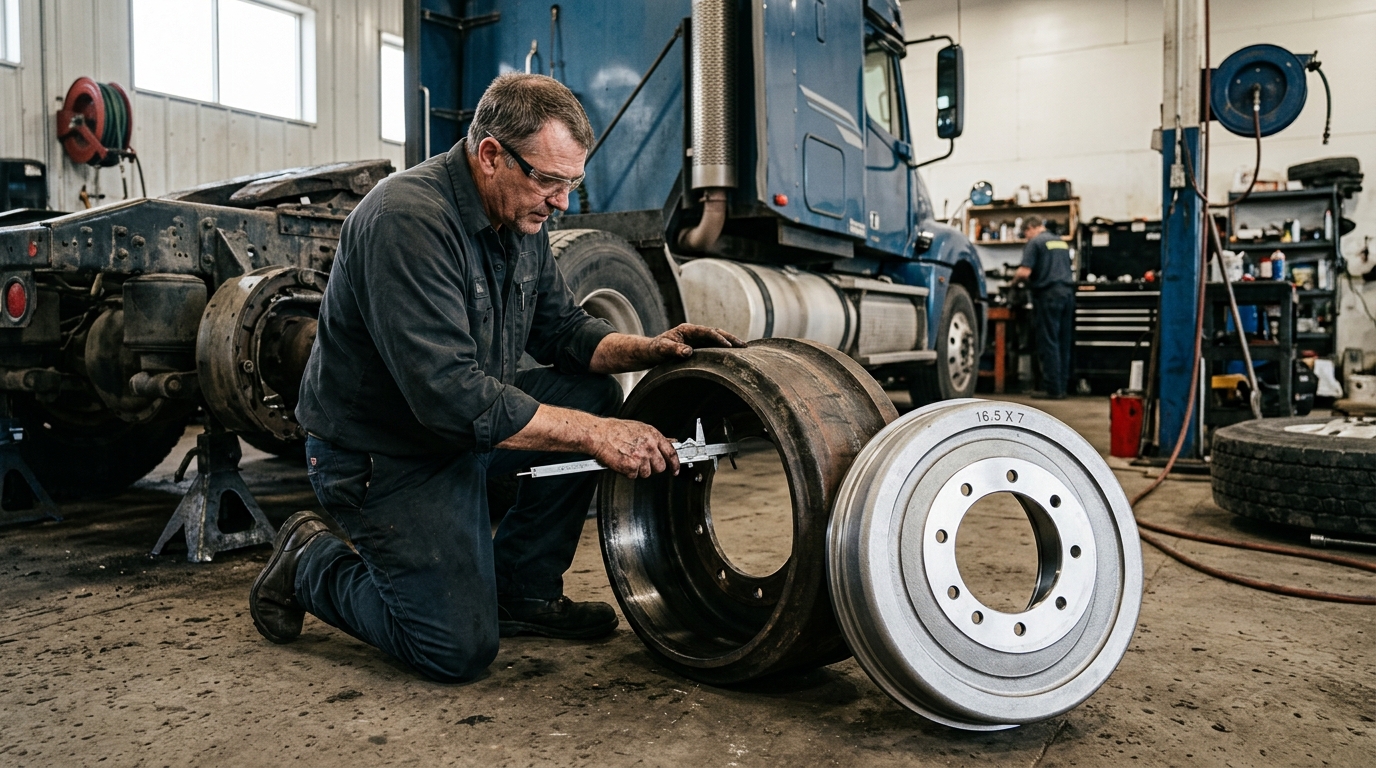
You pull the old drum off, toss it in the truck bed, and head to the counter expecting a quick swap. Two days later the new drum shows up and it doesn't seat right, or worse, it fits but rubs the shoes wrong because the width's off by an inch. Sound familiar? Brake drum numbers like 16.5x7 look simple until you're standing at the parts counter guessing.
The truth is most drum ordering mistakes aren't about finding the wrong brand — they're about not fully understanding what those numbers on the drum face actually mean. Diameter, width, bolt pattern, and load rating all have to line up with your axle, or you're back on the phone with the parts desk explaining why the new drum's sitting in a box in your shop.
This guide breaks down how to read drum sizing so you order it right the first time — no guessing, no return shipping, no truck sitting on jack stands longer than it needs to.
What "16.5 x 7" Actually Tells You
The first number — 16.5 in this example — is the drum's inside diameter in inches, measured across the braking surface where the shoes contact. The second number — 7 — is the width of that braking surface, also in inches.
So a 16.5x7 drum has a 16.5-inch friction diameter and a 7-inch-wide face. Change either number and you've got a different part, period. A 16.5x8.625 drum (common on steer axles with bigger brakes) won't interchange with a 16.5x7 even though the diameter matches — the shoes and hardware are sized for the width, and a mismatched drum will either rub, run hot, or wear unevenly.
Always check both numbers against your OEM spec or the number stamped on the old drum before ordering. Diameter alone isn't enough information.
Bolt Pattern and Hub Fit — The Part Everyone Skips
Diameter and width get all the attention, but the bolt pattern is where a lot of wrong orders happen. Drums have to match the hub's stud count and spacing, plus the pilot bore has to clear the hub properly.
Common heavy-duty patterns run 10-stud (10x285.75mm hub-piloted or stud-piloted) but there are variations depending on axle manufacturer and whether you're running steel or aluminum wheels. Hub-piloted and stud-piloted setups are not interchangeable — the drum's pilot hole and mounting surface are different even if the stud count matches.
Before ordering, physically count the studs and measure center-to-center spacing on adjacent studs, or better yet, pull the part number off the old drum or hub assembly. Don't assume because the last drum you bought fit a similar-looking truck that this one will too — axle suppliers vary by model year and spec package.
Weight Rating: Matching the Drum to the Axle Load
Drums are rated for a maximum axle weight, and this isn't a number you can eyeball. A drum built for a 20,000-lb axle isn't going to hold up long-term on a 23,000-lb rear tandem, even if it physically bolts on.
This rating ties directly to the drum's wall thickness and casting design — thicker castings dissipate heat better and resist cracking under sustained heavy braking, which matters a lot on grades and stop-and-go routes.
Check your truck's GAWR (Gross Axle Weight Rating) on the door-jamb data plate or axle tag, and match the replacement drum's rating to it — never downgrade. If you're not sure what your original equipment rating was, per OEM spec is your safest bet, and your parts supplier can cross-reference by VIN or axle model.
Reading Your Old Drum (or the Data Plate) Before You Order
The fastest way to avoid a return shipment is pulling numbers straight off the truck instead of guessing from memory.
- Look for casting numbers stamped or raised on the drum's outer face or hub area
- Check the axle tag riveted to the axle housing — it often lists drum size and rating
- Measure the braking surface diameter and width directly with a tape measure if numbers are worn off
- Count studs and measure bolt circle spacing
- Note whether it's a front (steer) or rear (drive/trailer) application — they're often different sizes
If the old drum is too worn or damaged to read, your VIN and axle model number (found on the axle housing tag) will let a parts counter cross-reference the correct spec faster than trial and error.
Common Ordering Mistakes That Cost You a Trip
A few patterns show up over and over at the counter:
- Assuming front and rear are identical — many trucks run different drum sizes axle to axle
- Ignoring width and only checking diameter, then wondering why the shoes don't seat
- Mixing hub-piloted and stud-piloted drums on the same axle
- Buying based on "what fit last time" without confirming spec changes between model years
- Skipping the weight rating check and installing an under-rated drum on a heavier-spec truck
Any one of these means a drum that either doesn't go on, or goes on and fails prematurely. Double-checking the numbers before you order costs five minutes. Fixing a wrong install costs a lot more downtime.
Quick answers
What does 16.5x7 mean on a brake drum?
The 16.5 is the inside braking diameter in inches, and the 7 is the width of the friction surface in inches. Both numbers have to match your axle spec — changing either one means it's a different part.
Can I use a 16.5x8 drum instead of a 16.5x7?
No. Even though the diameter matches, the wider drum won't seat correctly with 7-inch shoes and hardware, and it can cause uneven wear or rubbing. Always match both diameter and width exactly.
How do I find my truck's bolt pattern for a drum order?
Count the wheel studs and measure the center-to-center spacing between adjacent studs, or pull the number straight off the old drum or axle tag. Hub-piloted and stud-piloted setups look similar but aren't interchangeable.
Do front and rear drums come in different sizes?
Often yes — steer axles frequently run a different width or diameter than drive or trailer axles on the same truck. Never assume they match without checking the spec on each axle separately.
What happens if I install the wrong size or rating drum?
Best case it won't fit and you'll know right away. Worst case an under-rated or mismatched drum can overheat, crack, or fail under load — this is safety-critical wheel-end work and should be verified against OEM spec and signed off by a certified tech before the truck goes back on the road.
Parts for this job
Real products from the PartsNow catalog. Confirm fitment with Mike before ordering.

3030HNTRX
3030HNTRX - 3030 SPEC LONG SHAFT HNTRX BRAKE CHAMBER
$84.04

2424T
2424T - TYPE 2424 BRAKE CHAMBER COMPLE
$150.00

5-808330
5-808330 - BRAKE KIT FOR 4709DEN SHOES
$14.38

NB2001KIT-FRUE
NB2001KIT-FRUE - BRAKE SHOE KIT
$131.60

148.4719E.23
148.4719E.23 - BRAKE SHOE KIT
$94.61

OTR10143
OTR10143 - AUTO SLACK ADJUSTER, 11/2-10DRIVE 5.5,6.5
$150.00

370036A
370036A - OIL BATH SEAL
$45.94

348-4195
348-4195 - HUB CAP (SENTINAL LARGE DIAM)
$51.88
Still not sure what's wrong?
Mike — the free AI truck consultant — will walk through your exact symptoms and point you to the right part. No account, English or Spanish, 24/7.
