Preventive Maintenance Parts Checklist for Owner-Operators
September 15, 2026 · PartsNow Guides
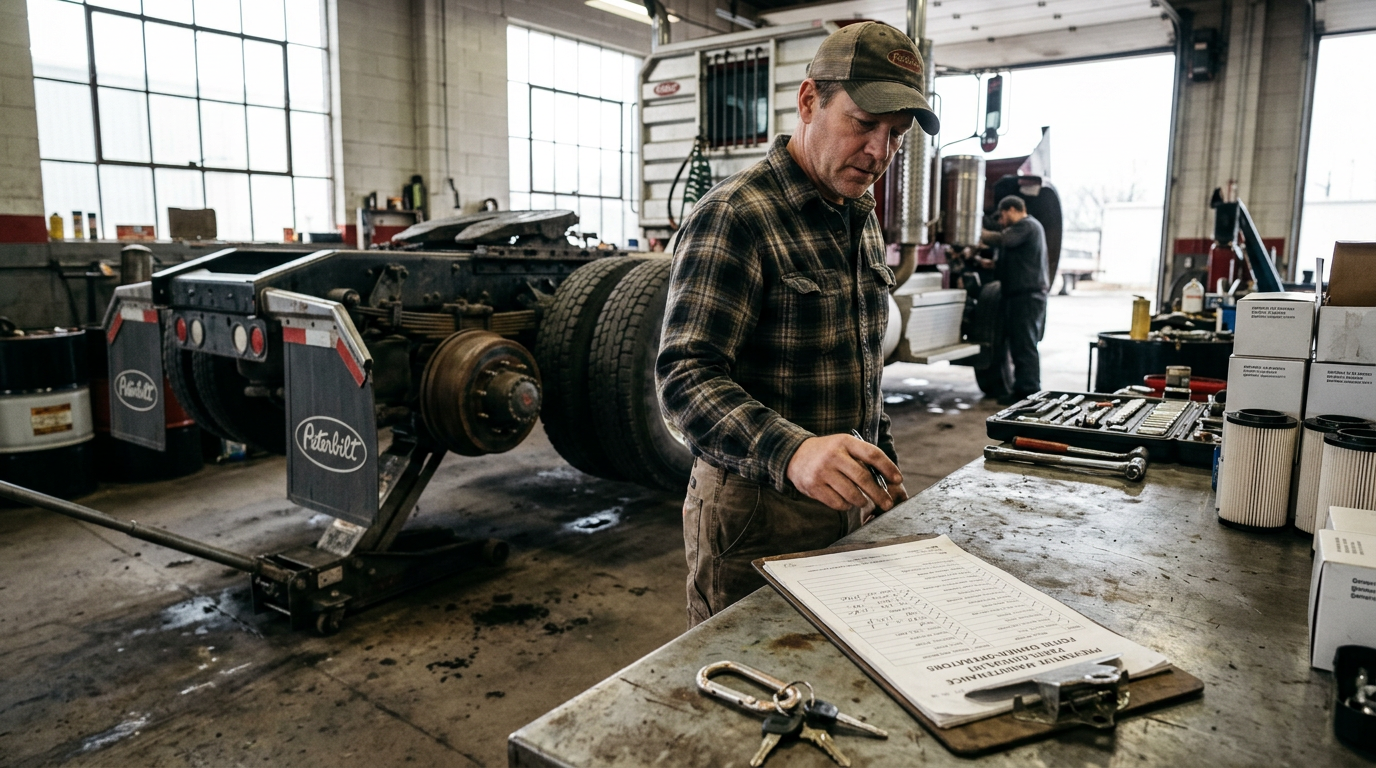
You know the feeling. You're two hours from the terminal, the engine light pops on, and now you're looking at a tow bill that eats your whole week's profit. Most of those roadside breakdowns didn't come out of nowhere — they came from a filter or fluid change that got pushed back one trip too many.
Running your own truck means you're the fleet manager, the dispatcher, and the shop foreman all rolled into one guy. Nobody's going to remind you the fuel filters are overdue. That's on you.
This checklist isn't fancy. It's the same stuff a good shop foreman keeps taped inside a filing cabinet door — the parts and fluids that, if you stay ahead of them, keep you rolling instead of parked at a truck stop waiting on roadside service.
Engine Filtration: Oil, Fuel, and Air
This is the backbone of your PM program. Skip these and you're inviting a breakdown or an early engine rebuild.
- Engine oil filter — change with every oil service, per OEM spec interval
- Fuel filters (primary and secondary) — dirty fuel filters starve the injectors and can leave you stranded; change on schedule, not just when you notice a power loss
- Air filter — check the restriction gauge regularly; don't wait for the dash light, a clogged filter kills fuel economy long before it triggers a warning
- Coolant filter (if your engine uses one) — protects the water pump and liner from corrosion
Keep a spare set of these in the truck. A $40 fuel filter swapped in a parking lot beats a $1,200 tow because you got stuck 300 miles from the nearest dealer.
Fluids That Don't Get a Second Chance
Fluids don't fail gracefully — by the time you see a problem, the damage is usually done.
- Engine oil — follow OEM-recommended interval and viscosity; don't stretch it based on "it still looks clean"
- Coolant/antifreeze — check level and condition every PM; low coolant on a long grade is how heads get warped
- DEF (diesel exhaust fluid) — always keep it topped off; running dry derates your engine and can shut you down on the road
- Transmission fluid — check level and condition, especially before long hauls in hot weather
- Differential/gear oil — inspect for metal contamination at each service; it's cheap insurance against a rear-end failure
Write the fluid change dates on a sticker under the hood. It takes ten seconds and saves you from guessing at 2 a.m.
Wear Items That Cause Roadside Failures
These parts don't have a fixed mileage life — they wear based on load, road conditions, and duty cycle. Inspect them every PM, not just when something feels off.
- Belts — check for cracking, glazing, or fraying; a snapped serpentine belt can take out your charging system and cooling fan
- Hoses — squeeze-test coolant and fuel hoses for soft spots or swelling
- Wiper blades — cheap, easy to forget, and a legal issue if they're shredded during a DOT inspection
- Battery terminals and hold-downs — corrosion here causes no-start calls more often than a dead battery itself
- Air dryer cartridge — a saturated cartridge sends moisture into your air system, which becomes a brake problem in cold weather
None of this is glamorous work, but it's the stuff that keeps you from calling dispatch with bad news.
Wheel-End and Brake Components — Inspect Every PM
This is where PM crosses into safety-critical territory. Brake pads/shoes, brake drums or rotors, wheel seals, hub oil, and air brake components all need regular inspection — and any adjustment, replacement, or repair on these systems needs to be signed off by a certified tech.
At minimum, check:
- Brake lining thickness — per OEM spec, replace before you're at minimum
- Wheel seals — look for oil weeping around the hub; a failed seal can lead to a dry wheel-end and a fire
- Hub oil level and condition — cloudy or metallic oil means something's wearing internally
- Air lines and fittings — cracked lines cause air loss and can trigger an out-of-service violation at a scale
Don't DIY brake or wheel-end repairs unless you're a certified tech. This is the one category where cutting a corner can cost more than money.
Building a PM Schedule You'll Actually Follow
The best checklist in the world doesn't help if it lives in a drawer. Owner-operators who stay out of the shop treat PM like a load — something with a deadline.
- Set mileage or time triggers for each category above (oil, fuel filters, air filter, fluids, wear items)
- Keep a logbook or app entry for every service — it doubles as proof for DOT inspections and resale value
- Stock a small parts kit in the truck: filters, belts, a spare hose, wiper blades
- Build PM into your route planning — schedule it during a scheduled layover, not when something's already failing
The goal isn't perfection. It's staying ahead of the failures that cost you a day, a load, or worse — a safety incident on the road.
Quick answers
How often should I change fuel filters on my truck?
Follow the OEM-recommended interval for your engine, but keep a spare set on hand since dirty fuel or a bad batch at a truck stop can clog them early. If you notice power loss or hard starting before the scheduled change, swap them sooner.
What PM items get checked at a DOT inspection?
Inspectors focus heavily on brakes, tires, lights, wipers, and air system components — all wear items covered in a good PM checklist. Staying current on these reduces your odds of an out-of-service violation.
Can I do my own brake inspections as an owner-operator?
You can visually inspect lining thickness and look for obvious wear, but any adjustment, replacement, or repair work on brakes or wheel-ends should be signed off by a certified tech. This is safety-critical work where mistakes have serious consequences.
How do I know if my air dryer cartridge needs replacing?
If you're seeing moisture in your air tanks or slow air buildup, especially in cold weather, the cartridge is likely saturated. Replace it per OEM spec interval rather than waiting for a failure that could affect your brakes.
What's a reasonable PM parts kit to carry in the truck?
Most owner-operators carry a spare fuel filter set, an air filter, a serpentine belt, a coolant hose, wiper blades, and basic fluids like oil and coolant. It's cheap insurance against a roadside breakdown turning into a lost day.
Parts for this job
Real products from the PartsNow catalog. Confirm fitment with Mike before ordering.


Still not sure what's wrong?
Mike — the free AI truck consultant — will walk through your exact symptoms and point you to the right part. No account, English or Spanish, 24/7.
