Freightliner Cascadia Filter Guide: Oil, Fuel and Air
August 25, 2026 · PartsNow Guides
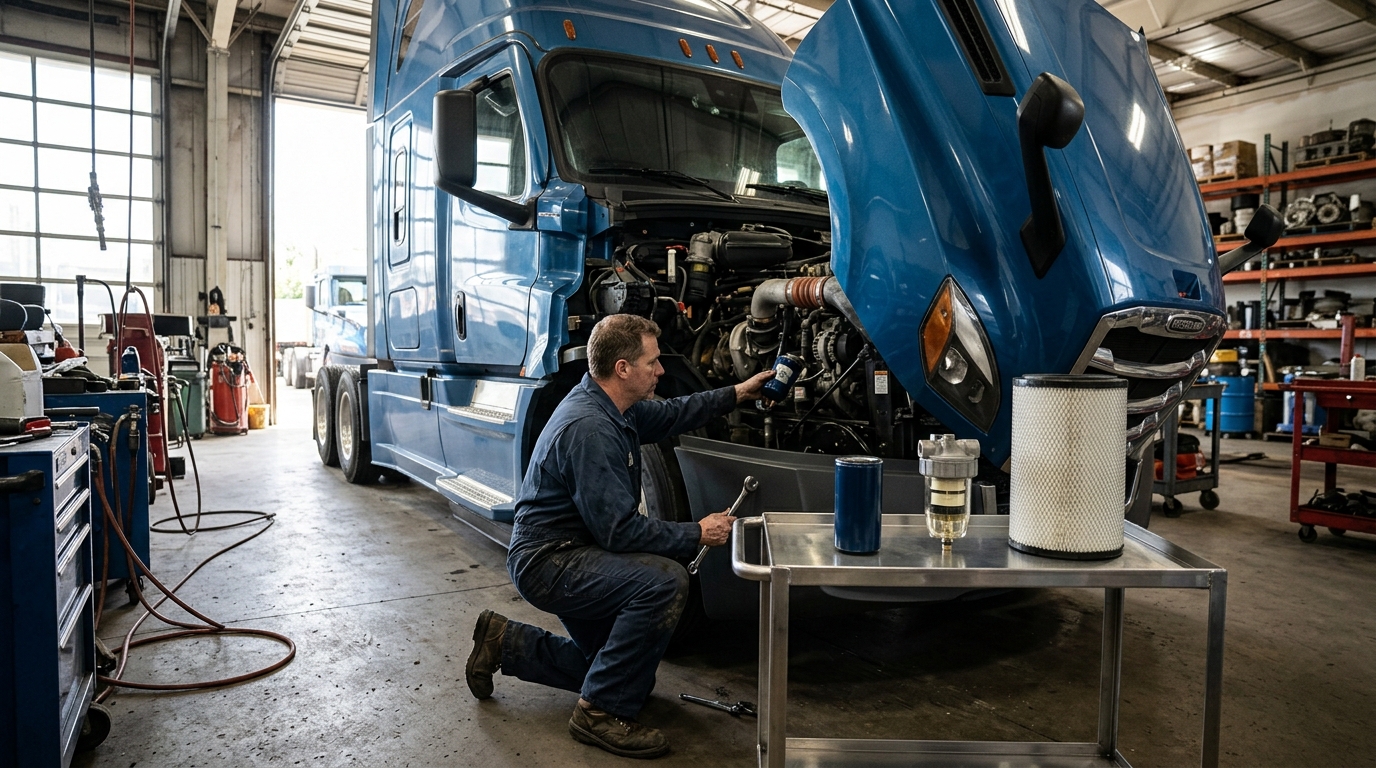
If you've ever limped a Cascadia into the yard because it started stumbling on a hill, chances are a filter was the real culprit long before anything expensive failed. Fuel starvation, oil pressure warnings, and turbo lag all trace back to the same cheap parts that guys put off changing because "it's still got some life left in it."
The Cascadia's filtration setup isn't complicated, but it does vary depending on whether you're running a Detroit DD13/DD15 or a Cummins X15, and depending on model year the housings and access points move around. This guide lays out what filters live where, how long they actually last in real service, and what it costs you in downtime if you ignore them.
We're not going to give you exact part numbers here — cross-reference those against your VIN and engine code with your parts supplier, since running the wrong filter can cost you more than the part itself. What we will give you is the maintenance logic so you know what to ask for and why.
Engine Oil Filters: Detroit vs Cummins Setups
Cascadias built with a Detroit DD13 or DD15 run a spin-on or cartridge-style oil filter depending on year, usually mounted low on the engine block for easy drain access. Cummins X15 setups typically use a different cartridge housing entirely — don't assume the DD filter cross-references, because it usually doesn't.
Most fleets change oil filters at every oil change, full stop. There's no good reason to run a filter longer than the oil it's cleaning. If you're on extended-drain synthetic, follow whatever interval your oil analysis program supports — but the filter still comes off every time the pan gets drained.
Watch for a bypass valve that's stuck open on high-mileage engines; it'll let unfiltered oil circulate under high pressure without throwing a code. If you're seeing metal in your oil samples but the filter looks clean, that's a red flag worth a second look from your tech.
Fuel Filtration: Primary and Secondary Stages
The Cascadia runs a two-stage fuel filtration system: a primary fuel filter/water separator (usually mounted on the frame rail or firewall) that pulls out water and coarse contaminants, and a secondary fuel filter closer to the engine that catches finer particulate before fuel hits the injectors.
- Drain the water separator daily, especially in humid climates or if you fuel from questionable sources
- Change the primary filter per OEM interval — don't stretch it just because it looks clear
- The secondary filter change often lines up with your oil service interval, but confirm against your specific engine's maintenance schedule
A clogged secondary filter on a DD15 will show up as power loss under load and rough idle before it throws a hard fault. If you're seeing those symptoms, don't chase electronics first — check fuel filtration.
Air Intake: Engine and Cabin Filters
The engine air filter on a Cascadia sits in a housing up front near the grille, feeding the turbo. A dirty air filter chokes the turbo's ability to make boost, which tanks fuel economy and can trigger derates on newer emissions-compliant engines.
Most Cascadias have a restriction gauge on the air filter housing — yellow zone means keep an eye on it, red means change it now. Don't just go by mileage alone; dusty routes (gravel, ag, construction sites) will load a filter up way faster than highway miles.
The cabin air filter is a separate, smaller filter behind the glovebox or under the dash depending on trim. It doesn't affect engine performance, but a clogged one kills your HVAC output and can smell musty — annoying on a long haul but not safety-critical.
Recommended Change Intervals
These are general guidelines — always confirm against your specific engine's OEM maintenance schedule since Detroit and Cummins intervals differ:
- Oil filter — every oil change, no exceptions
- Primary fuel filter/water separator — drain water daily, replace per OEM mileage interval
- Secondary fuel filter — typically tied to oil service intervals, verify against engine spec
- Engine air filter — watch the restriction gauge, don't run past yellow if you can avoid it
- Cabin air filter — once or twice a year depending on route dust exposure
Severe service — short hauls, dusty routes, extreme cold with lots of idling — pushes all these intervals shorter. If your truck lives that kind of life, don't run stock intervals; build a tighter PM schedule around it.
Quick answers
How often should I change the oil filter on a Freightliner Cascadia?
Change the oil filter every time you change the oil — there's no benefit to reusing a filter on fresh oil. Follow your specific DD13/DD15 or Cummins X15 oil change interval per OEM spec.
What fuel filter does a Cascadia use?
It depends on engine and model year — Cascadias run a primary fuel filter/water separator plus a secondary filter near the engine, and Detroit vs Cummins setups use different housings. Cross-reference by VIN and engine code with your parts supplier rather than guessing.
Where is the cabin air filter on a Freightliner Cascadia?
It's typically located behind the glovebox or under the dash on the passenger side, depending on trim level. It's a quick DIY swap and doesn't require a certified tech.
Can I keep driving if my water separator has water in it?
You can drain it and keep moving short-term, but running with water in the fuel system risks injector damage and corrosion over time. Drain it daily and don't let it become a habit to ignore.
How do I know if my Cascadia's air filter needs changing?
Check the restriction gauge on the air filter housing — yellow means monitor it, red means change it now. Don't rely on mileage alone, especially if you're running dusty or gravel routes.
Parts for this job
Real products from the PartsNow catalog. Confirm fitment with Mike before ordering.

2234788PE
2234788PE - OIL FILTER ELEMENT
$58.84

LF3313
LF3313 - OIL FILTER LF3313
$7.50

FS19765FLG
FS19765FLG - FUEL FILTER SEPARATOR
$32.95

23530645
23530645 - FUEL ELEMENT FILTER
$63.31

K37-1029
K37-1029 - FUEL FILTER ELEMENT
$66.14

243009
243009 - AIR COMPRESSOR FILTER
$20.63

P621725
P621725 - AIR CLEANER FILTER
$273.82

W2084001
W2084001 - REC IRC AIR FILTER
$36.92
Still not sure what's wrong?
Mike — the free AI truck consultant — will walk through your exact symptoms and point you to the right part. No account, English or Spanish, 24/7.
Related truck: Freightliner Cascadia— specs & parts
