Cummins X15 Oil Filter and Filtration Guide
August 20, 2026 · PartsNow Guides
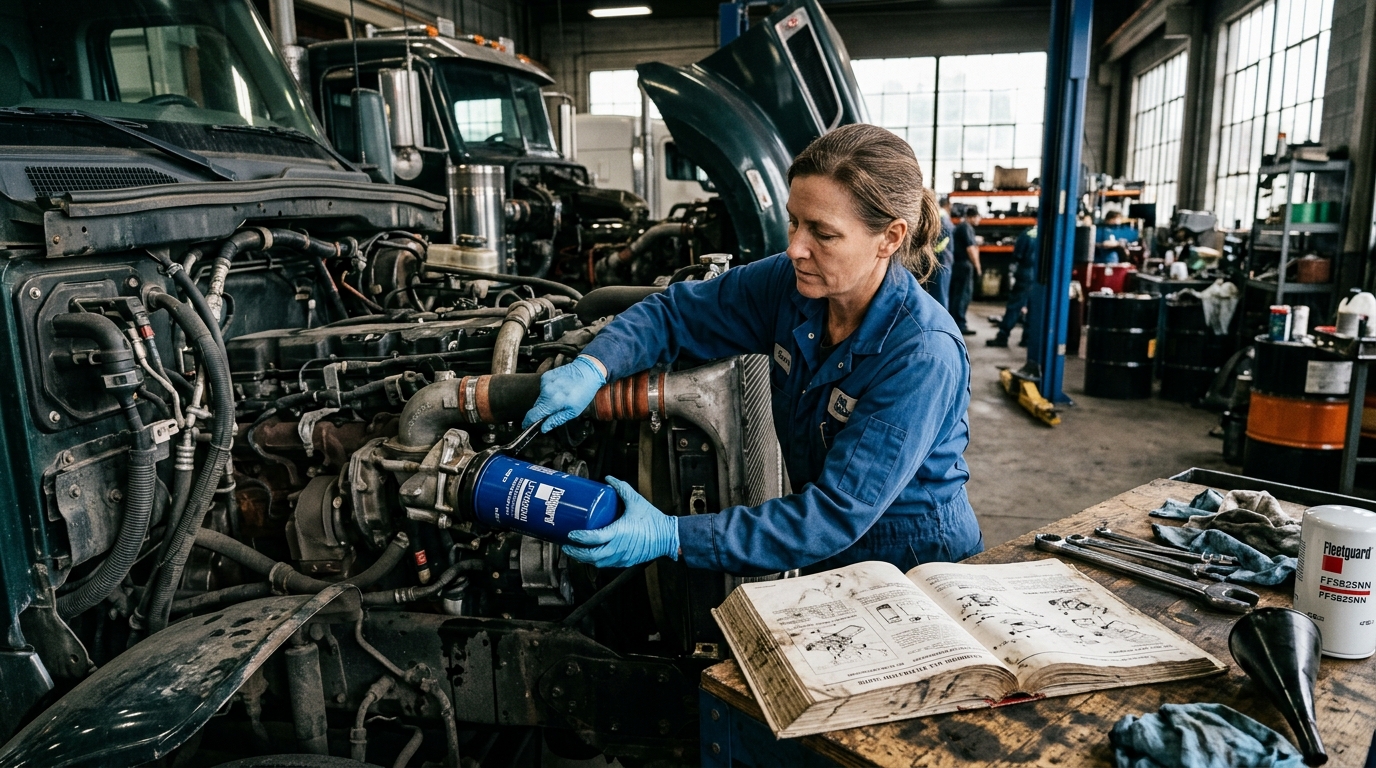
If you're chasing a low oil pressure light, a fuel gauge that won't stop dropping, or coolant that looks like rust water, odds are good the answer starts with a filter — not a rebuild. The X15 is a good engine, but it's picky about what goes through it, and the filtration system is doing more work than most guys give it credit for.
We see the same mistakes in shops all over the country: guys running the wrong micron rating fuel filter to save a few bucks, skipping the coolant filter because "it's just a filter," or stretching oil change intervals past what the oil analysis actually supports. Every one of those decisions eventually shows up on a repair invoice with a lot more zeros than a filter kit would've cost.
This guide walks through the full filtration picture on the X15 — oil, fuel, and coolant — so you know what you're buying, why it matters, and when to change it.
Oil Filtration: Full-Flow and Bypass
The X15 runs a full-flow spin-on oil filter as the primary line of defense, catching the big stuff before it circulates through bearings and the turbo. Some X15 configurations also use a bypass filter element that polishes a smaller percentage of oil flow at a finer micron rating — that's the one guys forget about because it's not screaming at you on the dash.
When you're buying replacement filters, match the OEM part number or a filter rated to the same micron efficiency and burst pressure. Cheap knockoff filters with weak media or undersized bypass valves are a common cause of filter collapse under cold start pressure spikes — and that sends unfiltered oil straight to your bearings.
- Check the filter housing gasket every change, not just the element
- Pre-fill the filter with clean oil before installing to cut down on dry-start wear
- Torque the filter per OEM spec — overtightening spin-ons is as bad as leaving them loose
Don't guess on part numbers. Cross-reference against your engine's serial number and build sheet, because X15 filtration hardware has changed across model years.
Fuel Filtration: Primary, Secondary, and Water-in-Fuel
The X15 fuel system typically runs a primary fuel filter/water separator ahead of the pump and a secondary fuel filter right before the injectors. The secondary is the finer of the two, protecting the high-pressure common rail components from particulate that would otherwise chew up injectors fast.
Water is the real enemy here. Most X15 setups have a water-in-fuel (WIF) sensor in the primary housing — if that light comes on, drain the bowl immediately. Running fuel with water contamination through a common rail system is one of the fastest ways to turn a filter problem into an injector replacement bill.
- Drain the water separator daily if you're running in humid climates or buying fuel from questionable sources
- Replace both primary and secondary filters together — mixing old and new creates uneven flow resistance
- Prime the system per OEM procedure after any fuel filter change to avoid air in the rail
Use OEM or filtration-matched aftermarket parts rated for common rail pressure. Fuel filters aren't a place to cut corners.
Coolant Filtration and Chemical Additives
Not every X15 install runs a coolant filter, but where they're specified — often paired with a coolant filtration/additive system — skipping it is asking for trouble. These filters do double duty: they trap particulate and, in some setups, release supplemental coolant additive (SCA) to fight cavitation erosion on wet-sleeve style cooling passages.
If your engine spec calls for one, don't run it dry or skip replacement to save time at a PM interval. Coolant filter neglect shows up months later as unexplained coolant loss, cavitation pitting, or a coolant system that won't hold additive levels no matter how much you dose it.
- Check coolant additive levels with test strips, not just by eye
- Replace the filter element per OEM interval, not "when it looks dirty" — you can't see cavitation protection
- Flag any coolant system work involving pressure testing or cavitation damage inspection for a certified tech, especially if you suspect sleeve or liner erosion
Service Intervals and Part Number Selection
Service intervals on the X15 aren't one-size-fits-all — they depend on duty cycle, fuel quality, oil analysis results, and whether you're running extended-life filtration. That said, most fleets set baseline intervals off Cummins' published maintenance schedule and adjust from there using oil sample data.
- Pull an oil sample at every change and track trends, not just single results
- Match filter part numbers to your specific X15 build — engine serial number ranges matter for filtration hardware
- Keep records of which filter brand and part number you ran if you're troubleshooting a recurring issue
When sourcing parts, cross-reference by OEM part number first, then confirm any aftermarket equivalent meets the same micron rating, burst pressure, and bypass valve spec. A filter that fits the housing isn't automatically a filter that protects the engine the same way. If you're not sure which spec applies to your engine's build, check with a parts specialist or dealer before installing — guessing here is expensive.
Quick answers
How often should I change the oil filter on a Cummins X15?
Change intervals depend on duty cycle and oil analysis results, so follow the OEM maintenance schedule as a baseline and adjust based on your oil sample trends. Don't stretch intervals just because the oil looks clean — particulate contamination isn't visible to the eye.
Can I use an aftermarket oil filter on my X15 instead of the OEM one?
You can, as long as the aftermarket filter matches the OEM micron rating, burst pressure, and bypass valve spec for your engine's build. Cheap filters with weak bypass valves can collapse under cold-start pressure and send unfiltered oil through the engine.
What does the water-in-fuel light mean on an X15?
It means your primary fuel filter/water separator has detected water in the fuel bowl, and you need to drain it right away. Running contaminated fuel through the common rail system risks expensive injector damage.
Does the Cummins X15 have a coolant filter?
Some X15 installations use a coolant filter, often tied to a supplemental coolant additive system, but not every build spec includes one. Check your engine's specific configuration and maintenance schedule to confirm.
Why does my X15 keep losing oil pressure after a filter change?
Low oil pressure right after a filter change is often caused by an incorrectly torqued filter, a damaged gasket, or a filter that wasn't pre-filled and caused a dry start. If pressure doesn't recover after a re-check, have a certified tech inspect the oil pump and bearings before running the engine further.
Parts for this job
Real products from the PartsNow catalog. Confirm fitment with Mike before ordering.

2234788PE
2234788PE - OIL FILTER ELEMENT
$58.84

LF3313
LF3313 - OIL FILTER LF3313
$7.50

15W40 OIL
15W40 OIL - 15W40 OIL (ROTELLA) GAL JUG
$25.00

FS19765FLG
FS19765FLG - FUEL FILTER SEPARATOR
$32.95

23530645
23530645 - FUEL ELEMENT FILTER
$63.31

K37-1029
K37-1029 - FUEL FILTER ELEMENT
$66.14

243009
243009 - AIR COMPRESSOR FILTER
$20.63

P621725
P621725 - AIR CLEANER FILTER
$273.82
Still not sure what's wrong?
Mike — the free AI truck consultant — will walk through your exact symptoms and point you to the right part. No account, English or Spanish, 24/7.
