Fuel Water Separator Failure: Diagnosing Stalling & Contamination
November 3, 2026 · PartsNow Guides
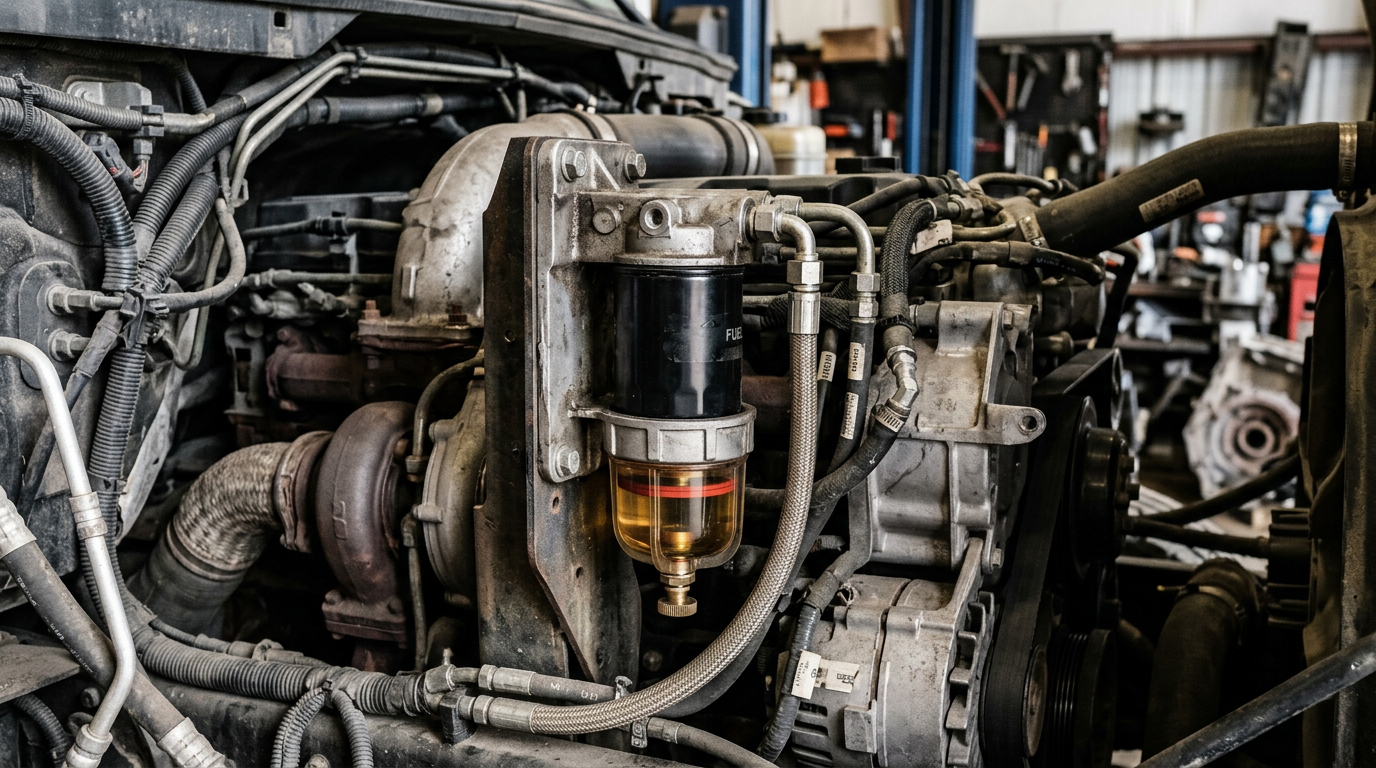
You're rolling down the interstate and the truck starts missing like it's got a bad tooth. Power drops, maybe it stalls at a light, and when you finally get it restarted it runs rough for a mile before smoothing out. Nine times out of ten in diesel trucks, that's your fuel water separator telling you it's had enough.
Water in diesel fuel is the enemy — it causes corrosion, microbial growth (that black slime you've probably scraped out of a bowl before), and it flat out won't combust right. Your separator's job is to catch that water before it reaches the injection pump and injectors, but when it's full, clogged, or the element's shot, it stops doing its job and starts causing the exact problems it was built to prevent.
This guide walks through how to recognize separator failure, how to drain and test it properly, and when it's time to swap the whole unit instead of babying it along.
Common Symptoms of a Failing Water Separator
The signs usually show up gradually before they hit all at once.
- Hard starting, especially in cold weather or after sitting overnight
- Loss of power under load, like climbing a grade or pulling a loaded trailer
- Stalling at idle or during deceleration
- Rough running or misfire-like symptoms that come and go
- Visible water in the sight bowl or drain, sometimes with sediment or a milky look
- Dash warning light if your truck has a water-in-fuel sensor
If you're seeing more than one of these together, don't just blame injectors or the lift pump right away. Check the separator first — it's cheaper and faster to rule out.
A lot of guys chase expensive fixes (injector pump rebuilds, fuel pump replacement) when the real culprit was a separator full of water and sediment restricting flow. Start simple, save yourself the headache.
Why Water Gets Into Your Fuel System
Water doesn't just appear — it gets in through a few common paths.
- Condensation in the tank, especially with partial fills and big temperature swings
- Contaminated fuel at the pump, more common than people think at some truck stops
- Bad fuel cap seals letting moisture in during rain or wash-downs
- Microbial growth feeding on the fuel-water interface, creating sludge that clogs filters fast
Trucks that sit for extended periods — think seasonal equipment or spare units — are especially prone to this. Condensation builds up overnight as temps drop, and if nobody's draining the separator regularly, water accumulates until it starts causing real problems.
Keeping your tank topped off reduces the airspace where condensation forms. It's a simple habit that cuts down on a lot of separator headaches down the road.
How to Drain and Test Your Fuel Water Separator
Most separators have a drain valve at the bottom — some manual, some with a push-button or petcock style.
- Place a clean container under the drain
- Open the valve slowly and let fluid flow until you see clear diesel (no water, no sediment)
- Close the valve per OEM spec — don't overtighten
- Check the sight bowl if equipped; water will settle at the bottom and look distinctly separate from fuel
If you're draining water repeatedly in short intervals, that's a red flag. Either you've got a serious contamination source upstream, or the separator element itself is failing and letting water pass through instead of catching it.
A water-in-fuel test strip or sensor check can confirm what you're seeing visually. If your separator has a WIF sensor and it's throwing a code, trust it — don't assume it's a faulty sensor until you've physically verified with a drain and visual check.
When to Replace the Element or Whole Unit
Draining helps short-term, but it's not a permanent fix if the filter element is clogged or deteriorating.
- Replace the element per OEM service interval, typically tied to mileage or hours — check your manual
- If you're seeing power loss or stalling even after draining, the element is likely restricted and needs changing now, not at the next scheduled service
- Inspect the housing and seals for cracks or degradation, especially on older units
- If the separator bowl won't hold a seal anymore or the drain valve is stripped, replace the whole assembly rather than patching it
Don't try to stretch an element past its service life to save a few bucks. A clogged element restricts fuel flow just like water does, and the stalling symptoms will be nearly identical. When in doubt, swap it — it's cheap insurance against a roadside breakdown.
Preventing Future Contamination Issues
A little routine maintenance keeps this problem from becoming a recurring headache.
- Drain the separator on a regular schedule, not just when symptoms show up — weekly is a good habit for most fleets
- Keep the tank full when possible to minimize condensation space
- Buy fuel from reputable stops and avoid sitting too long on nearly empty tanks
- Check fuel cap seals during routine inspections
- Log drain findings — if water shows up more often than usual, investigate the source before it gets worse
If you're running in cold climates, pay extra attention during seasonal transitions. Temperature swings are when condensation hits hardest, and a separator that's been fine all summer can suddenly start giving you trouble in October.
This isn't glamorous work, but it's the kind of five-minute check that saves you a tow truck call down the line.
Quick answers
Why does my diesel truck stall when I slow down or idle?
This is a classic sign of water contamination in your fuel water separator restricting fuel flow to the engine. Drain the separator and check for water or sediment before assuming it's an injector or sensor problem.
How often should I drain my fuel water separator?
Most owner-operators drain weekly as routine maintenance, but check per OEM spec for your specific unit. If you're seeing water more frequently than that, investigate your fuel source or tank condensation issue.
Can a clogged fuel filter cause hard starting?
Yes, a clogged separator element restricts fuel flow just like water contamination does, leading to hard starts, especially in cold weather. If draining doesn't resolve the issue, the element likely needs replacement.
What does water in diesel fuel look like in the separator bowl?
Water settles at the bottom of the sight bowl and appears cloudy or distinctly separate from the clear diesel above it. Sometimes you'll also see dark sediment or a milky appearance if microbial growth is present.
Is it safe to keep driving with a water-in-fuel warning light on?
You can usually limp to a safe spot, but don't ignore it — continued driving can push contaminated fuel further into the injection system and cause expensive damage. Pull over, drain the separator, and verify before continuing your route.
Parts for this job
Real products from the PartsNow catalog. Confirm fitment with Mike before ordering.


Still not sure what's wrong?
Mike — the free AI truck consultant — will walk through your exact symptoms and point you to the right part. No account, English or Spanish, 24/7.
