Heavy-Duty Air Filter: How to Choose & When to Replace It
August 13, 2026 · PartsNow Guides
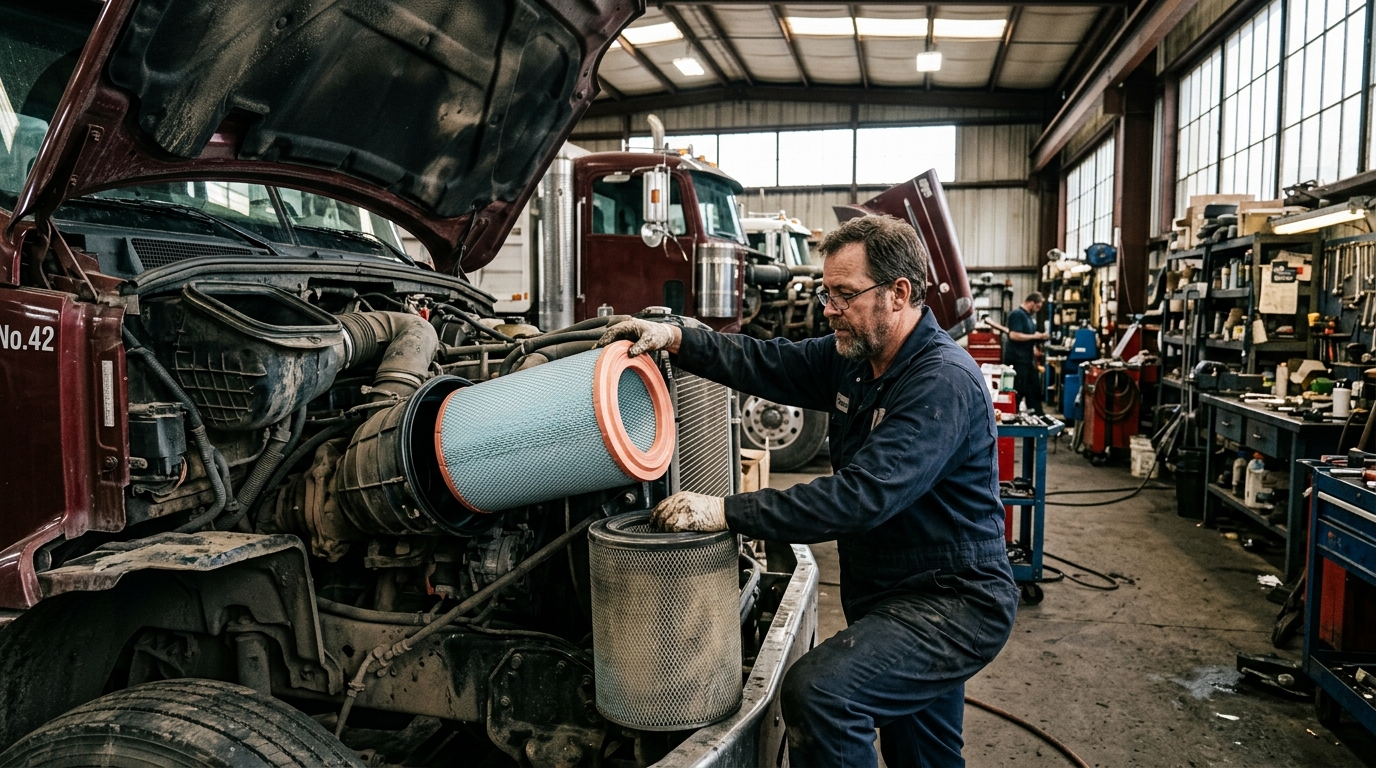
If you're chasing a power loss or watching fuel economy slide for no good reason, don't overlook the air filter. A clogged element starves the engine of air, the ECU dumps in more fuel to compensate, and you're burning diesel to move less freight. It's one of the cheapest parts on the truck and one of the most commonly mismanaged.
The mistake most shops make is running filters on a calendar schedule instead of watching the restriction gauge. A truck running gravel roads in Texas dust eats a filter in a fraction of the miles a highway unit sees. Change too early and you're throwing away good filter life. Change too late and you're costing horsepower, fuel, and eventually engine wear from dirt getting past a filter that's failed.
This guide covers picking the right air filter for your application, reading the restriction indicator correctly, and setting intervals that actually match your duty cycle instead of guessing.
Choosing the Right Air Filter for Your Truck
Start with OEM fitment — the filter housing, seal design, and micron rating are matched to your engine's airflow needs by design. Don't assume all filters marked for your make/model perform the same.
For primary filters, stick with a reputable brand that meets or exceeds OEM spec for filtration efficiency and airflow restriction. Cheap off-brand filters can pass more dirt or restrict airflow more at the same dirt load — both bad outcomes.
If you're running a two-stage air cleaner (primary + secondary), don't skip the secondary filter's job. It's your backup if the primary fails or gets torn during a change — not a maintenance item you swap on the same interval as the primary. Most secondaries only get replaced when the primary's been changed a few times or shows dirt streaking.
For severe dust applications — gravel, ag, construction sites — look at pre-cleaners or cyclonic intake setups. They knock down the bulk of dirt before it ever hits the filter, which stretches primary filter life significantly and is worth the upfront cost if you're in dirt regularly.
Understanding the Restriction Indicator (Gauge)
The restriction indicator — usually a small gauge or dash light — measures vacuum in the intake system, not dirt buildup directly. As the filter loads up with dust, it restricts airflow, vacuum increases, and the gauge climbs.
Check it at full RPM, wide open throttle, ideally under load — a quick idle glance won't show true restriction. Most gauges have a red zone or a specific inches-of-water-column threshold where the filter needs changing — per OEM spec for your engine.
A few things trip people up:
- Cold weather can cause false high readings temporarily — let the engine warm up before trusting the gauge.
- Reset the indicator after every filter change. A stuck indicator that never resets will have you guessing wrong on the next change.
- If the gauge hits the red line way sooner than expected, don't just swap the filter and move on — check for a bad seal, torn filter, or leak letting unfiltered air bypass the element entirely.
Gauge-based service beats mileage-based guessing every time.
Setting Intervals: Dusty vs. Highway Service
There's no single mileage number that works for every truck — duty cycle drives everything here.
Highway/line-haul trucks running mostly paved roads can often go extended intervals — sometimes well past standard PM mileage — as long as the restriction gauge stays in the green. Don't change early just because the calendar says so if the gauge says otherwise.
Dusty/off-road/vocational trucks — gravel haulers, ag, construction, anything running unpaved yards or job sites regularly — will load up a filter far faster. These trucks need restriction checks far more frequently, sometimes daily during heavy dust conditions, because the interval can shrink dramatically compared to highway use.
A good practice: log restriction readings at every PM regardless of duty type. Over a few cycles you'll see your truck's actual pattern and can set a realistic inspection interval instead of relying on a generic recommendation that doesn't match how the truck's actually used.
How to Inspect and Change the Filter Correctly
Changing an air filter is simple, but a sloppy job introduces the exact problem the filter exists to prevent — dirt in the engine.
- Clean the housing before removing the old filter. Any dust sitting in the housing lip will fall straight into the intake tube when you pull the element.
- Inspect the old filter — look for tears, oil contamination (points to a turbo or crankcase breather issue), or uneven dirt loading (can indicate an air leak).
- Check the seal on the new filter seats fully and evenly — a gap here lets unfiltered air bypass the whole system, which defeats the purpose entirely.
- Never wash and reuse a paper element filter — it's not designed for it and will fail early or let dirt through.
- Reset the restriction gauge after installing the new filter so your next reading is accurate.
This isn't safety-critical work requiring a certified tech sign-off, but a careless filter change can cause real engine damage down the line — take the extra five minutes to do it clean.
Quick answers
How do I know if my air filter needs to be changed?
Check the restriction gauge at full RPM under load — if it's in the red zone or past the OEM-specified threshold, it's time. Don't rely on mileage alone since dusty vs highway service changes filter life dramatically.
Can I clean and reuse a diesel truck air filter?
No — most heavy-duty paper element filters aren't designed to be washed and reused. Cleaning them typically damages the media or leaves residue that reduces filtration efficiency, so replace with a new filter per OEM spec.
Why is my restriction gauge in the red right after a filter change?
This usually means the gauge wasn't reset after the last change, or there's a bigger issue like a torn filter, bad seal, or intake leak letting unfiltered air bypass the element. Check the seal and reset the indicator before assuming the new filter is bad.
How often should a dump truck or gravel hauler change its air filter?
There's no fixed mileage — dusty vocational trucks load filters up far faster than highway trucks and should have restriction checked frequently, sometimes daily in heavy dust. Let the restriction gauge drive the actual change interval.
Does a dirty air filter hurt fuel economy?
Yes — a heavily restricted filter starves the engine of air, causing the ECU to compensate with more fuel and less efficient combustion. Watching your restriction gauge and changing filters on time helps protect both power and mpg.
Parts for this job
Real products from the PartsNow catalog. Confirm fitment with Mike before ordering.

243009
243009 - AIR COMPRESSOR FILTER
$20.63

P621725
P621725 - AIR CLEANER FILTER
$273.82

W2084001
W2084001 - REC IRC AIR FILTER
$36.92

2234788PE
2234788PE - OIL FILTER ELEMENT
$58.84

LF3313
LF3313 - OIL FILTER LF3313
$7.50

FS19765FLG
FS19765FLG - FUEL FILTER SEPARATOR
$32.95

23530645
23530645 - FUEL ELEMENT FILTER
$63.31

K37-1029
K37-1029 - FUEL FILTER ELEMENT
$66.14
Still not sure what's wrong?
Mike — the free AI truck consultant — will walk through your exact symptoms and point you to the right part. No account, English or Spanish, 24/7.
