Grease vs. Oil-Bath Hubs: Picking the Right Wheel End Lube
July 13, 2026 · PartsNow Guides
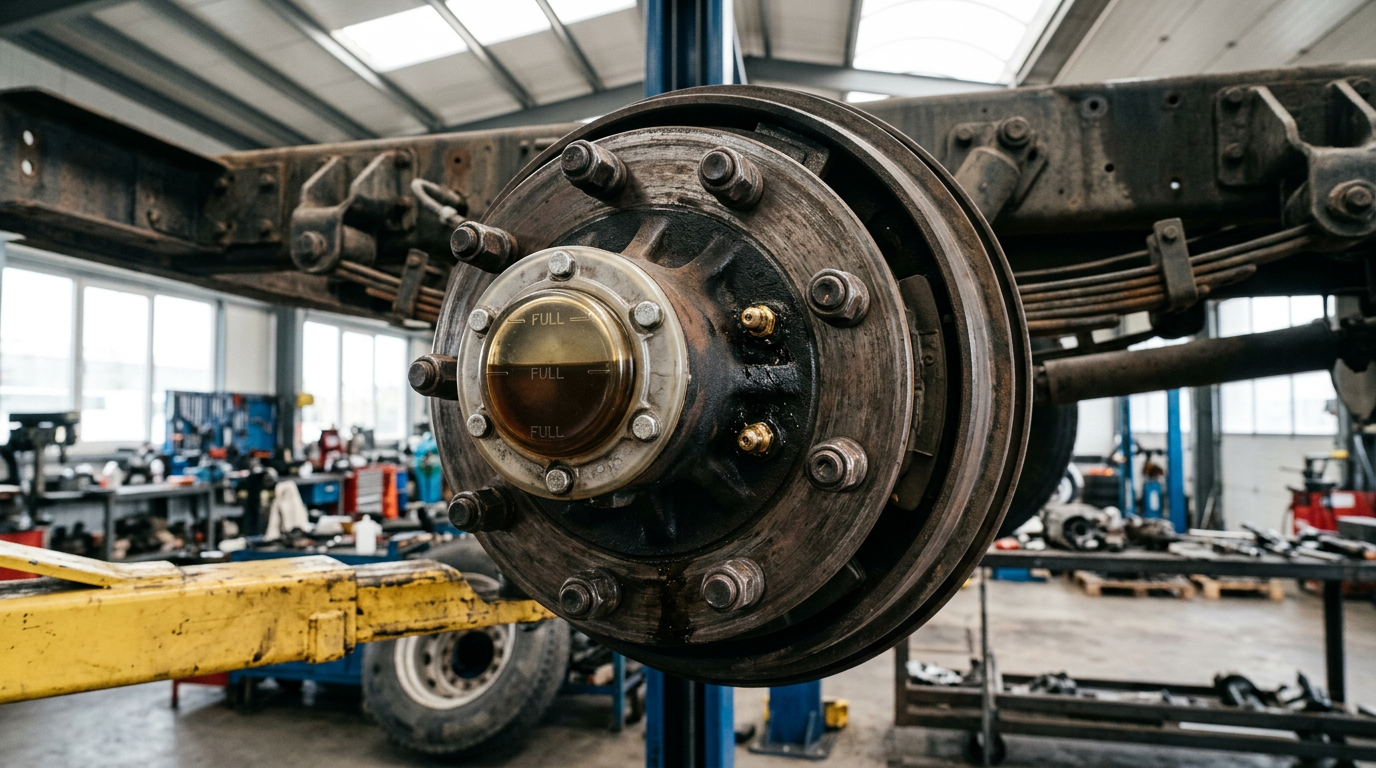
Nothing ruins a Tuesday like a smoking hub on the shoulder of I-80. Wheel end failures don't happen overnight — they build up over thousands of miles of the wrong lube, the wrong interval, or a seal that was never matched to what's inside the hub cap. And yet the grease-vs-oil debate still gets settled in shops by habit instead of duty cycle.
Both systems do the same job — keep the bearings cool and free of metal-to-metal contact — but they fail differently, get inspected differently, and demand different seals. Get the pairing wrong on a Freightliner 122SD running mixed on/off-road vocational work, and you'll be chasing leaks or cooked bearings inside a year.
This guide breaks down what each system actually needs, where they shine, and the early warning signs that tell you it's time to pull a hub before it strands a truck.
How Grease-Packed Hubs Work — and Where They Fall Short
Grease-packed hubs rely on a thick lithium or synthetic complex grease packed directly into the bearing cavity. It's the traditional setup and still common on a lot of 122SD vocational trucks running gravel pits, refuse routes, or short-haul work where oil-bath sight glasses would take a beating from rocks and debris.
The upside: grease stays put better on rough terrain and doesn't slosh or foam under hard cornering and constant starts/stops. It also tolerates minor seal weeps longer before you see catastrophic bearing damage — you'll usually get a warning (dark, gritty grease at the seal) before you get a fire.
The downside: you can't visually verify grease condition without pulling the cap. There's no dipstick, no sight glass — just a hub cap and a wipe-check at PM intervals. Over-greasing is also a real problem; too much packed in generates heat and can blow seals from pressure buildup, especially at highway speed.
How Oil-Bath Hubs Work — and Where They Shine
Oil-bath hubs use a synthetic or conventional gear oil that fully submerges the bearings, with a sight glass on the hub cap so you can check level and condition at a glance — no disassembly required. This is the setup you'll see on a lot of highway-spec 122SD tractors doing linehaul or regional work at sustained speed.
Oil circulates and dissipates heat better than grease, which matters on long, fast, heavily loaded runs where bearing temps climb steadily. It also makes PM inspection faster — a tech can glance at ten sight glasses on a walk-around instead of pulling ten hub caps.
The tradeoff is sensitivity to seal condition. Oil is thin enough to find its way past a seal that grease would never leak through, and low levels aren't always obvious until you're already losing lubrication to a bearing. Oil-bath systems also don't love off-road vibration and debris impact against the sight glass — cracked glass means a dry hub fast.
Seal Compatibility: Don't Mix and Match
This is where a lot of shops get burned. Oil seals and grease seals are not interchangeable, even though they can look similar on the shelf. Oil-bath systems need a seal rated for constant fluid immersion and lower viscosity — usually a different lip design and material than a grease seal, which only has to hold back a semi-solid.
If you convert a hub from grease to oil-bath (or vice versa) without swapping to the correct seal, you're setting up a leak on day one. Always match the seal to the lube system per OEM spec, and don't assume a seal kit is universal just because the bore size matches.
Wheel end seal and bearing work is safety-critical — it affects braking and steering control at that corner of the truck. This job needs a certified tech's sign-off, not a parking-lot guess.
Maintenance Intervals: Grease vs. Oil
Intervals depend on duty cycle, but the inspection method differs more than the frequency.
- Grease-packed hubs: require pulling the hub cap at PM intervals to visually check grease color, consistency, and contamination. Repack per OEM spec — don't eyeball it.
- Oil-bath hubs: check the sight glass at every PM and pre-trip when possible. Look for correct level (per the fill line) and color — milky or dark oil means water or metal contamination, and it's time to drain and inspect.
Climate matters too. Cold-weather operations may need a lighter viscosity oil or a cold-flow-rated grease so the lube actually reaches the bearing at startup instead of sitting stiff in the cavity. Always follow OEM spec for viscosity and grease grade — don't substitute based on what's on the shelf.
Common Failure Signs by System
Know what you're looking for before it becomes a roadside call.
Grease hub warning signs:
- Dark, gritty, or metallic-flecked grease at the seal
- Hub cap warm to the touch after a short drive (should be roughly ambient plus a little)
- Grinding or humming from the wheel end at speed
Oil-bath warning signs:
- Milky or foamy oil in the sight glass (water intrusion)
- Oil level below the fill line with no visible external leak (internal seal failure)
- Cracked or fogged sight glass — replace immediately, don't wait
Either system: any play in the wheel when jacked and spun, or a burnt smell after a run, means stop and inspect. Wheel end bearing and seal diagnosis is safety-critical work — get a certified tech to confirm before the truck goes back on the road.
Quick answers
Can I switch my 122SD hubs from grease to oil-bath without other changes?
Not without swapping seals — grease and oil seals aren't interchangeable and using the wrong one will leak fast. You'll also need the correct hub cap and sight glass setup, so treat it as a full conversion per OEM spec, not a quick swap.
Why does my oil-bath sight glass look milky after a wash?
Milky oil usually means water got past the seal, often from high-pressure washing near the hub. Drain and inspect the bearing and seal before running it again — water-contaminated oil loses its lubricating properties fast and can pit the bearing.
How do I know if my grease hub is overpacked?
Overpacked hubs often run hotter than normal and can push grease out past the seal shortly after service. Pack to OEM spec volume — more isn't better here, it just builds pressure and heat with nowhere to go.
Parts for this job
Real products from the PartsNow catalog. Confirm fitment with Mike before ordering.

370036A
370036A - OIL BATH SEAL
$45.94

3151503
3151503 - OIL BATH SEAL WEAR RING
$40.13

359-5990
359-5990 - OIL PLUG FOR HUB CAP
$6.25

3030HNTRX
3030HNTRX - 3030 SPEC LONG SHAFT HNTRX BRAKE CHAMBER
$84.04

OTR10143
OTR10143 - AUTO SLACK ADJUSTER, 11/2-10DRIVE 5.5,6.5
$150.00

5-808330
5-808330 - BRAKE KIT FOR 4709DEN SHOES
$14.38

348-4195
348-4195 - HUB CAP (SENTINAL LARGE DIAM)
$51.88
Still not sure what's wrong?
Mike — the free AI truck consultant — will walk through your exact symptoms and point you to the right part. No account, English or Spanish, 24/7.
Related truck: Freightliner 122SD— specs & parts
