Class 8 Oil Change Kit: Filters, Intervals & What You Need
August 18, 2026 · PartsNow Guides
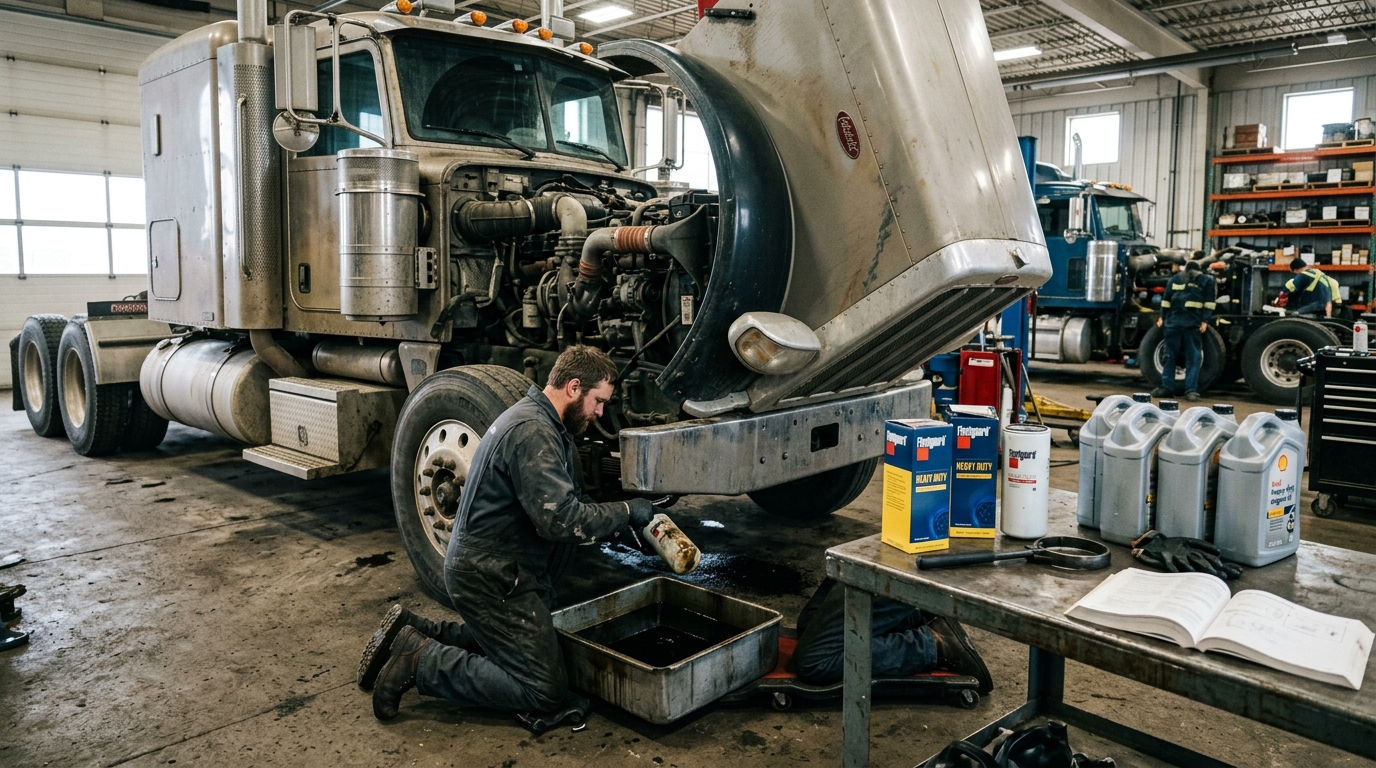
If you're still changing oil on a mileage sticker from 2015, you're either wasting money or risking your engine — sometimes both in the same fleet. Modern diesels run tighter tolerances and longer intervals than the old 3,000-mile habit, but only if you're using the right filtration and the correct spec oil for that engine family.
A proper Class 8 oil service isn't just "drain it and pour some in." It's matching the oil filter and fuel filter to the engine, torquing the drain plug correctly so you're not chasing leaks or stripped threads, and running an oil analysis program that tells you when your interval is actually right instead of guessing. Get any one of these wrong and you're either shortening engine life or throwing away good oil life on paper.
This guide walks through what belongs in a complete oil change kit, what spec oil actually means for your engine, and how to set an interval based on your duty cycle — not a number some rep told you ten years ago.
What's Actually in a Complete Oil Change Kit
A real Class 8 kit is more than a filter and a jug of oil. Here's what should be in the box:
- Oil filter — matched to your engine make/model, not just "fits most"
- Fuel filter(s) — primary and secondary, since most techs do these at the same PM interval
- Drain plug and/or crush washer — reused plugs strip out; keep spares on hand
- Spec oil — correct viscosity and API/CK-4 or FA-4 rating per OEM spec
- O-rings/gaskets for the filter housing if it's a cartridge-style system
Skipping the fuel filter because "the oil light's what matters" is how you end up with a fuel starvation complaint two weeks later. Buy the kit as a set when you can — it keeps you from grabbing an off-spec filter because it was the only one on the shelf.
Oil Filter: Full-Flow, Bypass, or Both
Most Class 8 engines run a full-flow filter as standard, but a lot of fleets add a bypass or secondary filtration system to stretch intervals and cut particulate contamination further.
The full-flow oil filter handles everything going through the engine — if it's undersized or the wrong media rating, you're not protecting the bearings and rings the way the engine's designed for. Bypass filters polish a smaller percentage of flow but catch finer particulate that full-flow media lets through.
Don't mix and match brands on the filter housing just because the o-ring looks right. Filter media construction (pleat count, micron rating, bypass valve pressure) is engineered for that specific housing and engine oil pump pressure. If you're not sure which combo your engine calls for, check OEM spec before ordering — guessing here is how you get premature wear complaints that take months to diagnose back to a filter mismatch.
Fuel Filter: Why It Rides Along With Oil Service
Fuel filters aren't technically part of the oil change, but any shop running efficient PM intervals bundles them because the labor's already there — the tech's under the truck anyway.
A clogged primary fuel filter/water separator starves the injection pump before you ever see a check-engine light for it. Modern high-pressure common rail systems are brutal on filtration — a fuel filter change that's overdue can take an injector pump with it, and that repair bill dwarfs the cost of the filter kit.
Check your fuel filter interval against the oil interval. On a lot of engines they don't line up exactly — fuel filters may need attention more often depending on fuel quality and how much water your fuel supply picks up. Don't assume one PM sticker covers both just because they're changed together most of the time.
Spec Oil: Viscosity, API Rating, and Why It's Not Optional
The oil you pour in has to match the engine's OEM spec — not "whatever 15W-40 was on sale."
Key things to check:
- Viscosity grade — climate and duty cycle matter; per OEM spec for your engine family
- API classification — CK-4 and FA-4 oils are not interchangeable; FA-4 is thinner and only approved for specific engines
- OEM approval list — some manufacturers require oils on an approved list, not just meeting API specs on paper
Running the wrong API category isn't a minor mismatch — FA-4 in an engine that calls for CK-4 (or vice versa) can affect emissions system performance and warranty coverage. If you're not 100% sure what your fleet's engines call for, pull the OEM spec sheet before you buy oil in bulk. A drum of the wrong oil sitting in your shop isn't a discount, it's a liability.
Setting the Right Oil Change Interval
Mileage-based intervals are a starting point, not gospel. Duty cycle changes everything:
- Long-haul highway trucks can often stretch intervals per OEM spec since sustained RPM and temp keep oil in good shape
- Vocational/stop-and-go trucks (dump, refuse, regional) work the oil harder per mile — shorter intervals usually make sense
- Idle time matters as much as mileage — hours-based tracking catches this where odometer-only tracking misses it
The best tool for dialing in your actual interval is oil analysis. Send samples in for a few PM cycles and you'll see exactly how your oil is holding up — TBN depletion, soot loading, wear metals. That data tells you whether you're changing oil too early (wasting money) or too late (wearing the engine). Most oil suppliers or your fuel jobber can set this up cheap, and it pays for itself fast on a fleet of any size.
Quick answers
How often should you change oil on a Class 8 diesel truck?
It depends on duty cycle and engine — long-haul trucks can often run longer intervals than vocational trucks doing stop-and-go work. Check OEM spec for your engine's baseline interval, then adjust based on oil analysis results from your specific fleet.
Can I use CK-4 oil instead of FA-4?
Not without checking your engine's approved oil list — CK-4 and FA-4 have different viscosity and performance characteristics and aren't universally interchangeable. Using the wrong category can affect emissions equipment and may violate warranty terms, so confirm per OEM spec first.
Do I need to change the fuel filter every time I change oil?
Not always on the same interval, but many fleets bundle them for labor efficiency. Check your fuel filter's specific service interval since fuel quality and water content can mean it needs attention more often than the oil does.
What happens if I overtighten the oil drain plug?
You'll strip the threads in the pan or shear the plug, which turns a five-minute oil change into a pan repair or replacement. Torque the drain plug per OEM spec with a torque wrench — don't just go by feel.
Is oil analysis worth it for a small fleet?
Yes — even a handful of trucks can benefit since oil analysis tells you exactly how your specific duty cycle is affecting oil life instead of guessing off a generic interval. It usually costs less than one wasted oil change and can catch developing engine problems early.
Parts for this job
Real products from the PartsNow catalog. Confirm fitment with Mike before ordering.


Still not sure what's wrong?
Mike — the free AI truck consultant — will walk through your exact symptoms and point you to the right part. No account, English or Spanish, 24/7.
