Fifth Wheel Not Locking? Diagnosis & Fix Before It Fails
July 13, 2026 · PartsNow Guides
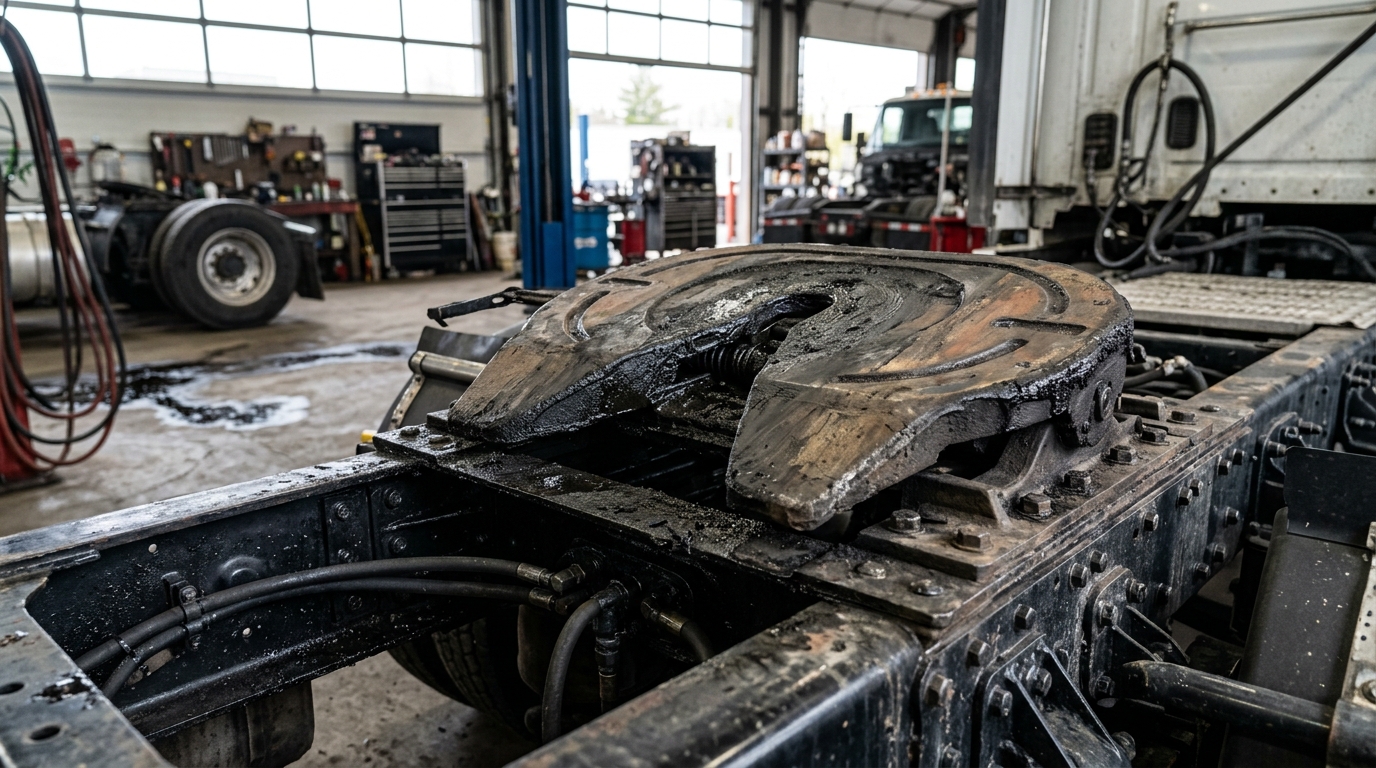
You back under the trailer, hear the jaws close, give it a tug test, and something feels off. Maybe the handle won't seat all the way. Maybe there's play in the kingpin you didn't have last month. That hesitation you feel is your gut telling you something the fifth wheel is trying to tell you too — and it pays to listen before you pull onto the highway.
A fifth wheel that won't lock, locks loose, or slips under load isn't a nuisance item you baby until the next PM. It's the single connection holding tractor and trailer together, and it fails quiet right up until it doesn't. We see this most on trucks running mixed loads and frequent drop-and-hooks — the 587 included — where the coupling gets worked hard and greased light.
This guide walks through the checks in order: lube, jaw geometry, lock mechanism, and load test. By the end you'll know whether you're looking at a five-minute grease fix or a coupling assembly that needs to come off the frame.
Start With Lubrication — It's the Cheapest Fix You'll Ever Make
Nine times out of ten a fifth wheel that's hard to lock or won't release clean is starving for grease, not broken. Check the top plate for a dry, shiny, or scored surface — that's metal-on-metal contact talking. Grease the top plate per OEM spec and don't skip the lock mechanism pivot points and springs underneath; a dry lock spring is a common reason the jaws hang up halfway closed.
- Wipe old grease and grit off the top plate before reapplying — packed dirt acts like sandpaper
- Grease the throat area where the kingpin enters, not just the flat plate
- Cycle the release handle a few times after greasing to work lubricant into the lock jaw pivot
- On the 587's factory fifth wheel setup, check the grease channel isn't clogged from road debris
If a clean, fresh grease job doesn't fix the sticky lock or loose feel, move on — you're dealing with wear, not lubrication.
Inspect the Jaw for Wear and Uneven Contact
Pull the trailer off (safely, on level ground, trailer supported) and get eyes and hands on the lock jaw and kingpin throat. You're looking for a jaw that's worn oval instead of round, or wear concentrated on one side — that tells you the kingpin has been riding off-center, usually from a worn or bent kingpin, misaligned fifth wheel mounting, or a jaw that's simply had too many cycles.
- Check for visible metal loss or flat spots on the jaw's contact face
- Look for a kingpin that rocks or has excessive play when jaws are closed — this is a lockup and separation risk
- Compare wear side-to-side; uneven wear points to a mounting or alignment problem, not just jaw age
- Measure jaw opening against OEM spec if your shop has the gauge — don't eyeball it
Uneven jaw wear rarely fixes itself and tends to accelerate once it starts.
Test the Lock Mechanism Itself
With the trailer off, cycle the release handle by hand. It should move freely, spring back firm, and the lock jaw should snap fully closed and fully open — no hanging, no partial travel. A handle that's stiff, doesn't return, or lets the jaw sit in a half-locked position is telling you the lock spring, secondary lock, or release cam is worn, bent, or broken.
- Check the secondary lock (safety latch) engages fully — this is the backup that keeps the primary lock from accidentally releasing
- Look for bent or missing return springs on the handle linkage
- Check the lock jaw pin and bushing for excess play
- If your fifth wheel has an air-operated release, test the air cylinder and lines for leaks or sticking
Any hesitation or partial engagement here is a coupling problem, not a lube problem — flag it before the truck goes back on the road.
Load Test: Catching Slippage Before It Catches You
A fifth wheel can lock closed and still slip under load if the jaw or kingpin is worn enough. After hooking, do a proper tug test — pull forward gently against the trailer brakes, then back, feeling and listening for a clunk, shift, or gap opening up between the plates.
- Watch for the trailer nose lifting or shifting during the pull test — sign of excess play in the coupling
- Listen for metallic clunking on hard braking or acceleration once loaded — that's the kingpin walking in a worn jaw
- Check for daylight between the fifth wheel plate and trailer apron after coupling — should be flush
- If slippage shows up only under heavy load or hard braking, don't dismiss it as normal shock — it's wear talking
This is coupling integrity work. If you find slippage, treat it as out-of-service until a certified tech signs off on the repair.
Rebuild or Replace? Making the Call
A rebuild kit — new jaw, springs, pivot pin, bushings — makes sense when the top plate and mounting are solid and wear is limited to the lock components. That's a straightforward job for a shop that does it regularly, and it's a lot cheaper than a full assembly.
Replace the whole fifth wheel assembly when you see:
- Cracked or bent top plate
- Mounting brackets or slider rails with wear, cracks, or elongated bolt holes
- Jaw wear beyond OEM spec that a kit can't correct
- Repeated lock failures after a rebuild — the frame or plate is likely compromised
On a 587 or any modern tractor, don't mix and match parts across fifth wheel brands to save money — grab OEM-spec components for the make installed. This is safety-critical coupling work. Whether you rebuild or replace, get a certified tech to inspect and sign off before the truck is back in service — a fifth wheel that fails at speed is a trailer separation, and there's no margin for a guess here.
Quick answers
How often should I grease my fifth wheel top plate?
Grease the top plate every time you notice it looking dry, and at minimum on your standard PM interval per OEM spec. Frequent drop-and-hook operations wear grease off faster than dedicated hauls, so check more often if you're switching trailers daily.
Can I keep driving if the fifth wheel won't fully lock?
No — treat it as out of service. A fifth wheel that's not fully locked can separate under braking or turning, and that's a load-drop or jackknife waiting to happen, not something to nurse to the next stop.
How do I know if my jaw wear means I need a rebuild kit or a whole new assembly?
If the top plate and mounting are solid and wear is limited to the jaw and lock springs, a rebuild kit usually does the job. If you're seeing cracks, bent plates, or repeated lock failures after a rebuild, it's time to replace the whole assembly and have a certified tech verify the install.
Parts for this job
Real products from the PartsNow catalog. Confirm fitment with Mike before ordering.

3030HNTRX
3030HNTRX - 3030 SPEC LONG SHAFT HNTRX BRAKE CHAMBER
$84.04

OTR10143
OTR10143 - AUTO SLACK ADJUSTER, 11/2-10DRIVE 5.5,6.5
$150.00

5-808330
5-808330 - BRAKE KIT FOR 4709DEN SHOES
$14.38

370036A
370036A - OIL BATH SEAL
$45.94

348-4195
348-4195 - HUB CAP (SENTINAL LARGE DIAM)
$51.88

482414R
482414R - MUD FLAPS 24 X 14 PLAIN
$15.00

91-18
91-18 - WIPER BLADE
$4.97
Still not sure what's wrong?
Mike — the free AI truck consultant — will walk through your exact symptoms and point you to the right part. No account, English or Spanish, 24/7.
Related truck: Peterbilt 587— specs & parts
