EGR Valve Problems: Symptoms, Codes & Diagnosis Guide
August 3, 2026 · PartsNow Guides
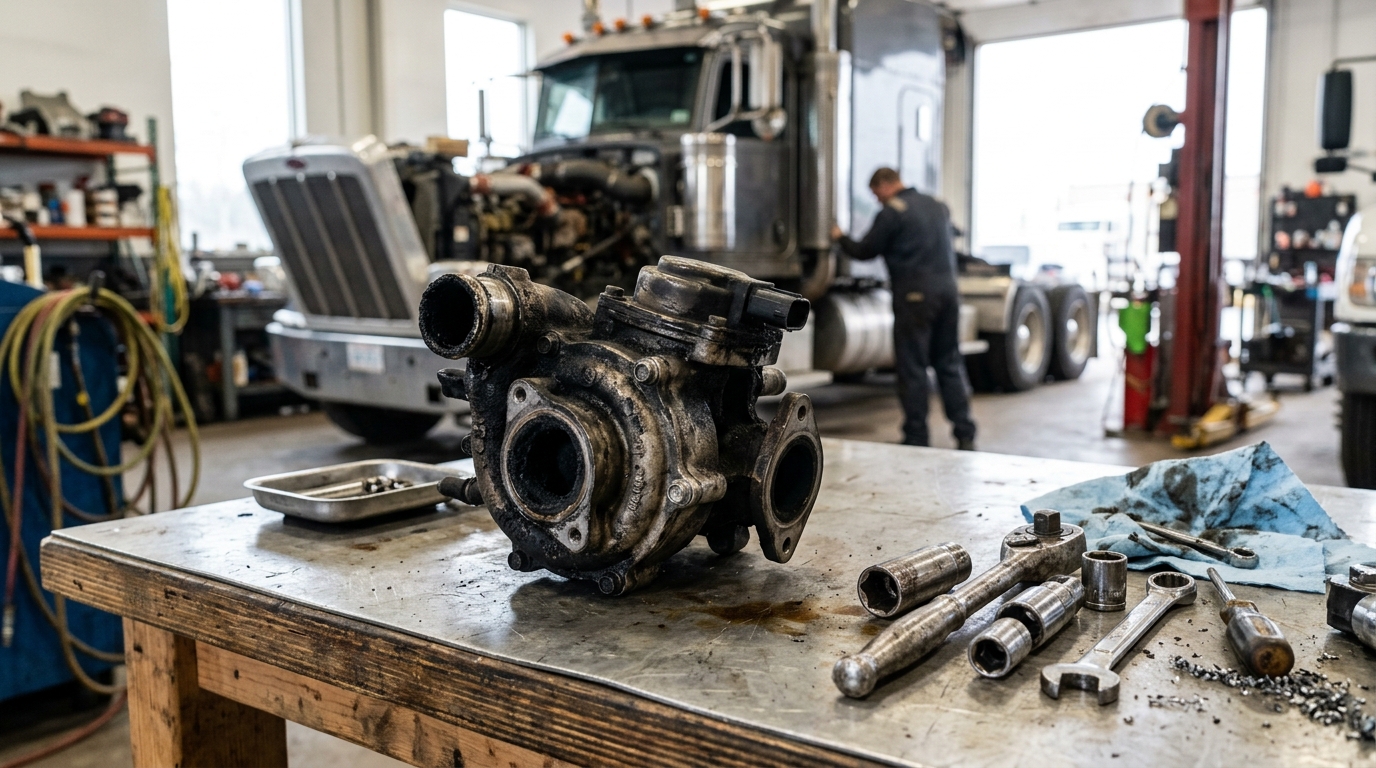
If your truck's idling rough, losing power on hills, or throwing a code you can't quite pin down, don't jump straight to the DPF or injectors. A lot of engines get torn into over problems that trace right back to a sticky or fouled EGR valve. It's one of the most common failure points in modern diesel emissions systems, and it's also one of the most misdiagnosed.
The EGR valve doesn't fail quietly. It usually gives you warning signs—a rough idle, a check engine light, black smoke on acceleration, or that sluggish feeling like the truck's pulling with one hand tied behind its back. Catch it early and you're looking at a cleaning or a straightforward valve swap. Ignore it and you're looking at a derate on the side of the highway, or a cascade of problems in your DPF and DEF systems that cost a lot more to sort out.
This guide walks through the symptoms, the codes, and how to actually diagnose the root cause instead of guessing. We'll also cover when a cleaning gets you back on the road versus when it's time to just replace the valve.
What the EGR Valve Does and Why It Clogs Up
The EGR valve (exhaust gas recirculation) routes a metered amount of exhaust gas back into the intake, which lowers combustion temps and cuts down on NOx emissions. It's a simple job on paper, but the environment it lives in is brutal—hot, dirty exhaust gas passing through a valve with moving parts, day in and day out.
Over time, soot and carbon build up on the valve pintle, the seat, and the cooler passages feeding it. That buildup makes the valve stick, either partially open or partially closed, instead of responding cleanly to commands from the ECM. Short-haul trucks that idle a lot and run low exhaust temps are especially prone to this because the engine never gets hot enough to burn off the deposits naturally.
Once the valve can't move freely, the ECM's fuel and air calculations go out the window, and that's when you start seeing the symptoms show up in how the truck drives.
Common EGR Valve Symptoms Every Driver Should Know
You don't need a scan tool to notice most of these—they show up in how the truck feels and sounds:
- Rough or unstable idle — the engine hunts up and down or shakes noticeably at idle
- Loss of power under load — sluggish acceleration, especially pulling grades
- Black smoke on acceleration — a sign the air/fuel mix is off because the valve's stuck open or closed
- Rotten egg or sulfur smell from the exhaust
- Check engine light with an EGR-related code stored
- Increased soot buildup in the intake or noticeable oil contamination
- Failed emissions test even when everything else checks out
Any one of these on its own could point to something else. But two or three together, especially rough idle plus power loss, should have you looking hard at the EGR system before you start throwing parts at other components.
Fault Codes That Point to EGR Trouble
Most EGR-related faults fall into a handful of families, and knowing the pattern helps you narrow things down fast:
- P0400-series codes (P0401, P0402, P0404, etc.) point directly to EGR flow problems—either insufficient or excessive flow detected by the ECM
- P2457/P2459 range often relates to the EGR cooler bypass or cooler performance
- NOx sensor codes (like P229x) can show up as a downstream symptom of an EGR that's not flowing correctly, since NOx output climbs when EGR isn't doing its job
- DPF-related codes sometimes trigger because soot loading increases when EGR flow is off, even though the DPF itself is fine
Don't clear a code and call it done. Pull the freeze frame data and look at what the engine was doing when the fault set—load, RPM, coolant temp. That context tells you whether it's a mechanical stick, a wiring issue, or a sensor giving the ECM bad information.
Diagnosing the Root Cause Before You Order Parts
Swapping the valve without confirming the actual problem wastes time and money. Work through it in order:
- Pull codes and freeze frame data first — note the conditions when the fault triggered
- Visually inspect the valve for carbon buildup, a stuck pintle, or exhaust leaks at the gasket
- Check the wiring harness and connector for corrosion, chafing, or a loose pin — a bad connection mimics a bad valve
- Command the valve open and closed with a scan tool and watch actual position feedback versus commanded position
- Inspect the EGR cooler for plugging or coolant leaks, since a restricted cooler puts extra strain on the valve and can trigger the same codes
- Check for intake or exhaust leaks upstream that could throw off flow readings
If the valve moves freely and matches commanded position but the code keeps coming back, look at the cooler or the differential pressure sensor before you condemn the valve itself.
Clean It or Replace It? Making the Call
This is where a lot of shops either waste money replacing good parts or waste time chasing a valve that's too far gone.
Cleaning makes sense when:
- The valve moves but sticks intermittently
- Carbon buildup is visible but the pintle and seat aren't worn or pitted
- There's no play or damage in the moving parts, just soot
Replacement is the better call when:
- The valve fails to hold commanded position even after cleaning
- There's visible wear, cracking, or pitting on the seat or pintle
- The valve's electrical actuator has failed (won't respond at all)
- The truck has a history of repeat EGR faults after cleaning
A cleaned valve that's mechanically worn will just clog again faster and set the same code within weeks. If you're already pulling it, do a real inspection—don't just hit it with cleaner and bolt it back on hoping for the best.
How EGR Problems Ripple Into DPF and DEF Systems
The EGR valve doesn't operate in isolation—it's the front end of the emissions chain, and problems there push downstream fast.
When EGR flow is off, combustion temps and NOx output shift, which changes soot production. That means your DPF can start loading faster than normal, triggering more frequent regens or even active regen failures if the ECM thinks conditions are wrong. A stuck-open EGR valve in particular tends to dump more soot into the exhaust stream, accelerating DPF fouling.
On the DEF side, if NOx output climbs because EGR isn't recirculating properly, the SCR system has to work harder to compensate. That can trigger NOx sensor faults or DEF quality codes that have nothing to do with your DEF itself—the system's just trying to correct for an upstream EGR problem it can't fully offset.
Bottom line: an EGR code that gets ignored often shows up two weeks later as a DPF or SCR fault. Chase the root cause at the EGR valve first, and you'll save yourself from chasing ghosts in the aftertreatment system.
Quick answers
Can I keep driving with an EGR code active before it derates?
Depends on the code and derate schedule set by your engine manufacturer—some give you a grace period, others start limiting power fast. Get it scanned as soon as possible rather than waiting to see how bad it gets, since ignoring it usually leads to a harder derate down the road.
Will cleaning the EGR valve fix a rough idle for good?
If the valve's just carbon-fouled and mechanically sound, cleaning often resolves it. But if the idle issue comes back within a few weeks, that's usually a sign the valve's actuator or seat is worn and needs replacement instead of another cleaning.
Does a bad EGR valve cause DPF regens to happen more often?
Yes, it can. A stuck or malfunctioning EGR valve changes combustion conditions and soot output, which often means the DPF loads faster and needs more frequent regens to keep up.
Parts for this job
Real products from the PartsNow catalog. Confirm fitment with Mike before ordering.


Still not sure what's wrong?
Mike — the free AI truck consultant — will walk through your exact symptoms and point you to the right part. No account, English or Spanish, 24/7.
