EGR Valve & Cooler Failure: Diagnosing Codes & Power Loss
August 3, 2026 · PartsNow Guides
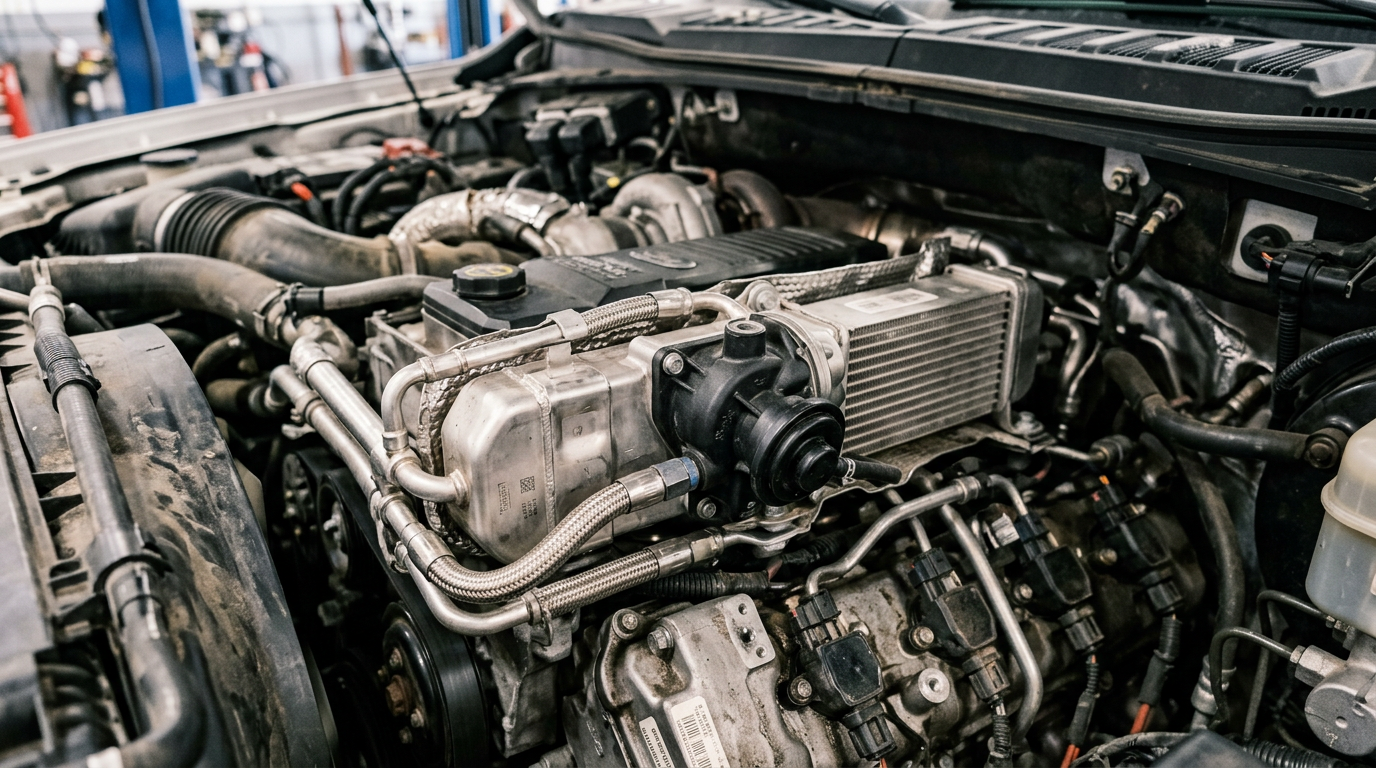
Rough idle, a coolant tank that keeps sucking air, and a power loss code that won't clear — that combination sends a lot of guys straight to the turbo or the DPF. Nine times out of ten on a modern diesel, especially the N13-equipped International ProStar, that's the wrong tree to bark up. The EGR system is doing more work than it ever has, and it's failing more often than it used to.
The EGR valve sticks from carbon buildup, and the cooler cracks from thermal cycling — sometimes both at once. Either failure throws codes that overlap with turbo and DPF faults, which is exactly why so many shops throw parts at a truck before they nail down the real problem. This guide walks you through telling the difference before you start pulling components.
Get this wrong and you'll spend a day chasing a turbo replacement when the fix was a $200 valve — or worse, you'll miss a cracked cooler dumping coolant into the intake until you've got a hydro-locked cylinder.
The Two Failure Modes: Sticking Valve vs Cracked Cooler
These are two different problems that get lumped together, and they don't fail the same way.
A sticking EGR valve usually means carbon buildup on the valve poppet or in the actuator linkage. It won't fully close (causing rough idle, black smoke, power loss) or won't fully open (causing high EGT, DPF loading issues). You'll often hear it before you see a code — idle that hunts, or a slight miss under light load.
A cracked EGR cooler is a mechanical failure of the cooler core itself, usually from repeated heat cycling. This lets coolant leak into the exhaust/intake side, or exhaust gas pressurize the coolant system. Symptoms are white smoke, coolant loss with no visible external leak, and a coolant system that won't hold pressure on a pressure test.
Know which one you're chasing before you order parts — the diagnostic path splits early.
Fault Codes That Point to EGR
On the ProStar's N13, and most modern diesels, these are the codes that should make you think EGR first:
- EGR position codes (valve not reaching commanded position) — points to a sticking valve or bad actuator
- EGR flow rate too high/too low — often a stuck-open or stuck-closed valve
- Coolant level low with no external leak found — classic cracked cooler
- Intake manifold temp higher than expected — can indicate EGR flow is insufficient, forcing you to also check for a lazy valve
These codes can overlap with turbo boost codes and DPF differential pressure codes, so don't stop at the code reader. Pull freeze frame data and look at EGR position vs. commanded position side by side. A gap between the two numbers is your smoking gun for a valve problem, not a turbo or DPF issue.
Step-by-Step: Confirming a Sticking EGR Valve
- Pull codes and check EGR commanded vs. actual position in live data — a lag or gap confirms sticking
- With engine off and cooled, pull the valve and inspect the poppet and bore for carbon buildup
- Manually actuate the valve (per OEM procedure) and feel for binding or slow return
- Check the wiring harness and connector for corrosion — a lazy actuator sometimes isn't mechanical at all
- Compare idle quality before and after cleaning or replacing the valve
If the valve moves freely on the bench but the truck still throws position codes, look at the actuator motor itself before condemning the whole assembly. A lot of techs replace the entire EGR valve assembly when it's just a carbon-fouled poppet that cleans up fine — check parts availability and cost before deciding clean vs. replace.
Step-by-Step: Confirming a Cracked EGR Cooler
- Pressure test the coolant system per OEM spec — if it won't hold, don't assume it's a hose or gasket yet
- Check the coolant reservoir for oil-sheen or exhaust smell, and check for white smoke at startup
- Do a compression-side check: cracked coolers can push exhaust gas into the coolant system under load, causing bubbling in the overflow tank at high RPM
- Remove the cooler and visually inspect for hairline cracks or a fin pack that's swollen/discolored
- If you suspect internal leakage but can't confirm visually, a coolant system exhaust-gas test kit will confirm combustion gas contamination
A cracked cooler that's dumping coolant into the intake is a bigger deal than lost coolant alone — that coolant can hydro-lock a cylinder or wash oil off cylinder walls. Don't run the truck once you've confirmed a crack. Get it pulled and replaced before it does real engine damage.
Ruling Out DPF and Turbo Before You Commit
EGR, DPF, and turbo problems share symptoms — power loss, high EGT, rough idle — so cross off the other two before you order EGR parts.
- DPF: check differential pressure sensor readings and soot load percentage. A plugged DPF causes power loss but usually with a distinct backpressure code, not an EGR position fault.
- Turbo: check boost pressure at idle and under load against spec. A failing turbo (worn bearings, stuck VGT vanes) causes power loss and sometimes oil consumption, but won't typically cause coolant loss or EGR position codes.
- Overlap zone: a stuck-open EGR valve can starve the turbo of exhaust energy, mimicking a turbo problem. That's why checking EGR position data first saves you from replacing a good turbo.
When codes are ambiguous, isolate one system at a time using live data instead of guessing from symptoms alone.
Quick answers
Can a bad EGR valve cause my truck to lose power on hills?
Yes — a stuck-open EGR valve dilutes intake air with exhaust gas, which robs combustion efficiency and shows up as power loss under load, especially climbing grades. Check EGR position vs. commanded position in live data to confirm before assuming it's a turbo or fuel problem.
How do I know if I'm losing coolant from the EGR cooler and not a hose or radiator?
If your coolant level keeps dropping and you can't find an external leak, pressure test the system per OEM spec and check for white smoke at startup or bubbling in the overflow tank under load. Those are strong signs of a cracked EGR cooler letting coolant into the exhaust or intake side.
Is it safe to keep driving with an EGR cooler crack?
No — a cracked cooler can let coolant get into the cylinders and cause hydro-lock or wash oil off the cylinder walls, which leads to real engine damage fast. Get it diagnosed and pulled before you put more miles on it.
Parts for this job
Real products from the PartsNow catalog. Confirm fitment with Mike before ordering.


Still not sure what's wrong?
Mike — the free AI truck consultant — will walk through your exact symptoms and point you to the right part. No account, English or Spanish, 24/7.
Related truck: International ProStar— specs & parts
