Alternator & Charging System Failure: Dead Batteries, Dim Lights
October 22, 2026 · PartsNow Guides
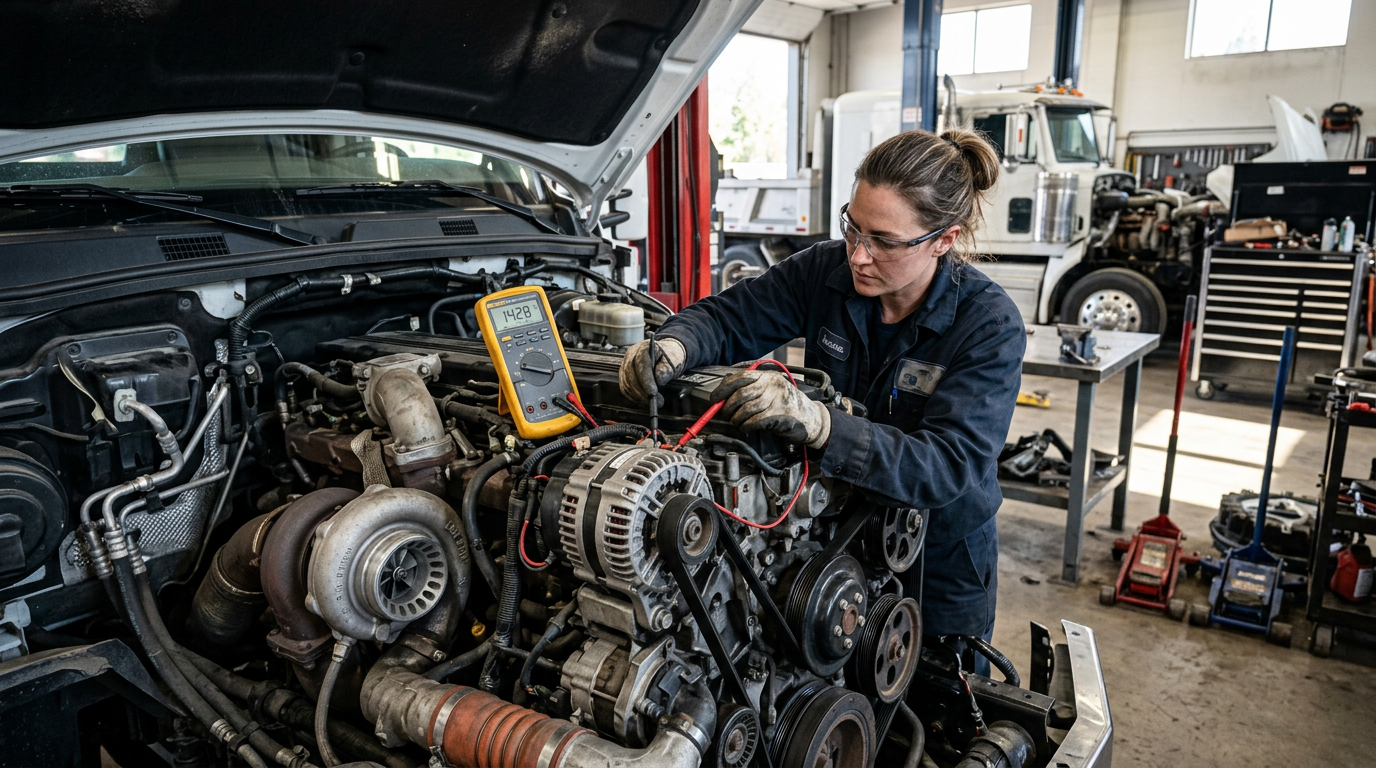
Nothing ruins a dispatch like turning the key and getting nothing but a click. Before you throw a new alternator or a set of batteries at the problem, you need to know which one's actually bad — because a lot of guys replace a perfectly good alternator when the real issue is a corroded ground strap or a parasitic draw eating the battery overnight.
Dim dash lights, slow cranks, batteries that won't hold a charge past a weekend — these all point back to the charging system, but they don't all point to the same part. On a truck like the Sterling A9500, where the charging circuit runs through a mess of grounds, fuse panels, and a belt-driven alternator that takes real abuse from road grime and heat cycling, you've got three suspects: the battery, the alternator, or the wiring between them. This guide walks you through ruling each one out in order, cheapest and easiest first.
Don't skip steps. Guys who jump straight to "just swap the alternator" end up doing it twice.
Start With the Battery — Not the Alternator
Most charging complaints start life as a battery problem. Before you touch the alternator, pull each battery and load-test it individually — don't just check voltage sitting on the bench, because a dead cell will still show 12.4V with no load and fool you.
- Check for corrosion on terminals and clean with a wire brush if needed
- Load-test each battery per OEM spec — a weak one will sag fast under load
- Check electrolyte level on non-sealed batteries
- On multi-battery setups like the A9500, test batteries individually, not just as a bank — one bad battery drags the whole group down
If a battery won't hold a charge after a full overnight charge and a proper load test, replace it before you do anything else. Don't assume age alone condemns it — a 2-year-old battery with a cracked case or sulfated plates can fail just as hard as a 5-year-old one.
Check the Belt Before You Blame the Alternator
A slipping or glazed serpentine belt will starve the alternator of RPM and mimic a failing unit — flickering lights at idle that clear up at highway speed is a classic belt symptom, not an electrical one.
- Inspect belt for glazing, cracking, or missing chunks
- Check belt tension per OEM spec — too loose and it slips, too tight and it kills the alternator bearing
- Spin the pulley by hand (engine off) and listen/feel for bearing roughness or grinding
- Check the tensioner spring for weak return pressure
On the A9500, the alternator sits low and close to road spray, so belt glazing from oil or coolant contamination is common — trace any leak before you just replace the belt, or you'll be back under there in a month. If the belt's fine, move to the electrical side.
Test Alternator Output — The Real Diagnostic
This is where you actually confirm alternator health, not guess at it. You'll need a multimeter.
- With the engine off, check battery voltage — should read around 12.6V on a healthy, charged battery
- Start the engine, bring RPM up to around 1500-2000
- Check voltage at the battery terminals — a good alternator should push output into the mid-to-high 13s up to around 14.5V (per OEM spec for your exact charging system)
- Load it up — headlights, wipers, HVAC blower on high — and watch for voltage sag below spec
- Check for AC ripple with the meter set to AC volts — excessive ripple means failing diodes inside the alternator
If voltage won't climb above battery resting voltage under load, or it climbs too high and cooks the battery, the alternator's bad. If it tests good, your problem is downstream in the wiring.
Chase Parasitic Draws Before You Condemn Anything
If the charging system tests fine but the battery's still dead by morning, something's pulling current with the key off. This is the step guys skip and it costs them.
- Disconnect the negative battery cable
- Put a multimeter in series between the cable and terminal, set to DC amps
- A normal resting draw is a small fraction of an amp (a few milliamps) for clocks, alarms, and ECM memory — anything significantly higher means a draw
- Pull fuses one at a time and watch the meter — when the draw drops, you've found the circuit
Common culprits on older fleet trucks: a cab light stuck on, a bad relay, an aftermarket accessory wired wrong, or a chafed wire shorting to ground. This test takes 20 minutes and saves you from replacing a battery that'll just die again next week.
Inspect Wiring, Grounds, and Connections
Charging systems fail quietly at the connections more often than inside the alternator itself. Corrosion and loose grounds cause voltage drop that mimics a weak alternator.
- Check the main ground strap from engine to frame — clean, tight, no green corrosion
- Inspect the alternator's output wire and ground connection for corrosion or looseness
- Check the battery cable ends for corrosion inside the crimp, not just visible on the outside
- Do a voltage drop test across major connections under load — more than a small drop (per OEM spec) at any single connection means a bad joint
On high-mileage trucks like an A9500 that's seen years of road salt and vibration, ground straps and cable ends are usually the first thing to go bad, long before the alternator itself. Don't overlook the simple stuff chasing something exotic.
Quick answers
Why does my truck battery die overnight even with a new alternator?
A new alternator doesn't fix a parasitic draw. Something is pulling power with the key off — test for parasitic drain with an ammeter before assuming the battery itself is bad.
What voltage should my alternator put out at idle?
A healthy alternator should push output into the mid-to-high 13-volt range up to around 14.5V under normal load — check your OEM spec for the exact number on your charging system.
Can a bad belt cause dim headlights without throwing a warning light?
Yes. A slipping or glazed belt starves the alternator of RPM at idle, causing dim lights and flicker that often clears up as engine speed increases — it won't always trigger a dash warning.
How do I know if it's the battery or the alternator that's bad?
Load-test the battery first since it's the cheaper and more common failure. If the battery passes a load test but voltage won't climb under load with the engine running, the alternator is the problem.
Why are my dash lights flickering but the truck still starts fine?
Flickering dash lights usually mean an inconsistent charging voltage, often from a slipping belt, a failing diode in the alternator, or a loose/corroded ground connection — test alternator output and grounds before replacing parts.
Parts for this job
Real products from the PartsNow catalog. Confirm fitment with Mike before ordering.


Still not sure what's wrong?
Mike — the free AI truck consultant — will walk through your exact symptoms and point you to the right part. No account, English or Spanish, 24/7.
Related truck: Sterling A9500— specs & parts
