Air Dryer Not Purging? Diagnose Wet Tanks Fast
July 13, 2026 · PartsNow Guides
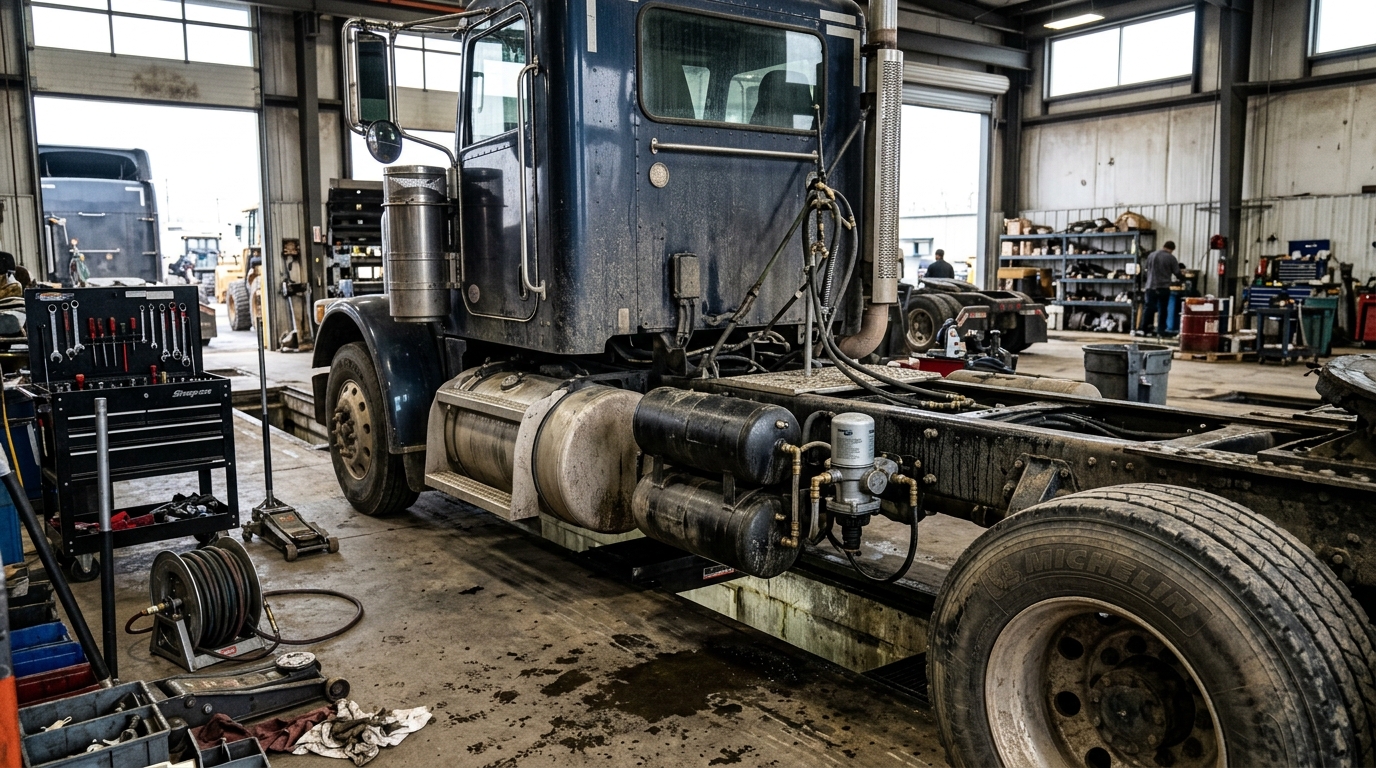
If your tanks are spitting water or valves are sticking, your air dryer isn’t doing its job. The usual sign is simple: you never hear that sharp purge blast after the compressor hits cut-out. On a Kenworth T800, you should hear a clean purge cycle every time system pressure tops out. No purge means moisture keeps moving downstream.
Wet air isn’t just annoying—it corrodes valves, freezes lines in cold weather, and shortens the life of everything from ABS modulators to brake chambers. This quick walk-through helps you pin down whether the issue is control (governor), the dryer itself (purge valve or cartridge), or support components like the heater.
Confirm the Basics: Is It Actually Reaching Cut-Out?
Start with the simple check most guys skip: watch your air gauges and listen. On a healthy system, the compressor loads up to cut-out (typically around 120–130 psi per OEM spec), then the dryer purges with a loud blast.
- Build air from low pressure and watch both primary and secondary gauges
- Note if pressure stalls below normal cut-out
- Listen for purge—no sound usually means no signal or no action
If it never reaches cut-out, the dryer won’t purge. That points upstream—think compressor performance or a governor not signaling unload. On a T800, the governor is usually mounted near the compressor; easy to access for testing. Don’t chase the dryer until you know the system is actually hitting cut-out.
Check the Governor: The Brains of the System
The governor controls when the compressor loads and unloads—and it’s what triggers the dryer purge. If it’s stuck or misadjusted, you won’t get a purge event.
- Verify cut-in and cut-out pressures match OEM spec
- Inspect air lines to and from the governor for leaks or kinks
- Tap test: sometimes a sticking governor will respond briefly
If pressure climbs too high with no purge, or cycles erratically, the governor is suspect. Replacement is usually quicker than chasing an intermittent fault. On older T800s, governors are common failure points, especially in harsh environments.
Any adjustment or replacement should follow OEM spec to avoid overpressure issues.
Inspect the Purge Valve: Common Failure Point
If the system hits cut-out but you don’t hear the purge, the purge valve on the dryer is the next stop. This is the part that actually dumps moisture and air.
- Listen closely at cut-out—any weak hiss instead of a sharp blast?
- Check for constant leaking at the purge port
- Look for contamination or oil fouling around the valve
A stuck or leaking purge valve won’t clear moisture and may bleed air continuously. On Bendix-style dryers common to T800s, the purge valve assembly is serviceable, but if it’s heavily contaminated, a full dryer service is usually the better move.
This is part of the air system—if you’re not confident, have a certified tech sign off, especially if brake performance is affected.
Don’t Ignore the Heater: Cold Weather Killer
In colder climates, a failed dryer heater will freeze the purge valve shut. That means no purge, even if everything else is working.
- Check for power at the heater with key on
- Inspect wiring and connector corrosion
- Look for signs of ice buildup at the purge exhaust
On a T800 running winter routes, heater failure is a top cause of sudden no-purge complaints. If the valve is frozen, you might get intermittent purges once the truck warms up—but moisture is already in the system.
Fix the heater issue before replacing other components, or you’ll be back in the same spot after the next cold snap.
Know When to Replace the Cartridge
The desiccant cartridge does the actual drying. Once it’s saturated, moisture passes straight through—even if the purge cycle works.
- Check service interval (often yearly or per OEM spec)
- Look for oil contamination (points to compressor issues too)
- Persistent moisture despite normal purge = worn cartridge
On high-mile T800s, skipping cartridge service is a common cost-cutting move that backfires. A fresh cartridge is cheap compared to replacing valves and chambers damaged by water.
If you’re already in there dealing with purge or heater issues, it’s smart to replace the cartridge at the same time and reset the baseline.
Quick answers
Why don’t I hear my air dryer purge anymore?
Either the system isn’t reaching cut-out, or the purge valve isn’t opening. Start by confirming pressure hits normal cut-out, then check the governor and purge valve operation.
Can I drive with a non-purging air dryer?
You can, but it’s risky. Moisture will build up in tanks and valves, leading to corrosion or freezing—both can affect braking, so get it fixed quickly.
How often should I change the air dryer cartridge?
Most setups call for yearly replacement or per OEM spec. If you’re seeing moisture in tanks or heavy contamination, replace it sooner.
Parts for this job
Real products from the PartsNow catalog. Confirm fitment with Mike before ordering.


Still not sure what's wrong?
Mike — the free AI truck consultant — will walk through your exact symptoms and point you to the right part. No account, English or Spanish, 24/7.
Related truck: Kenworth T800— specs & parts
