Air Compressor Failure: Symptoms, Diagnosis & Fixes
July 23, 2026 · PartsNow Guides
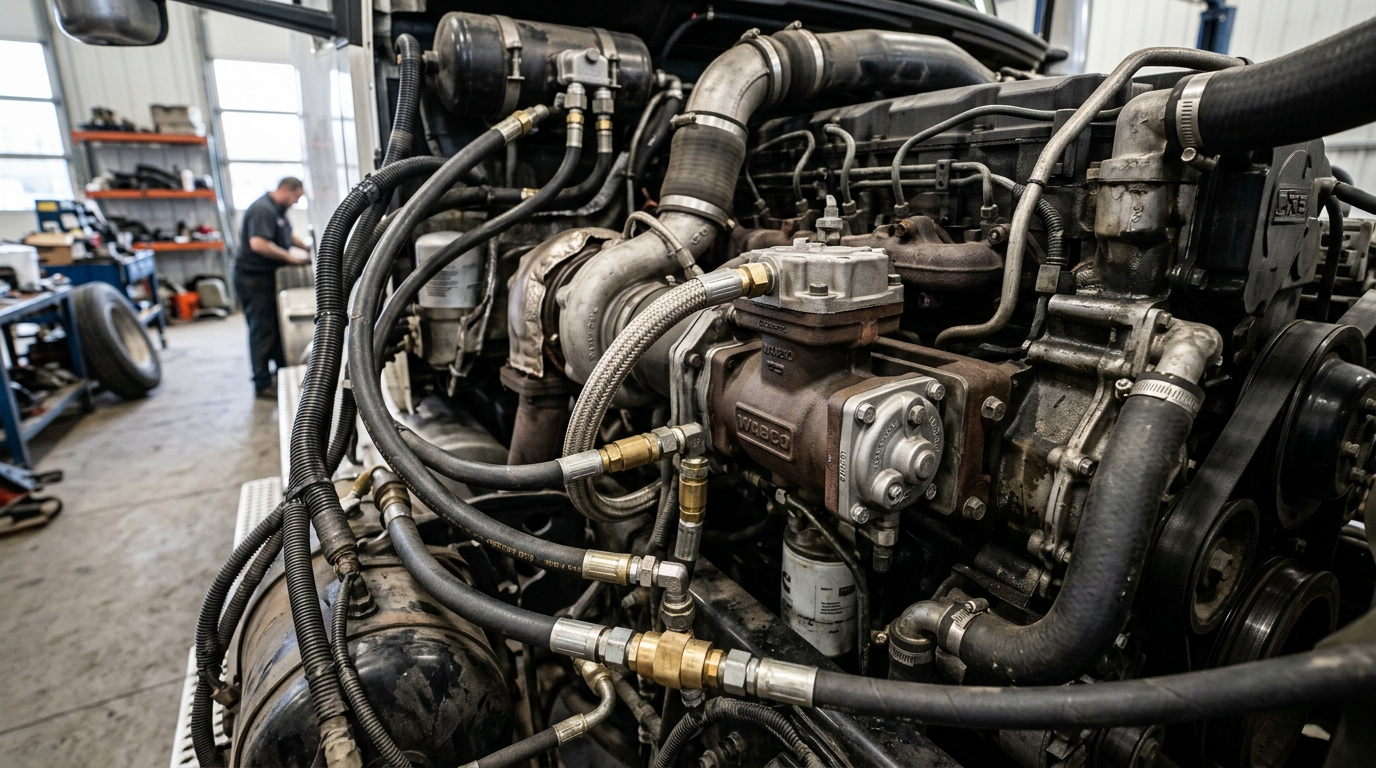
There's nothing quite like watching your air gauge crawl up at a snail's pace on a cold morning, wondering if you're going to make your pickup or spend the day parked at the shop. A failing air compressor doesn't usually quit without warning — it drops hints for days or weeks before it leaves you stuck on the shoulder with the parking brakes locked.
The problem is a lot of drivers and even some shop techs miss those hints because they look like other issues — a bad governor, a leaky tank, condensation in the lines. Knowing what a real compressor failure looks like, and catching it early, is the difference between a scheduled repair and a roadside call that costs you a day of revenue.
This guide walks through the symptoms, how to actually diagnose the problem instead of guessing, what usually kills compressors in the first place, and how to think through OEM versus remanufactured replacement options when it's time to swap the unit.
Warning Signs of a Failing Air Compressor
Most compressor failures give you a few weeks of warning if you're paying attention.
- Slow air build-up — if it's taking noticeably longer to build from low pressure to cut-out than it used to, especially once the engine's warmed up, that's usually the first sign.
- Oil in the air tanks — drain your tanks regularly. Oil sheen or actual oil coming out with the moisture means the compressor is passing oil past worn rings or a bad discharge line.
- Unusual noise — knocking, rattling, or a high-pitched whine from the compressor area, particularly under load, points to worn bearings or internal damage.
- Overheating — a compressor housing too hot to touch, discolored paint, or a burnt smell near the unit means it's working way harder than it should.
- Excessive oil consumption with no visible external leak is another red flag — the compressor may be burning it internally.
Catch any of these early and you've got options. Ignore them and you're looking at a tow.
Diagnostic Steps Before You Condemn the Compressor
Don't just throw a new compressor at a build-up problem — check the whole system first, or you'll be doing the job twice.
- Check the air filter and intake — a clogged filter starves the compressor and mimics slow build-up.
- Inspect the discharge line for carbon buildup or restriction between the compressor and the tanks.
- Test the governor — a stuck or misadjusted governor can cause build-up issues that have nothing to do with the compressor itself.
- Check drive gear/coupling — a worn drive gear or gasket can cause noise and oil leaks that look like internal compressor failure but aren't.
- Drain tanks and inspect the residue — oil, water, or sludge tells you a lot about what's happening upstream.
- Do a build-up time test from low pressure to governor cut-out and compare it against per OEM spec for your system.
Only after ruling out filters, lines, and the governor should you pull the compressor for teardown or replacement.
Common Root Causes of Compressor Failure
Compressors rarely fail for no reason — it's almost always one of a handful of usual suspects.
- Coolant contamination — a leaking coolant line or head gasket lets coolant into the compressor, which destroys internal components fast.
- Oil starvation — low oil pressure to the compressor, restricted feed lines, or running low on oil accelerates bearing and ring wear.
- Excessive duty cycle — trailers or equipment with chronic air leaks force the compressor to run far more than it's designed for, shortening its life dramatically.
- Contaminated intake air — dust, debris, or a torn intake hose lets abrasive material into the cylinders.
- Age and mileage — like any wear component, compressors have a service life. Running one well past its expected mileage without inspection is asking for trouble.
Finding and fixing the root cause matters just as much as replacing the compressor — otherwise you'll kill the new one the same way you killed the old one.
OEM vs. Remanufactured Replacement: What to Choose
Once you've confirmed the compressor's done, the next call is what to put back in.
OEM units are built to the exact spec your engine manufacturer designed around — fit, output, and mounting are guaranteed correct, but you'll pay the premium price that comes with the badge.
Remanufactured units from a reputable rebuilder can be a smart cost-effective option — they're torn down, inspected, and rebuilt with new wear components, often at a meaningful discount over new OEM. The catch is quality varies a lot between rebuilders, so know who's standing behind the core.
What to check before you buy either way:
- Warranty length and what it actually covers (parts only vs. parts and labor)
- Whether the core was properly cleaned, magnaflux-inspected, and rebuilt to OEM tolerances
- Compatibility with your specific engine application — don't assume all units in a family are interchangeable
- Supplier reputation and return policy if the unit fails early
For high-mileage trucks running tight margins, a quality reman is usually the practical call. For newer trucks still under warranty coverage, stick with OEM.
Safety Note: This Is Brake System Work
Your air compressor feeds the entire air brake system — service brakes, parking brakes, and often the trailer supply line all depend on it working correctly. A compressor swap itself is a mechanical repair many experienced techs handle regularly, but any work that touches brake system components, chambers, or the air lines feeding them needs to be signed off by a certified brake technician before the truck goes back in service.
After any compressor replacement or repair, a full air system function test — build-up time, governor cut-in/cut-out, low air warning activation, and a leak-down test — should be performed per OEM spec before the truck leaves the shop. Don't skip this step to save time. A brake system that isn't fully verified is a hazard to the driver and everyone sharing the road.
Quick answers
Can I keep driving if my compressor is building air slowly but still reaching full pressure?
You can technically keep running it short-term if it's still reaching full cut-out pressure, but slow build-up almost always gets worse, not better. Get it diagnosed soon rather than waiting for it to leave you stranded with low air pressure on the shoulder.
Why is there oil in my air tanks if I don't have an oil leak anywhere else?
Oil in the tanks usually means the compressor is passing oil internally past worn rings, seals, or the discharge line rather than leaking externally. It's a strong sign the compressor needs to come off for inspection or replacement soon.
How long should a heavy-duty truck air compressor last?
Service life varies a lot by application and duty cycle, but per OEM spec most compressors are designed to last well beyond typical engine overhaul intervals when properly maintained. Chronic air leaks, oil starvation, or coolant contamination are what usually cut that life short.
Parts for this job
Real products from the PartsNow catalog. Confirm fitment with Mike before ordering.


Still not sure what's wrong?
Mike — the free AI truck consultant — will walk through your exact symptoms and point you to the right part. No account, English or Spanish, 24/7.
