Radiator & Cooling System Failure: Diagnosing Overheating
November 10, 2026 · PartsNow Guides
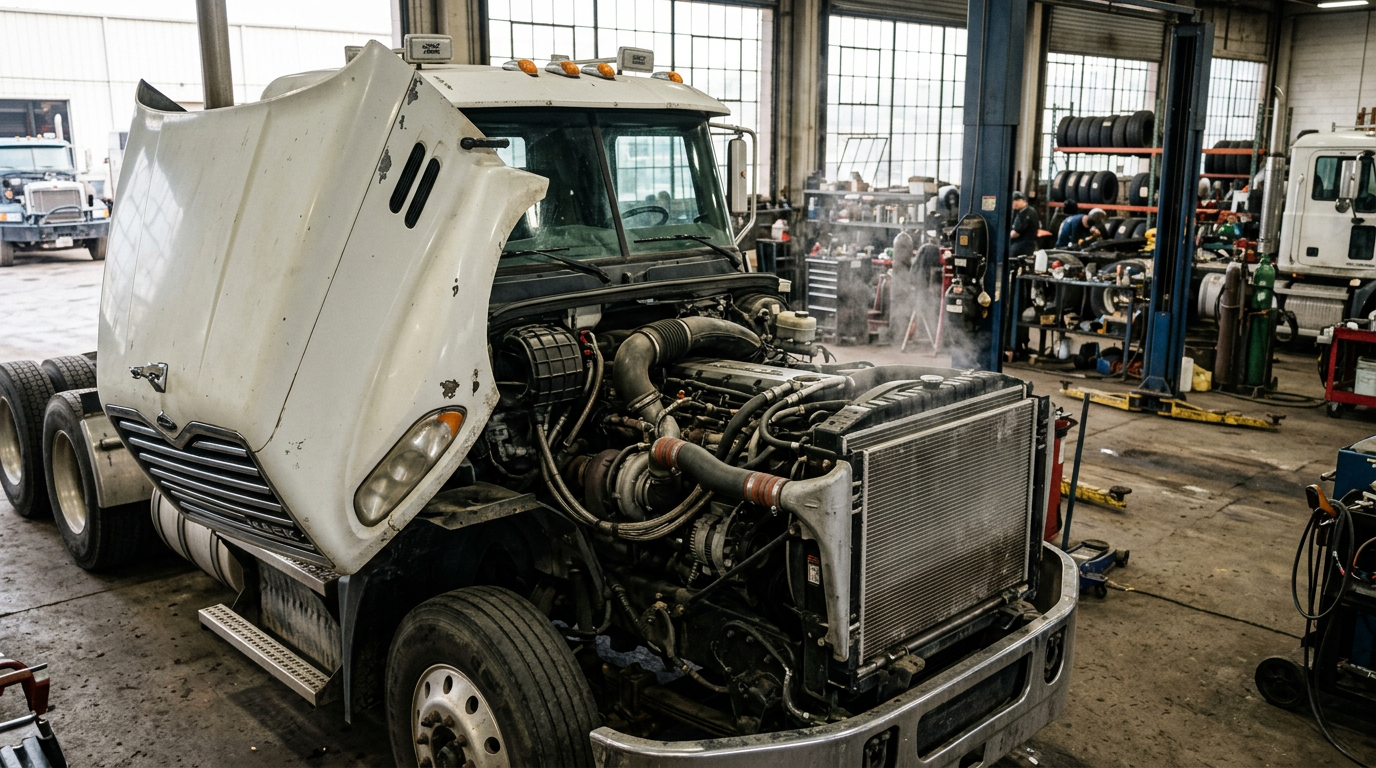
Nothing ruins a run faster than watching that temp gauge climb past 220 on a grade with a loaded trailer behind you. Overheating doesn't happen for one reason—it's usually a chain of small failures that finally catch up with the engine at the worst possible time, like a late-afternoon climb in August traffic.
Most guys reach for the radiator cap first, and sometimes that's right. But a Mack Pinnacle running an MP8 generates a lot of heat, and the cooling system has to move a lot of coolant efficiently to keep up. If you don't work the problem in order—flow, pressure, airflow, then components—you'll throw parts at a truck that didn't need them.
This guide walks through the diagnostic sequence we use in the shop: checking the easy stuff first, then narrowing down to the water pump, thermostat, radiator core, or a leak you can't see from the ground. Get it right and you save the engine. Get it wrong and you're looking at a cracked head or a blown head gasket down the road.
Start With the Basics Before You Tear Into Anything
Before you condemn a part, rule out the cheap stuff.
- Check coolant level cold, not hot—never open a hot system, you'll get scalded.
- Look at coolant condition. Rusty, oily, or sludgy coolant tells you there's been a leak path or a previous head gasket issue brewing.
- Check the coolant mix with a refractometer, not a guess. Too much water and you lose boil-over protection; too much antifreeze and you lose heat transfer.
- Inspect belts and fan clutch operation. A slipping belt or a fan clutch stuck in freewheel mode will overheat a Pinnacle just as fast as a bad water pump.
- Walk around and check for visible leaks—hoses, clamps, radiator seams, water pump weep hole.
This takes fifteen minutes and rules out half the overheating calls we get before you ever pull a wrench on the radiator.
Check the Thermostat First—It's Cheap and It's Common
A stuck-closed thermostat is one of the most common overheating causes on these trucks, and it's the cheapest fix if you catch it early.
- Warm the truck up and watch the upper radiator hose. If it stays cold while the temp gauge climbs, the thermostat isn't opening.
- Pull the thermostat and test it in a pot of heated water if you're not sure—it should open at the rated temperature, per OEM spec for the MP8.
- Check the housing for corrosion or a warped sealing surface while it's out.
- Always replace the gasket or O-ring, don't reuse it.
Don't just swap the thermostat because it's the easy part—verify it's actually bad. We've seen guys replace a good thermostat and miss a collapsing lower radiator hose that was doing the same thing: restricting flow under load.
Inspect the Radiator Core for Clogs, Bent Fins, and Internal Scale
A radiator that looks fine from ten feet away can still be choked inside.
- Check for bent or crushed fins from road debris—even partial blockage cuts airflow a lot.
- Look for bug and dirt packing between the fins, especially on trucks running secondary routes a lot.
- Check for scale buildup inside the tubes if the truck's been running on tap water or mixed coolant types over the years—that's an internal flow problem you won't see from outside.
- Use an infrared thermometer across the face of the radiator with the engine running. Cold spots mean blocked tubes.
- On a Pinnacle, also check the charge air cooler and condenser in front of the radiator—airflow restriction there shows up as a cooling problem too.
If the core's clogged internally, don't try to flush your way out of a bad radiator. Replace it with an OEM-spec unit sized correctly for the MP8's cooling demands.
Test the Water Pump for Flow, Noise, and Leaks
The water pump is the heart of the system, and on high-mileage Pinnacles it's a common failure point.
- Check the weep hole for coolant seepage—that's the bearing seal telling you it's going.
- Grab the pulley and check for shaft play. Any wobble means bearing wear, and it's only getting worse.
- Listen for a grinding or whining noise at idle that changes with RPM.
- Verify flow by feeling both radiator hoses after warm-up—if the pump's not moving coolant, you'll feel a big temperature difference between upper and lower hose that doesn't match thermostat behavior.
- Check the impeller if you pull the pump—corroded or eroded vanes won't move enough volume even if the pump still spins.
Don't rebuild these in the field. Replace with an OEM-spec water pump matched to the MP8 and torque the housing per OEM spec—a leak here under load can empty a cooling system fast.
Pressure Test the System to Find Leaks You Can't See
A lot of overheating cases come down to a slow leak that only shows up under pressure and heat—never when the truck's sitting cold in the yard.
- Pressure test the system to the cap's rated pressure and hold it. Watch for a drop over several minutes.
- Check the heater core, hose connections, and freeze plugs—these hide leaks well.
- Look at the head gasket area and check for combustion gases in the coolant with a block tester if you suspect a gasket or cracked head.
- Inspect the radiator cap itself—a weak spring means the system won't hold full pressure, which lowers the boiling point and invites overheating on grades.
A pressure test takes the guesswork out of leak-hunting and it's a lot cheaper than chasing a ghost for three days. If you find combustion gas in the coolant, that's beyond a cooling system repair—get a certified tech to evaluate the head and gasket before the truck goes back on the road.
Quick answers
Why does my Mack Pinnacle overheat only when climbing grades or pulling heavy?
That's usually a flow or airflow problem that only shows up under load—a slipping fan clutch, a partially clogged radiator, or a weak water pump that can't keep up when the engine's working hard. Check fan clutch engagement and radiator airflow first.
How do I know if it's the thermostat or the water pump causing overheating?
A stuck thermostat usually shows a cold upper radiator hose while the gauge climbs; a bad water pump usually shows weep hole leakage, pulley play, or no real temperature difference between hoses because coolant isn't moving at all. Test both separately before replacing either.
Can I keep driving if my truck is running hot but not in the red yet?
No—shut it down and diagnose it. Running a borderline-hot engine over miles accelerates head gasket failure and can warp a head, turning a cheap cooling repair into a major engine job.
How often should I flush the cooling system on a Mack MP8?
Follow the OEM maintenance interval for coolant and flush schedule, and don't stretch it—old coolant loses corrosion protection and leads to scale buildup inside the radiator and water pump over time.
Is a bad radiator cap really enough to cause overheating?
Yes—a weak or worn cap can't hold system pressure, which lowers the coolant's boiling point and lets it boil over sooner than it should, especially on long grades. It's a cheap part, so test or replace it before chasing bigger problems.
Parts for this job
Real products from the PartsNow catalog. Confirm fitment with Mike before ordering.

RADHOSE_2-1/2
RADHOSE_2-1/2 - 2-1/2' RADIATOR HOSE, PER FT
$24.00

RADIATORHOSE_3
RADIATORHOSE_3 - 3' RADIATOR HOSE, PER FT
$27.94

572.2043
572.2043 - RADIATOR CAP 16LB
$5.56

15W40 OIL
15W40 OIL - 15W40 OIL (ROTELLA) GAL JUG
$25.00

FS19765FLG
FS19765FLG - FUEL FILTER SEPARATOR
$32.95

243009
243009 - AIR COMPRESSOR FILTER
$20.63

4083
4083 - COOLANT FILTER
$0.00
Still not sure what's wrong?
Mike — the free AI truck consultant — will walk through your exact symptoms and point you to the right part. No account, English or Spanish, 24/7.
Related truck: Mack Trucks Pinnacle— specs & parts
