Fan Clutch Failure: Diagnosing Overheating & Fan Noise
August 1, 2026 · PartsNow Guides
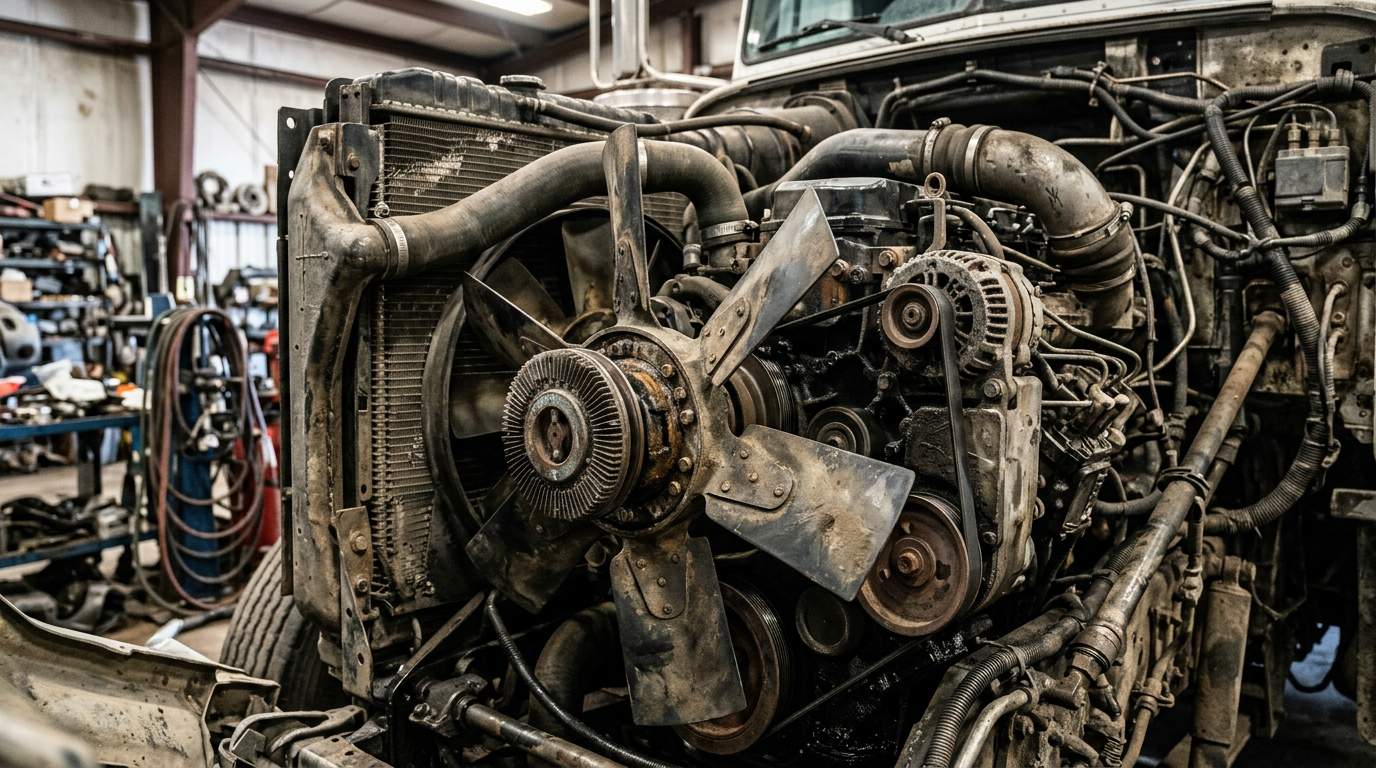
You're pulling a grade, the temp gauge starts creeping up, and there's a roar coming from the front of the engine that sounds like a jet taking off. Nine times out of ten that's your fan clutch telling you it's checked out. Either it's stuck engaged (that's the roar) or it's slipping when it shouldn't (that's the overheat), and both problems will strand you or cook a head gasket if you ignore them.
The fan clutch is one of those parts nobody thinks about until it fails, and then it's the only thing anyone's thinking about. On a Kenworth T270 or T370 running a PACCAR PX-7 or PX-9, the viscous clutch sits right behind the radiator doing double duty — pulling air through the core and keeping cab noise down when it's not needed. When it goes bad, you get one of two failures: full-time lockup (fuel burn goes up, noise goes through the roof) or full-time freewheel (truck overheats every time you're not moving fast enough to get airflow off the grille).
This guide walks through the symptoms, the checks you can do on the shoulder or in the yard, and how to decide whether you're replacing the clutch or sending it out for a rebuild.
Symptoms That Point to a Bad Fan Clutch
Two failure modes, two different symptom sets, and it pays to know which one you're chasing.
Stuck engaged (locked up):
- Loud roaring noise at all engine speeds, gets worse under throttle
- Noticeable drop in fuel economy
- Fan spins fast even with a cold engine at startup
Freewheeling (not engaging):
- Engine temp climbs in stop-and-go traffic or at idle
- Temp drops back down once you get rolling and airflow picks up
- No roar, no pull-down noise when you shut the engine off
If you're hearing the roar and seeing high temps, don't assume it's "just noise" — a clutch that's partially seized can still fail to move enough air under load. Either way, don't keep running it. A locked clutch overworks the belt and bearing; a dead one will overheat the engine and take other parts with it.
Roadside and Yard Quick Checks
You don't need a shop to get a good read on a fan clutch. Do this before you call for a tow or write up a work order:
- Cold engagement check: Start the engine cold. The fan should spin freely and quietly with almost no drag — if it's roaring right at startup, it's stuck engaged.
- Shutdown listen: Run the engine up to operating temp, then shut it off. A good clutch will "free-wheel down" — the fan spins down slowly and smoothly after the engine stops. If it stops dead with the engine, it's likely locked or the bearing's seized.
- Manual spin test (engine OFF, key out): Grab the fan blade and try to rotate it by hand. Some resistance is normal; if it spins with zero drag at all, or it's rock solid and won't budge, that's your answer.
- Wobble check: Push/pull on the fan blade tip. Excess play means a bad bearing, separate from clutch engagement.
Write down what you find — it saves the shop diagnostic time and helps decide replace vs. rebuild.
Testing Viscous vs Electric Fan Clutches
Most T270/T370 trucks run a viscous (thermal) fan clutch, but some spec electric fan setups, especially on vocational builds. The testing approach differs.
Viscous clutch:
- Relies on silicone fluid and a bimetal spring to sense airflow temp off the radiator and engage the fan.
- Test by checking engagement temp against a heat gun on the radiator core, per OEM spec — if it won't engage near that temp, or engages way too early, the clutch is bad.
- Fluid leakage around the clutch face (oily residue, dust caked on) is a dead giveaway of internal seal failure.
Electric clutch:
- Engagement is controlled by the ECM based on coolant temp sensor input, not airflow temp.
- Check for power and ground at the clutch connector with a multimeter when the ECM commands it on — no voltage means a wiring or relay problem, not the clutch itself.
- If voltage's present and the fan still won't spin, the clutch coil or solenoid has failed.
Don't guess — misdiagnosing electric-vs-viscous wastes a parts run.
Replace or Rebuild: Making the Call
Replace when:
- The clutch has visible fluid leakage or a seized bearing
- It's an older unit with unknown service history and the truck's a daily runner you can't afford to have back in the shop
- Rebuild kits aren't available for that specific clutch model
Rebuild (or send out for remanufacture) when:
- The housing and bearing are in good shape and only the internal clutch pack or fluid needs service
- You're running a fleet with multiple units of the same clutch and it's cheaper per-unit to core-exchange
- Downtime isn't critical and you've got a reman core program through your dealer
For most owner-operators, a straight swap with a new or quality reman unit is the practical call — labor to pull the fan shroud and clutch is the same either way, so you're really just weighing parts cost. Check warranty terms on reman units before you commit; a bad rebuild that fails again in six months costs you the labor twice.
Installation Notes for the T270/T370
Pulling the fan clutch on a PX-7/PX-9 setup means working close to the belt, pulley, and radiator core — plenty of pinch points and sharp fan blade edges.
- Let the engine cool fully before you touch anything near the fan or radiator
- Support the fan/clutch assembly before removing the last retaining bolt — these units are heavier than they look and can drop or tip
- Inspect the water pump pulley and belt while you're in there; a bad clutch sometimes takes a belt or pulley bearing down with it
- Torque the retaining bolts to OEM spec — overtightening can crack the clutch housing, undertightening leads to wobble and premature bearing wear
- Bleed and top off coolant per OEM procedure if the radiator shroud had to come off
This is engine bay work, not chassis or brake work, so it doesn't require a certified brake/steering tech sign-off — but if you're not comfortable around a spinning fan and belt system, have a qualified shop handle it.
Quick answers
Can I keep driving with a fan clutch that's making noise but the truck isn't overheating yet?
You can limp it to a shop, but a roaring clutch stuck engaged is already overworking your belt and water pump bearing. Get it looked at within a few days — waiting for it to also overheat just adds a second repair to the bill.
How do I know if it's the fan clutch and not just a low coolant or bad thermostat causing overheating?
Check coolant level and look for a stuck-closed thermostat first since those are cheaper and faster to rule out. If coolant's full and the thermostat's opening normally but temps still climb at idle or low speed, the fan clutch not engaging is the next suspect.
Is a fan clutch replacement something I can do myself in the yard?
Mechanically it's a straightforward bolt-on job if you've got the right tools and the engine's fully cooled down, and it's not a brake or steering safety item. That said, the assembly's heavy and close to a belt and sharp fan blades, so if you're not experienced with engine bay work, have a tech handle it.
Parts for this job
Real products from the PartsNow catalog. Confirm fitment with Mike before ordering.


Still not sure what's wrong?
Mike — the free AI truck consultant — will walk through your exact symptoms and point you to the right part. No account, English or Spanish, 24/7.
Related truck: Kenworth T270 / T370— specs & parts
