Clutch Slipping or Chattering? Diagnosis Guide for Manual Trucks
August 5, 2026 · PartsNow Guides
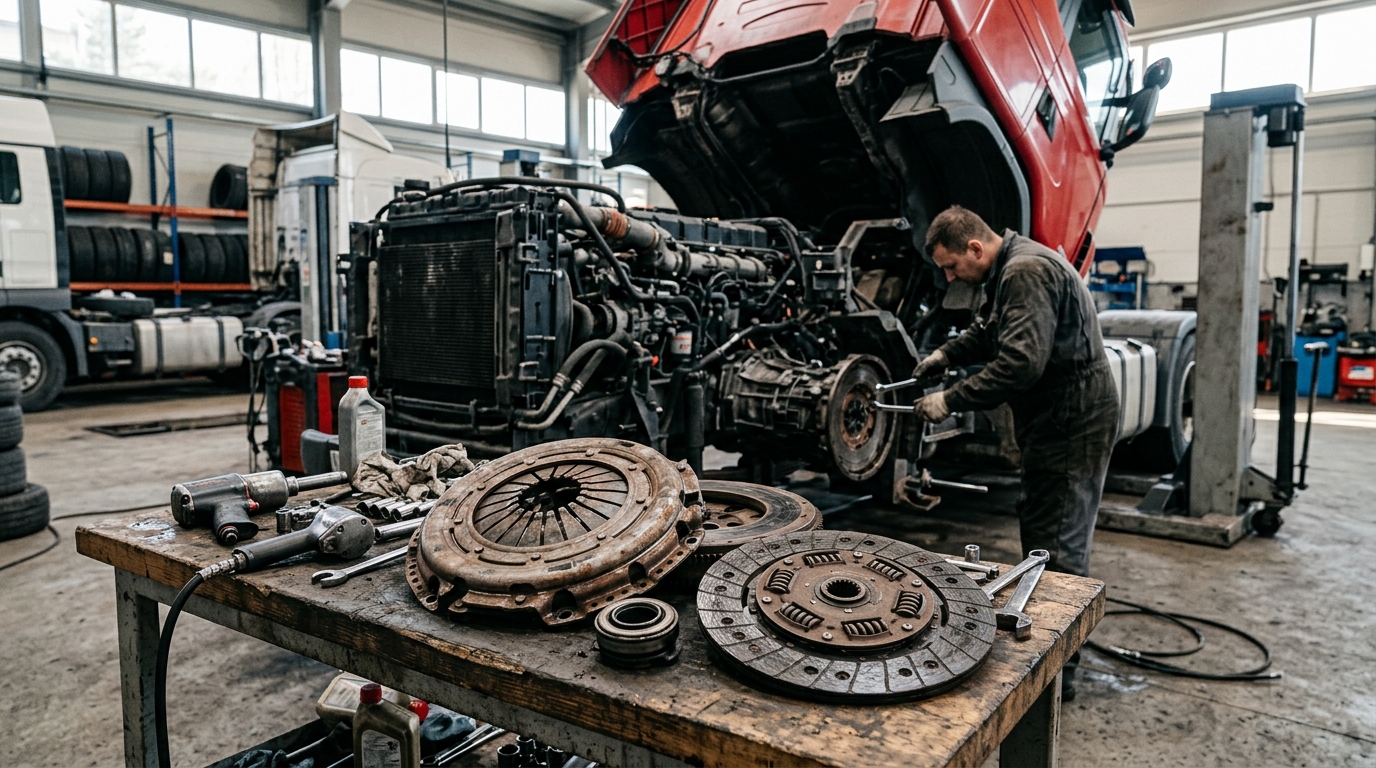
You're pulling a grade, RPMs climb but the truck won't pick up speed like it should — that's clutch slip, and it's telling you something's wearing out before it strands you on a hill. Chatter on takeoff feels different: a shudder or grab that rattles your teeth for the first few feet, then smooths out. Both symptoms point to the clutch system, but they don't always mean the same repair.
Too many shops jump straight to a full clutch replacement when the real problem is a hydraulic linkage that needs bleeding or an adjustment that's overdue. Others limp a truck along with a slipping disc until it cooks the flywheel and pressure plate, turning a $-part job into a full driveline teardown. This guide walks through the checks that separate a simple adjustment from a real wear-out, so you fix it right the first time.
We'll use the Western Star 4900 with a manual transmission as our reference point since it's common in owner-operator fleets, but the diagnostic logic applies to any heavy-duty manual clutch setup.
Slipping vs. Chattering: Know What You're Hearing and Feeling
Slipping shows up as engine RPM rising without a matching increase in road speed — especially under load, going uphill, or pulling a heavy trailer. You might smell a burnt-clutch odor, like hot brakes. This almost always points to a worn clutch disc, a weak pressure plate, or oil contamination on the friction surfaces.
Chattering feels like a shudder or grabbing sensation during takeoff from a stop, then it clears up once you're rolling. This is more often tied to a warped pressure plate, a glazed or oil-soaked disc, worn pilot bearing, or loose engine/transmission mounts letting things shift under load.
Write down exactly when the symptom happens — cold start only, always at takeoff, only under heavy load — before you start pulling anything apart. That detail narrows your diagnosis fast and saves you labor hours chasing the wrong part.
Step 1: Check Free Play and Hydraulic Linkage First
Before you assume the clutch disc is worn out, rule out the cheap stuff. On cable or mechanical linkage trucks, check pedal free play against per OEM spec — too little free play means the clutch never fully disengages, which cooks the disc and causes chatter.
On hydraulic clutch systems (common on the Western Star 4900), check the master cylinder and slave cylinder for fluid leaks, air in the line, or a soft pedal. A spongy pedal that sinks to the floor points to a hydraulic problem, not a worn disc. Bleed the system per OEM spec and retest.
If the pedal firms up and slip or chatter disappears, you just saved yourself a clutch job. If the symptom persists after confirming proper linkage adjustment and a solid hydraulic system, move to the mechanical inspection below.
Step 2: Inspect the Clutch Disc for Wear and Contamination
Pull the transmission per OEM procedure to get eyes on the clutch disc. Look for:
- Friction material worn down near the rivets — this is your slip culprit
- Glazing (shiny, hardened surface) — causes chatter, often from riding the clutch or slow takeoffs
- Oil or grease contamination from a leaking rear main seal or transmission input seal — always fix the leak source before installing a new disc
- Cracked or broken springs in the disc hub — leads to chatter and vibration
Measure remaining friction material thickness against per OEM spec. If it's within spec and shows no glazing or contamination, the disc may not be your problem — check the pressure plate next. If it's worn thin or contaminated, replace it, and always replace as a matched set with the pressure plate to avoid an early comeback.
Step 3: Check the Pressure Plate and Flywheel
A weak pressure plate loses clamping force over time, which shows up as slip even with a healthy disc. Check the diaphragm spring or coil springs for signs of fatigue, cracking, or uneven wear pattern on the pressure plate face.
Inspect the flywheel surface for hot spots (bluish discoloration), deep grooves, or warping — these cause chatter and won't fully resurface with a light skim. If the flywheel's out of spec on flatness or thickness, replace it rather than resurfacing past the minimum, per OEM spec.
Also check the pilot bearing in the crankshaft — a dry or worn pilot bearing causes chatter and hard shifting even with a perfect clutch assembly. It's a cheap part; always replace it during any clutch job since it's an early comeback if skipped.
When to Adjust vs. When to Replace
If your diagnosis stops at linkage adjustment or a hydraulic bleed and the symptom clears, you're done — no need to pull the transmission. That's the cheapest, fastest fix and it's a legitimate call, not a shortcut.
If you're into the disc and pressure plate inspection and find wear within spec, a good cleaning and reassembly with a new pilot bearing may buy more life. But once friction material, spring tension, or flywheel surface fall outside per OEM spec, replace the full clutch kit — disc, pressure plate, and release bearing together. Mixing a new disc with an old, weak pressure plate is a classic comeback generator.
On a Western Star 4900 running regional or long-haul loads, factor in duty cycle — a truck doing constant stop-and-go city work wears clutches faster than steady highway miles, so don't judge remaining life by mileage alone.
Avoiding Comeback Repairs
Comebacks on clutch jobs almost always trace back to skipped steps, not bad parts. Before buttoning up:
- Replace the release bearing and pilot bearing every time, even if they look fine — they're inexpensive compared to another teardown
- Fix any oil leak (rear main seal, input shaft seal) before it contaminates a fresh disc
- Verify linkage adjustment or bleed the hydraulic system per OEM spec after installation, not before
- Torque the pressure plate bolts in the correct sequence per OEM spec — uneven torque causes chatter and premature wear
- Road test under load, not just around the yard, to confirm full engagement and no slip before calling the job done
Skipping any of these to save an hour of labor usually costs more in a return visit and a frustrated customer.
Quick answers
Can I keep driving with a slipping clutch, or will it strand me?
A slipping clutch will get worse under load, and heat buildup can damage the flywheel and pressure plate, turning a disc-only fix into a full assembly replacement. Get it inspected soon — don't wait for it to fail on a grade with a loaded trailer.
Is clutch chatter always a clutch problem, or could it be something else?
Not always — worn engine or transmission mounts, a bad pilot bearing, or even universal joint wear can mimic clutch chatter. That's why checking mounts and the pilot bearing during diagnosis matters before you assume it's the disc or pressure plate.
How often should a Western Star 4900 clutch be replaced?
There's no fixed mileage — it depends on duty cycle, driving habits, and load weight, so go by inspection findings against per OEM spec rather than a set interval. A truck doing heavy stop-and-go work will need it sooner than one running steady highway miles.
Parts for this job
Real products from the PartsNow catalog. Confirm fitment with Mike before ordering.


Still not sure what's wrong?
Mike — the free AI truck consultant — will walk through your exact symptoms and point you to the right part. No account, English or Spanish, 24/7.
Related truck: Western Star 4900— specs & parts
